
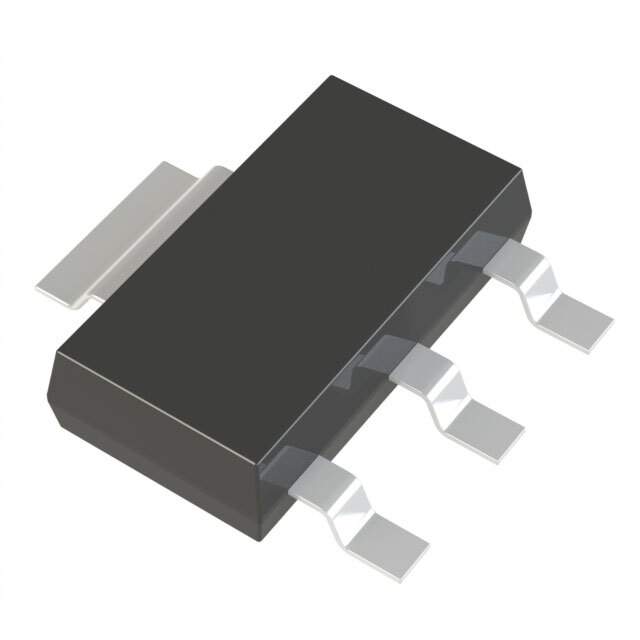
450 V, 1.3 A, 700 mW, SOT-223-3, -55°C to 150°C (TJ): the ceilings that decide whether it fits
Quick Engineering Summary
| Field | Value |
|---|---|
| Manufacturer | Diodes Incorporated |
| Category | RF Transistors (BJT) |
| Package | Tape & Reel |
| Core function | TRANS NPN 450V 1. |
| Key electrical range | Current - Collector (Ic) (Max): 1.3 A; DC Current Gain (hFE) (Min) @ Ic, Vce: 16 @ 500mA, 2V; Frequency - Transition: 4MHz; Power - Max: 700 mW |
| Reported stock | 2500 pcs reported — confirm on RFQ |
The power ceiling is the real limit here
The constraint is power, not current. At 700 mW in SOT-223-3, that ceiling closes the decision before the 1.3 A collector limit does. DXT13003DG-13 is Active and suitable for new design-in. EU RoHS is compliant.
Can you actually keep this on a running line?
Can purchasing take it in the form your line needs? Yes, if tape-and-reel fits the build. Stock is 2500, the standard package is 2,500, and the package field is Tape & Reel, so DXT13003DG-13 lines up with automated SMT intake rather than bench builds or tiny service buys.
MSL 1 (Unlimited) removes a common floor-life handling constraint. The real buy-side limit is pack form: if your line can't absorb reel quantity, the part gets awkward before any electrical question does.
That also tells you where DXT13003DG-13 belongs
And that points to the electrical fit. A 450 V collector-emitter breakdown ceiling puts DXT13003DG-13 in offline high-voltage stages and other circuits where rail withstand matters more than speed. The listed 4MHz transition frequency does not make it a fast-switching answer on its own; it only rules out assuming RF behavior from the category label.
The other useful pair is 400mV @ 250mA, 1A for Vce saturation and 16 @ 500mA, 2V for minimum hFE. Those numbers support moderate-current saturated switching, but they do not close base-drive design across the full load range, and they say nothing about what happens thermally once conduction loss starts pushing against the 700 mW ceiling.
The missing data is exactly what decides release
2500 pieces on hand helps, but it doesn't answer the hard questions. What still blocks a confident release on DXT13003DG-13 is missing detail around stress and switching.
There is no reverse-recovery time because this is a BJT, but the listing also gives no thermal resistance, no derating curve, no pinout, and no package drawing. Thermal resistance and the derating curve decide how much of the 700 mW ceiling survives at real ambient. Pinout and drawing decide whether the SOT-223-3 land pattern and orientation match the board you already have.
One more gap matters. There is no switching waveform data beyond the 4MHz transition figure, leaving storage behavior and edge performance unresolved. That's where a high-voltage transistor can look acceptable in a table and still turn into heat or switching loss on the bench.
View the Win-Source product page for DXT13003DG-13.
Key Takeaways for Engineers & Buyers
- Treat 450 V as the rail ceiling; it does not settle switching stress without the missing waveform data.
- Budget around 700 mW in SOT-223-3 before you lean on the 1.3 A collector limit.
- Buy in 2,500-piece tape and reel lots if this goes straight to SMT production.