
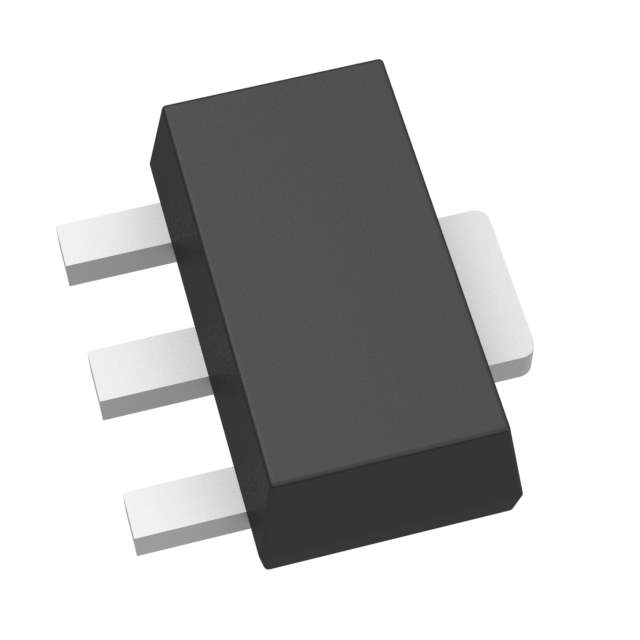
60V VCEO, 600mA collector ceiling, 1W dissipation limit, SOT-89-3 package, -55°C to 150°C TJ
Quick Engineering Summary
| Field | Value |
|---|---|
| Manufacturer | Diodes Incorporated |
| Category | Transistors (BJT) - Single |
| Package | SOT-89-3 |
| Core function | TRANS PNP 60V 0. |
| Key electrical range | Collector Cut-off Current(Max): 10nA (ICBO); Frequency - Transition: 200MHz; Maximum Current Collector: 600mA; Maximum Power Dissipation: 1W |
| Reported stock | 13094 pcs reported — confirm on RFQ |
60V is the reason to consider DXT2907A-13
60V sets the tone here. It is the spec that makes this transistor worth considering, because DXT2907A-13 is an Active PNP single BJT in SOT-89-3 and that VCEO ceiling is what separates it from lower-voltage small-signal parts that look fine until a higher rail or an inductive edge pushes the collector-emitter path too far.
The rest follows from that. The 600mA maximum collector current is a ceiling, not a working promise, and the 1W maximum power dissipation is the other hard stop that decides whether it belongs in a compact bias, load-switch, or driver position rather than anywhere expecting sustained current without careful thermal budgeting. EU RoHS is straightforward here.
Not for heavy saturation switching
Wrong job first: low-drop saturated switching. With a listed VCE(sat) maximum of 1.6V @ 50mA, 500mA, DXT2907A-13 can give away too much voltage in a rail switch or hard-driven load path.
It fits better where the 60V ceiling matters more than a low on-state drop.
The thermal budget is tighter than the current headline
And that is the real design argument. The 600mA figure grabs attention, but the 1W maximum power dissipation and the 1.6V @ 50mA, 500mA VCE(sat) ceiling decide whether DXT2907A-13 survives the job or just runs hot enough to become a field-return candidate in a cramped board corner.
The gain number helps place it. hFE is listed as 100 @ 150mA, 10V, which gives at least one stated operating point showing this part is aimed at ordinary signal and moderate-current work, not only leakage-blocking duty. Pair that with the 200MHz transition frequency and it lands naturally in small driver stages, level shifting, and general-purpose PNP duties where board area is tight and SMD assembly matters.
Temperature range is broad at -55°C to 150°C (TJ), but that remains a junction limit, not ambient permission. Without a thermal resistance figure or derating curve, you can see the package is compact and board-mounted, yet you still can't close the ambient headroom argument. Use DXT2907A-13 where voltage headroom and compact mounting matter more than low-drop saturated switching.
The missing details are the ones that close the review
The weak point is clear. There is no pinout, no package drawing, no thermal resistance, and no derating curve.
Those gaps matter more than another headline spec. Pinout and drawing decide footprint confidence, while thermal resistance and derating decide how much of that 1W ceiling is usable on your board. Stock is listed at 13094 and packaging is Reel - TR, so it lines up with reel-fed SMT builds, but the land pattern and thermal margin still depend on those missing details.
View the Win-Source product page for DXT2907A-13.
Key Takeaways for Engineers & Buyers
- Keep DXT2907A-13 on rails that need the full 60V collector-emitter ceiling, not above it.
- Budget heat around the 1W maximum and the listed 1.6V VCE(sat) at 50mA, 500mA.
- Load reels against the listed 13094 stock if DXT2907A-13 is going straight to SMT production.