
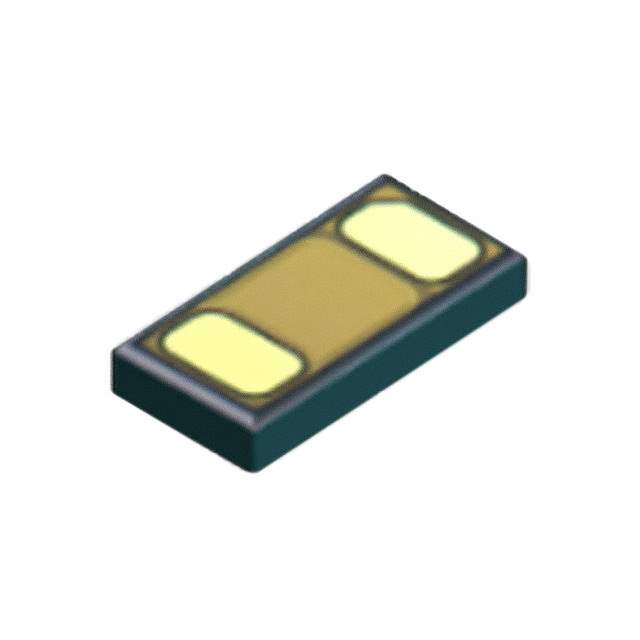
3 V reverse standoff, 10 V clamp, 2.6 A pulse, 0201 package, -40°C to 85°C ambient
Quick Engineering Summary
| Field | Value |
|---|---|
| Manufacturer | Panasonic |
| Category | TVS - Diodes |
| Package | 0201 (0603 Metric) |
| Core function | TVS DIODE 3VWM 10VC 201 |
| Key electrical range | Operating Temperature Range: -40°C ~ 85°C (TA); Supply and Demand Status: Limited |
| Reported stock | 18963 pcs reported — confirm on RFQ |
The lifecycle conflict is the real limit
The constraint is lifecycle, not electrical. Active status appears alongside a stop-supply signal, so Panasonic DY2L3A0C0L1 fits sustaining use, not a clean new design-in. EU RoHS is compliant.
Not for higher rails; useful on very low-voltage nodes
Wrong for anything above 3 V with real margin. The listed 3 V reverse standoff is a ceiling on the protected line, not an operating point you can stretch, and if you ignore that, the protector becomes the problem.
It does fit dense low-voltage protection where a 0201 package matters and the clamp target is tight. The 10 V clamp at 2.6 A on an 8/20µs pulse sets the event it is built to catch and the voltage downstream silicon may still see during that event, but it says nothing about repetitive stress, long-pulse energy, or board-level survivability outside that stated condition. The 23 W peak pulse figure belongs in the same category: a surge ceiling, not a dissipation allowance.
Buy carefully, not broadly
Sustaining only.
The buying constraint is not package quantity or MSL. It is Limited supply status paired with 18963 pieces in stock and mixed lifecycle signals. That's enough for a running line or a service build, but not enough evidence to spread DY2L3A0C0L1 across a new platform family. Keep the requirement tied to existing production, then secure the reel count you need.
The missing data still blocks a full protection call
What would a buyer ask first: what is still missing? Quite a bit.
DY2L3A0C0L1 does give you 8.5 pF at 1 MHz, which helps frame signal loading, but the listing stops short of the details that decide whether this TVS behaves well in a real interface and whether the board survives abuse without hidden thermal trouble.
The first gap is the pinout and package drawing. Even in a two-terminal 0201 body, land pattern and orientation details still drive assembly yield and rework pain. The second is thermal resistance or any derating curve; without that, the -40°C to 85°C ambient range is only an ambient limit, not proof of pulse headroom on your board. The third is surge detail beyond the single 2.6 A, 8/20µs condition: no alternate waveform context, no forward-drop curve, and no junction-level thermal data. The fourth is reverse leakage. On a 3 V standoff protector tied to a sensitive low-voltage node, that omission can decide whether the part disappears into the circuit or shows up as bias error.
View the Win-Source product page for DY2L3A0C0L1.
Key Takeaways for Engineers & Buyers
- Keep DY2L3A0C0L1 on rails that stay within the 3 V reverse standoff ceiling.
- Check assembly capability for 0201 (0603 Metric) before releasing the PCB.
- Reserve stock early if the line depends on DY2L3A0C0L1; supply is marked Limited.