
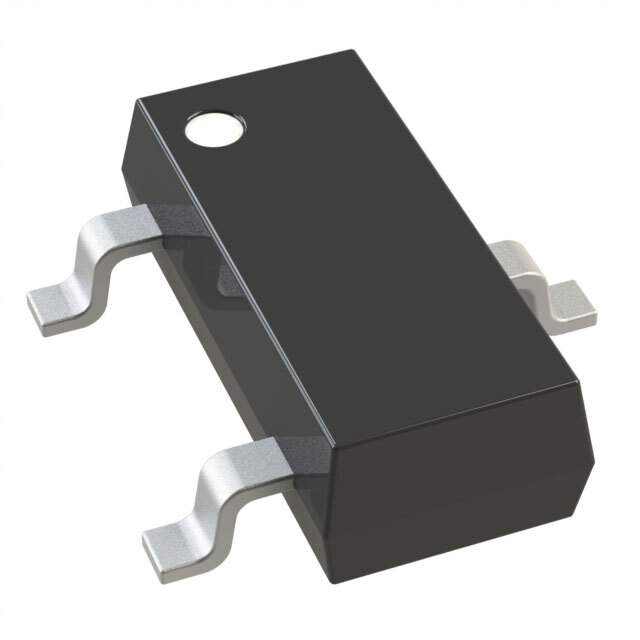
11V nominal Zener, 300mW ceiling, SOT-23-3 package, -65°C to 150°C operating range
Quick Engineering Summary
| Field | Value |
|---|---|
| Manufacturer | Diodes Incorporated |
| Category | Diodes - Zener - Arrays |
| Package | SOT-23-3 |
| Core function | DIODE ZENER ARRAY 11V SOT-23-3 |
| Key electrical range | Maximum Power Dissipation: 300mW; Supply and Demand Status: Sufficient; Temperature Range - Operating: -65°C to 150°C; Tolerance: ±5% |
| Reported stock | 42000 pcs reported — confirm on RFQ |
The real limit here is power, not the 11V label
The constraint is power: 300mW is the ceiling that decides whether this common-cathode pair survives clamp duty in SOT-23-3, while the 11V nominal value only tells you where breakdown is centered. Get that wrong and the package, not the schematic symbol, becomes the failure point.
The other number that shapes fit is ±5% tolerance. That works for rail clamping and coarse reference work, but not for a precision threshold by itself. The 20 Ohm maximum Zzt says something about clamp stiffness around its test region, yet transient behavior is still unresolved because no surge figure is listed.
Can you buy this for a running line without drama?
Can you buy it and keep the line moving? Yes, if the electrical gaps match the job. DZ23C11-7-F is marked Active, the lifecycle signals agree, and 42000 pieces on hand is enough to support a real build rather than a lab-only call. Packaging is Reel - TR, so it fits automated placement without repacking.
Fit is narrower than the stock number suggests. This is a Zener array with 1 Pair Common Cathode in SOT-23-3, so it belongs in compact dual-line clamping or paired reference points where that shared node is intentional. It does not fit jobs that need isolated single Zeners, a larger dissipation envelope, or a precision reference tighter than ±5%.
The listed operating range runs from -65°C to 150°C, which closes ambient suitability only at the category level; the thermal detail that decides whether DZ23C11-7-F can actually hold that range on your board under dissipation is still missing. EU RoHS is straightforward here, with no compliance conflict to resolve.
Good for new design-in, with one obvious boundary
Use it.
DZ23C11-7-F is a reasonable new design-in choice when you need an 11V nominal Zener pair and your topology wants a common cathode. The package and mounting style point to dense board-level protection or bias networks, not loose thermal budgets or high-energy suppression. One boundary is hard: 300mW maximum dissipation is a ceiling, so this part is for small-signal clamp work, not for absorbing repeated abuse and hoping the package sorts it out.
The missing datasheet items are the real review blockers
The weak point is missing electrical depth. DZ23C11-7-F is easy to place on a BOM, but the listing leaves out reverse leakage at Vr, forward voltage at If, and any surge or transient current figure. Those numbers separate a harmless rail clamp from a field return.
The mechanical side is thin too. ECAD is listed only as contact-for-download, and there is no pinout or package drawing here even though the common-cathode configuration makes pin assignment matter immediately. Thermal resistance is also absent, so the 300mW ceiling cannot be translated into board headroom from this page alone.
View the Win-Source product page for DZ23C11-7-F.
Key Takeaways for Engineers & Buyers
- Keep DZ23C11-7-F on rails that need an 11V nominal clamp, not a tighter tolerance than ±5%.
- Treat 300mW as the dissipation ceiling and pull thermal path detail from the SOT-23-3 datasheet before release.
- Buy on reel for the running line while 42000 pieces are available.