
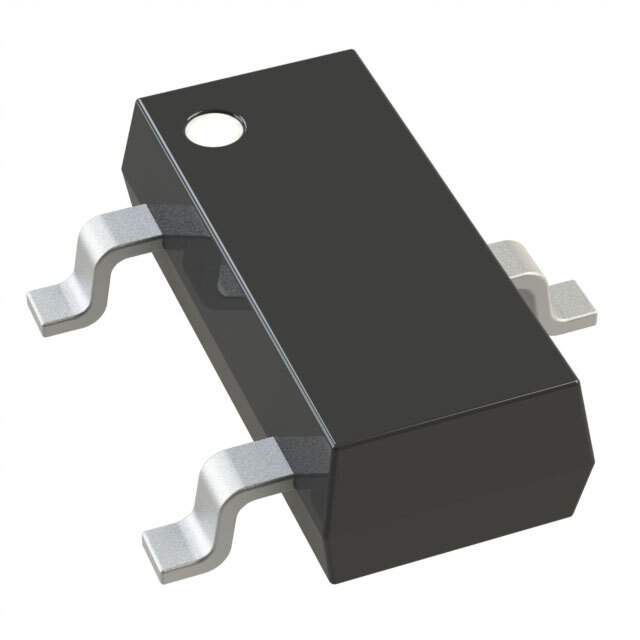

12V nominal zener pair, 300mW ceiling, SOT-23-3 package, -65°C to 150°C operating range
Quick Engineering Summary
| Field | Value |
|---|---|
| Manufacturer | Diodes Incorporated |
| Category | Diodes - Zener - Arrays |
| Package | SOT-23-3 |
| Core function | DIODE ZENER ARRAY 12V SOT-23-3 |
| Key electrical range | Maximum Power Dissipation: 300mW; Supply and Demand Status: Balance; Temperature Range - Operating: -65°C to 150°C; Tolerance: ±5% |
| Reported stock | 2092 pcs reported — confirm on RFQ |
So yes, this is a real design-in candidate
And that comes down to the few numbers that actually decide the part. DZ23C12-7-F is Active, the lifecycle signals agree, and the package is a standard SOT-23-3, so there is no obvious program-level reason to exclude it from a new build when the circuit needs a 12V zener array rather than a single device.
The caution is narrower. It is described here only as a 1 Pair Common Cathode device with a 12V nominal zener voltage and ±5% tolerance, so it fits compact clamp or reference work that already wants that topology. EU RoHS is straightforward. What remains open is the exact electrical behavior around leakage, forward conduction, and transient stress.
The 300mW ceiling is the number that can kill the fit
Dissipation is the constraint. The listed 300mW maximum power dissipation is a ceiling, and it does not say the part will sit comfortably there in your ambient or on your copper, so without a derating curve or thermal resistance, DZ23C12-7-F is not a casual 12V clamp for abuse-heavy rails just because the package is familiar.
The 12V zener voltage with ±5% tolerance answers a different question. It centers the clamp or reference target on 12V, but it does not show how tightly the device holds that point under current because the listing gives no test current with Vz. The 20 Ohm maximum impedance points the same way: the zener region is not ideal, so rail stiffness and clamp behavior will move with current, and the missing test condition keeps that movement out of a clean design calculation.
Topology and package still matter. SOT-23-3 and 1 Pair Common Cathode make DZ23C12-7-F a dense board-level protection part, not a generic answer for any two-line clamp, and if the common node is wrong, the network is wrong before thermal questions even begin. The -65°C to 150°C operating range is broad, but it is only a listed span, not permission to ignore self-heating.
Good fit, with one clear buying move
Buyable now.
For compact SMT boards that need two zener elements in a shared common-cathode arrangement and want SOT-23-3, the move is simple: reserve stock early if this exact topology is already qualified into a running line.
2092 pieces help, but the datasheet gaps still matter
2092 pieces on hand is enough to keep attention on this exact part instead of reopening the schematic, especially for sustaining demand, but inventory is not the hard engineering question.
Reverse leakage is absent. Forward voltage at a stated If is absent. There is no thermal resistance, no derating curve, and no surge or transient current figure. The package naming is present, but a pinout or drawing is not. Those are the gaps between a plausible BOM line and a finished clamp design.
View the Win-Source product page for DZ23C12-7-F.
Key Takeaways for Engineers & Buyers
- Treat 300mW as the dissipation ceiling; don’t size DZ23C12-7-F from the 12V nominal alone.
- Check the common-cathode topology against the clamp network before laying out SOT-23-3.
- Reserve reel handling for TR packaging and secure the 2092-piece stock if this is a running line.