
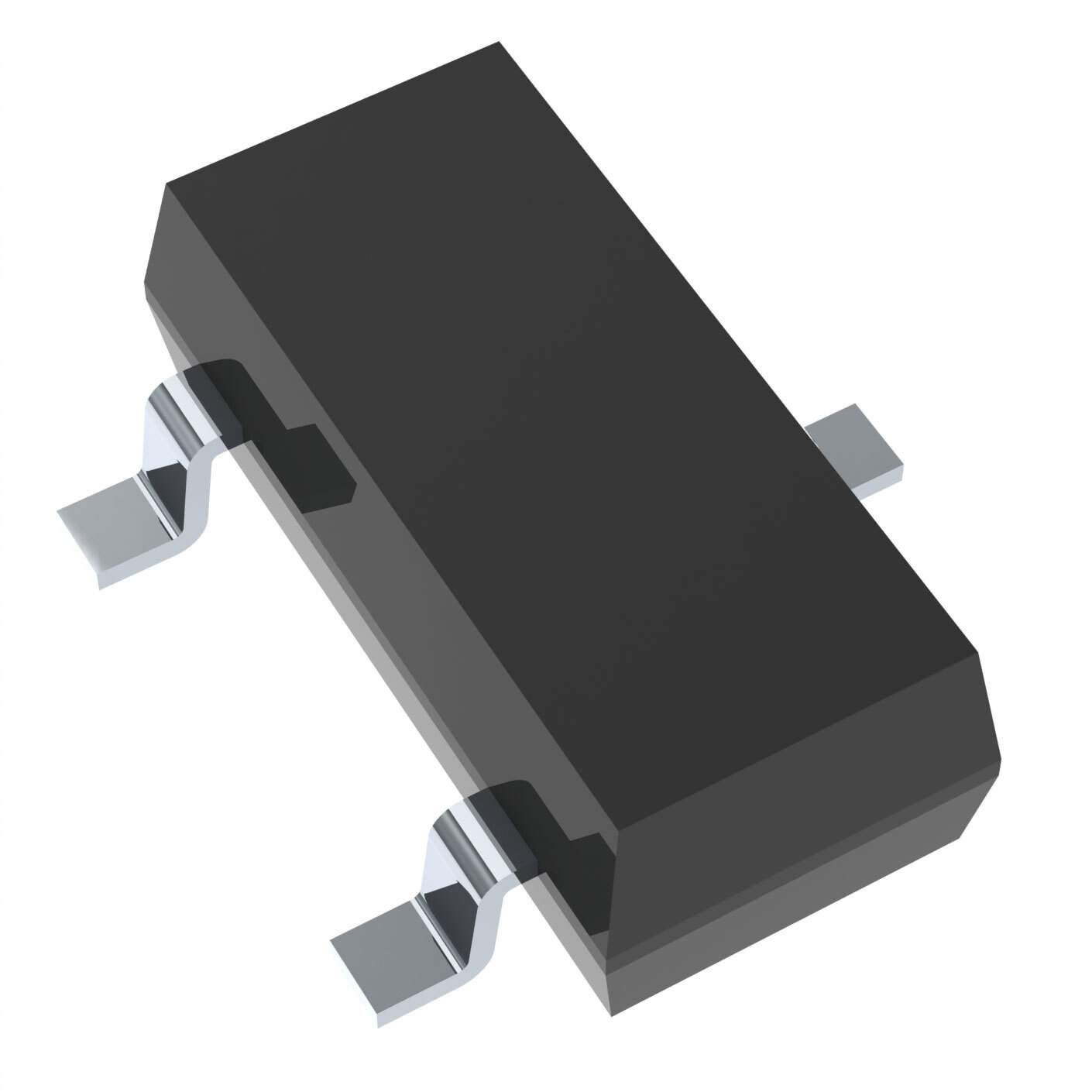
12 V, 300 mW, SOT-23-3, -55°C to 150°C: usable in existing builds, but the lifecycle closes new design-in.
Quick Engineering Summary
| Field | Value |
|---|---|
| Manufacturer | Vishay |
| Category | Diodes - Zener - Arrays |
| Package | SOT-23-3 |
| Core function | DIODE ZENER ARRAY 12V SOT-23-3 |
| Key electrical range | Operating Temperature Range: -55°C ~ 150°C; Supply and Demand Status: Limited |
| Reported stock | 3410 pcs reported — confirm on RFQ |
300 mW ends the new-design conversation
300 mW is the listed power ceiling, and the lifecycle matters even more because the part is already EOL. That number alone does not tell you how much surge abuse the pair can take in a real clamp role, nor does it give ambient headroom without a derating curve, so it shuts down any casual assumption that a dual 12 V zener in SOT-23-3 can absorb repeated fault energy just because it is automotive qualified.
The rest of the electrical picture is narrow but still useful. The nominal zener voltage is 12 V with ±5% tolerance, so rail window and clamp spread are bounded to that tolerance band. Zzt is 20 Ohms maximum, setting how soft the clamp can get under current. Leakage is 100 nA at 9 V, a small-signal figure that helps standby paths, not a promise about behavior near breakdown.
51 Weeks makes this a sustaining buy only
51 Weeks is long enough to change the buying decision on its own, and here it applies to a part already marked EOL with supply and demand status listed as Limited.
That is the real constraint. Stock is 3410, and the package is Reel - TR with 15000 per package, so this is not a part to scatter into new programs or low-volume prototypes that may later need a clean reorder path. Use the available stock to cover existing production, then move the line off it. EU RoHS compliant, REACH Unaffected, and MSL 1 help handling and compliance, but they do not change the lifecycle stop sign.
It fits compact rail clamps, not energy-heavy protection
Sustaining only.
This part belongs in dense board-level protection where a common-cathode zener pair and SOT-23-3 footprint are already designed in, especially when the assembly needs surface mount handling, MSL 1, and the listed -55°C to 150°C operating range. The AEC-Q101 callout matters in that narrow context because it keeps the device in play for automotive-qualified existing designs that already released this exact part, and that is a much smaller claim than saying it deserves a place in a new platform.
Its limits are just as clear. A 12 V nominal zener with 20 Ohms maximum impedance is not the pick when tight clamp behavior sets downstream stress, and the 300 mW ceiling rules out treating this small package like a surge sink. The leakage figure of 100 nA at 9 V is attractive for quiet monitoring or bias-protection nodes, but the listing gives no forward-voltage figure at any forward current, so ordinary diode conduction loss and bidirectional abuse remain unresolved. The page also leaves out the derating curve, surge or overload figure, package drawing, and pinout, which is why this device makes sense only in the exact footprint-and-function slot it already occupies.
The missing datasheet items are the real blocker
Wrong for surge sizing.
Right for a compact existing clamp. The gaps are concrete: no derating curve, no surge or overload figure, no forward-voltage point at forward current, and no package drawing or pinout here.
View the Win-Source product page for DZ23C12-HE3-08.
Key Takeaways for Engineers & Buyers
- Block new BOM releases for DZ23C12-HE3-08; lifecycle is EOL.
- Match the footprint to SOT-23-3 common-cathode routing before any last-time build.
- Treat 300 mW as the dissipation ceiling and 20 Ohms Zzt as the clamp-quality limit.