
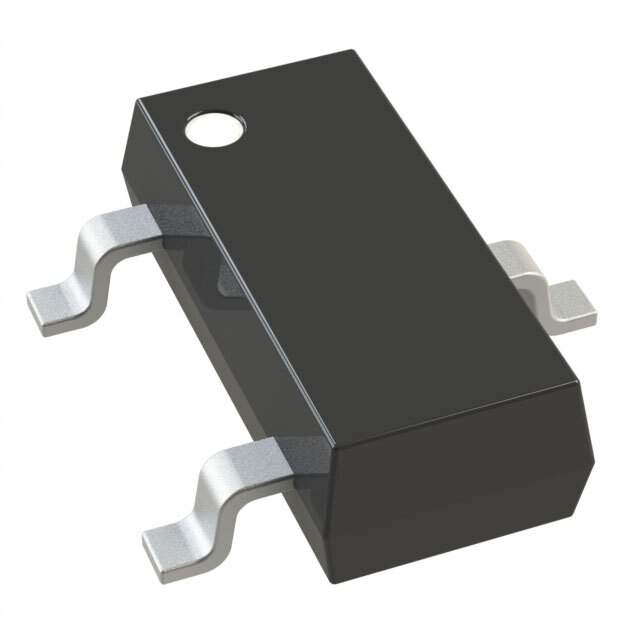
15V zener pair, 300mW ceiling, SOT-23-3 package, -65°C to 150°C operating range
Quick Engineering Summary
| Field | Value |
|---|---|
| Manufacturer | Diodes Incorporated |
| Category | Diodes - Zener - Arrays |
| Package | SOT-23-3 |
| Core function | DIODE ZENER ARRAY 15V SOT-23-3 |
| Key electrical range | Maximum Power Dissipation: 300mW; Supply and Demand Status: Balance; Temperature Range - Operating: -65°C to 150°C; Tolerance: ±5% |
| Reported stock | 2590 pcs reported — confirm on RFQ |
Can you design DZ23C15-7-F into a new board?
Can this go on a new board without drama? Yes, if the requirement is specific: a 15V zener array in SOT-23-3 with 1 pair common cathode.
That makes DZ23C15-7-F a sensible board-level clamp or reference element when two nodes need the same cathode connection and board area is tight. The lifecycle picture is clean, with Active status and EU RoHS stated. What remains open is the behavior that usually decides margin in the field: surge handling, leakage at reverse bias, and forward conduction loss are not listed here.
So the call is simple. It fits teams that already know they want a common-cathode 15V pair, not a single zener or a bidirectional TVS.
The real ceiling here is dissipation, not nominal voltage
Dissipation is the limit.
300mW is the maximum power dissipation, and that ceiling decides whether repeated clamp duty is realistic in a SOT-23-3 body.
15V, ±15%, and 30 Ohm define where it fits
15V sets the starting point, but it does not tell the whole story until you put it next to the ±15% tolerance and 30 Ohm maximum impedance.
The nominal zener rating and wide tolerance push this part toward rail protection and simple bias limiting, not jobs that depend on a narrowly held threshold. If the circuit needs a sharply defined trip point, this listing does not support that use. If it needs a compact clamp around a 15V-class node, it does.
The 30 Ohm maximum impedance matters for the same reason: breakdown is not perfectly stiff, so clamp voltage can move as current changes. That steers DZ23C15-7-F toward housekeeping protection, input limiting, and modest reference duty rather than applications where transient accuracy carries the whole design. In a dense SMT layout, the SOT-23-3 package and common-cathode topology are the real attraction, because they let two matched 15V zener elements share one cathode node without spending more area than the footprint allows.
That same topology also narrows the fit. DZ23C15-7-F is wrong for isolated dual clamps, through-hole service work, or designs that need a published surge number before release. It is right for compact layouts that need two 15V zener elements tied to one cathode node.
Buy it for running lines, but mind the missing curves
Buyable now.
Stock shows 2590, packaging is Reel - TR, and supply-demand is marked Balance. The open items are concrete ones: reverse leakage at Vr, forward voltage at If, pinout confirmation, and any surge or transient current limit. That leaves DZ23C15-7-F easy to place on a BOM and harder to sign off for abuse cases or tight analog limits.
View the Win-Source product page for DZ23C15-7-F.
Key Takeaways for Engineers & Buyers
- Keep clamp expectations inside the 15V nominal zener rating and the ±15% tolerance band.
- Budget dissipation against the 300mW ceiling before using both diodes in the common-cathode pair.
- Buy on reel only; line setup should expect TR packaging and current stock of 2590.