
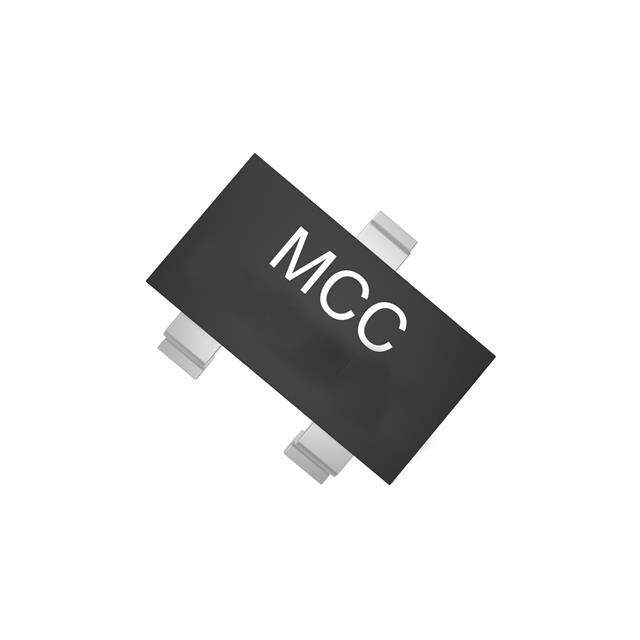
15V nominal Zener, 300mW ceiling, SOT-23 common-cathode pair, -65°C to 150°C operating range
Quick Engineering Summary
| Field | Value |
|---|---|
| Manufacturer | Micro Commercial Co |
| Category | Diodes - Zener - Arrays |
| Package | SOT-23 |
| Core function | DIODE ZENER ARRAY 15V SOT-23 |
| Key electrical range | Current - Reverse Leakage @ Vr: 100nA @ 11V; Maximum Power Dissipation: 300mW; Supply and Demand Status: Balance; Temperature Range - Operating: -65°C to 150°C |
| Reported stock | 1 pcs reported — confirm on RFQ |
15V is the reason to look at it
15V sets the appeal. It places DZ23C15-TP in low-power clamp or reference work around a 15V threshold, while stock shown at 1 is the real buying constraint despite Active status and EU RoHS compliance.
Use it for light clamp duty, not as a vague protection catch-all
It fits.
A paired 15V Zener in one SOT-23 is the real draw here, and the common cathode topology earns its keep only when that shared node is exactly what the schematic wants. In that case, DZ23C15-TP saves board area, keeps the network discrete, and stays easy to place in tape-based assembly.
The limits are just as clear. This part belongs in light clamp or reference duty, not in a protection role where the decision depends on surge handling, thermal resistance, or dynamic behavior, because those are the missing numbers and they are the ones that separate a neat symbol on the page from a part that survives the field.
The listed ratings define the boundary. Maximum power dissipation is 300mW, so that number is a ceiling, not a normal operating target. The operating range of -65°C to 150°C says the silicon spans a wide temperature range, but without a derating curve it says little about real ambient headroom once the clamp is working. The 15V nominal value also carries a ±5% tolerance, so rail margin and trip spread have to absorb that window instead of assuming one crisp knee.
One more number matters: 30 Ohm maximum Zzt. That tells you the Zener region is not especially stiff, so clamp voltage will move with current, and the missing curve matters more if the circuit needs a tightly held limit.
300mW is a ceiling, not your operating plan
300mW is the hard stop.
With an SOT-23 package, that keeps the device in the small-signal lane. It is a compact array for modest energy, not a part to drop into a line and expect to absorb abuse. Reverse leakage, 100nA @ 11V, is useful on bias-sensitive nodes because off-state loading stays low at that stated reverse voltage, but it does not answer what leakage does at 15V. The listing supports a low-leakage intent and a 15V nominal clamp point. It does not close the stress case.
What the listing still does not settle
And that is where the page runs out of answers. The pinout or package drawing still matters, because a common-cathode array is only convenient when the shared node lands where the layout expects it. The forward-voltage figure is also absent, and that matters if the design can ever drive the junction forward instead of only into Zener breakdown.
The remaining gaps are the ones that finish protection work: surge or overload capability such as IFSM, plus thermal resistance or a derating curve. Without those, DZ23C15-TP can go on a BOM for light clamp duty, but the stress margin is still not defended from this page alone.
View the Win-Source product page for DZ23C15-TP.
Key Takeaways for Engineers & Buyers
- Treat 300mW as the dissipation ceiling; don’t assign DZ23C15-TP to clamp duty without the thermal path and surge case.
- Use the 1 pair common cathode configuration to simplify dual-rail clamping only if that shared node matches the schematic.
- Book supply early or qualify timing around it; listed stock is 1 and packaging is Reel - TR, 3k pcs.