
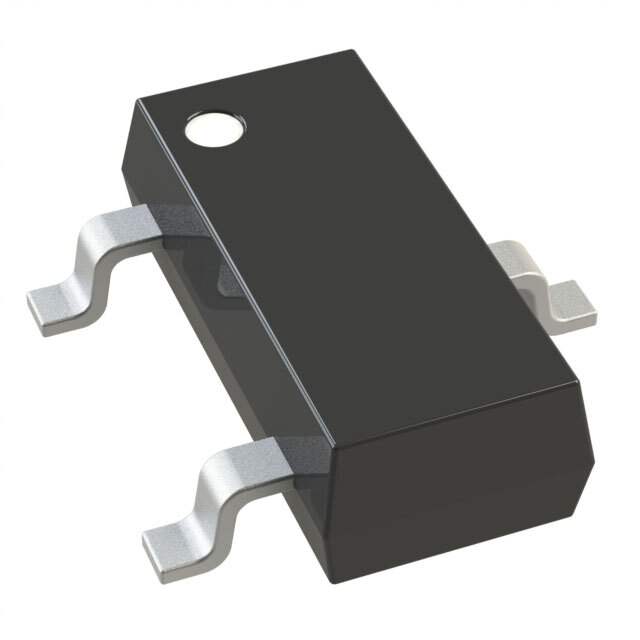
18V nominal zener, 300mW ceiling, SOT-23-3, -65°C to 150°C operating range
Quick Engineering Summary
| Field | Value |
|---|---|
| Manufacturer | Diodes Incorporated |
| Category | Diodes - Zener - Arrays |
| Package | SOT-23-3 |
| Core function | DIODE ZENER ARRAY 18V SOT-23-3 |
| Key electrical range | Maximum Power Dissipation: 300mW; Supply and Demand Status: Balance; Temperature Range - Operating: -65°C to 150°C; Tolerance: ±5% |
| Reported stock | 2910 pcs reported — confirm on RFQ |
Good for new builds, with one obvious limit
Use it.
Active status with no lifecycle conflict makes it a fair new design-in choice when you need a 1 pair common cathode device in SOT-23-3. One limit stands out: 300mW is a ceiling, and the small package sets how much abuse the clamp can absorb.
Not for heavy surge work; fine for compact rail clamping
Heavy surge duty is not its job.
The only listed power number is 300mW maximum and the package is SOT-23-3, so this is the wrong part for protection work that lives on pulse energy or high dissipation. That rules out treating it like a line-side surge part.
It fits dense board-level clamping around an 18V node, especially when the common-cathode pair already matches the topology. The 18V zener value with ±5% tolerance sets the clamp target, not a precision reference. The 50 Ohm maximum impedance matters too, because a soft zener under current can move more than you want; if the downstream circuit is sensitive to clamp stiffness, that number is the first warning sign.
Can you keep a line running on DZ23C18-7-F?
Can you actually buy it in production quantity?
Right now, yes. The part is listed Active, packaging is Reel - TR, and stock is shown as 2910, with another quantity field at 10100. For a running SMT line, that combination says more than a long feature list because it points to a part set up for placement equipment rather than odd packaging.
The electrical numbers still need a conservative read. The 18V zener rating is nominal, not an exact clamp promise across current, and the ±5% tolerance leaves real spread around that target. The operating range of -65°C to 150°C says the silicon is meant to survive broad ambient and junction conditions, but it does not settle the thermal question on its own; the 300mW maximum dissipation remains the ceiling that decides whether the package stays comfortable or cooks during repeated clamp events.
Buy it for sustained builds if the topology wants a common-cathode pair and the board already expects SOT-23-3. Hold off if your review still depends on transient behavior, because the listing does not include reverse leakage at Vr, forward voltage at If, or any surge current figure, and those numbers separate a tidy BOM choice from a field-return generator.
The missing numbers are the real review blockers
And that is the weak spot.
You get enough here to place the part class, package, and basic clamp level, but not enough to close a protection review.
The missing items that matter are reverse leakage at Vr, forward voltage at If, surge current, and a package drawing or pinout detail beyond SOT-23-3 naming. Reverse leakage decides whether the protected node drifts where it shouldn't. Forward voltage matters if the array can be driven in the forward direction during fault cases. Surge current is the missing stress number for clamp duty. The package name alone is not the same as a drawing when pad layout and orientation have to be frozen.
View the Win-Source product page for DZ23C18-7-F.
Key Takeaways for Engineers & Buyers
- Keep DZ23C18-7-F on rails that need an 18V clamp target, not lower-voltage protection.
- Treat 300mW as the dissipation ceiling and size board copper around the SOT-23-3 package.
- Buy on reel for the running line; current stock shows 2910.