
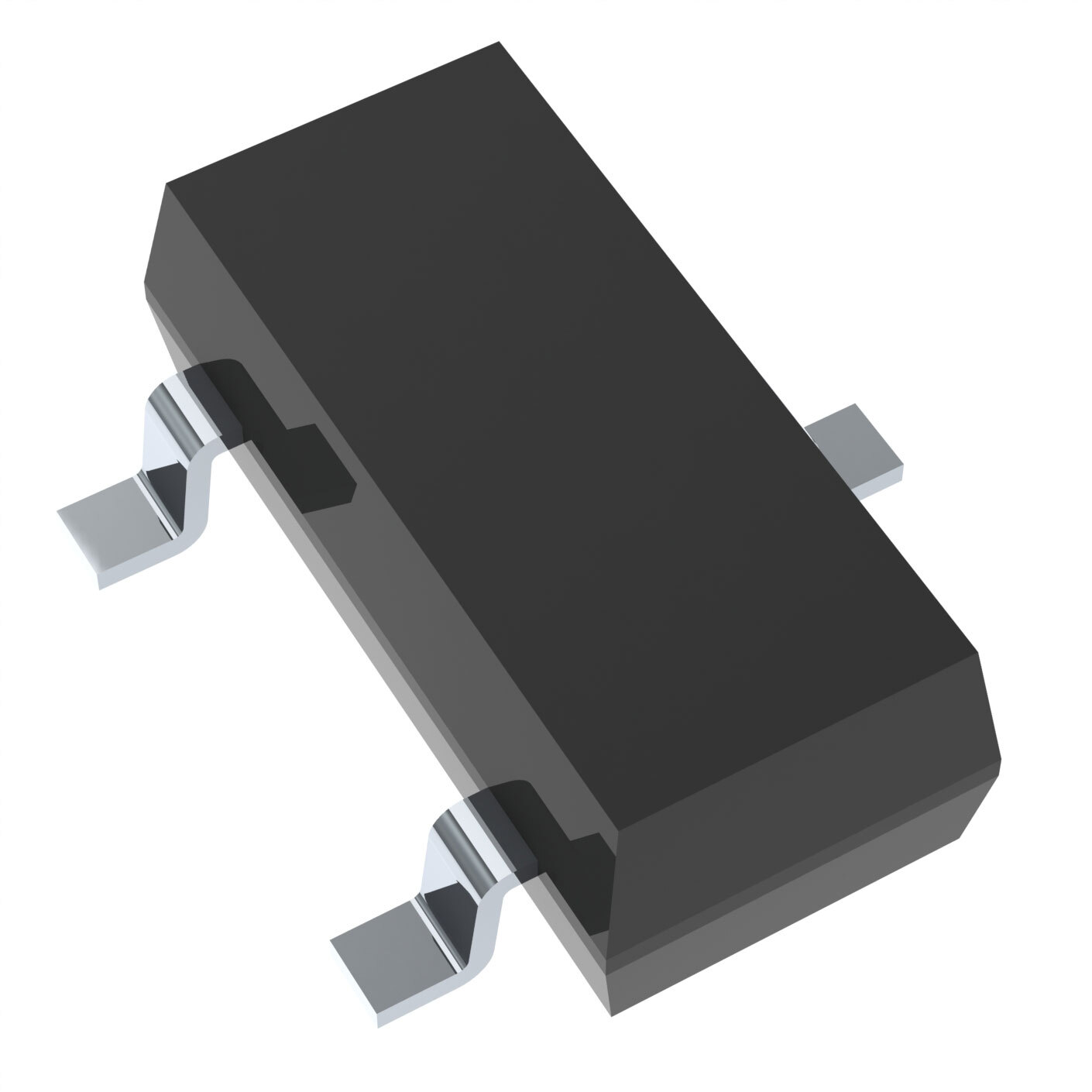
18 V nominal, 300 mW ceiling, SOT-23-3, -55°C to 150°C, common-cathode zener pair
Quick Engineering Summary
| Field | Value |
|---|---|
| Manufacturer | Vishay |
| Category | Diodes - Zener - Arrays |
| Package | TO-236-3, SC-59, SOT-23-3 |
| Core function | DIODE ZENER ARRAY 18V SOT-23-3 |
| Key electrical range | Current - Reverse Leakage @ Vr: 100 nA @ 14 V; Power - Max: 300 mW; Supply and Demand Status: Normal; Temperature Range - Operating: -55°C ~ 150°C |
| Reported stock | 12394 pcs reported — confirm on RFQ |
Good for new builds, with one clear boundary
Use it.
This part is Active, carries low lifecycle risk, shows normal supply status, and is EU RoHS compliant. That is enough to clear the lifecycle question for a fresh BOM.
The real boundary is functional. It is a 1 pair common cathode device in SOT-23-3 with an 18 V nominal zener value and ±5% tolerance, so it fits compact rail clamping or reference duties that actually need that paired common-cathode structure. It does not answer surge handling, board-level thermal headroom, or pin-level interchangeability, because those details are not included here.
Not for precision rails; fine for compact 18 V clamping
Start with where it fails. This is not the part for a tight rail window or for a low-impedance clamp.
The listed tolerance is ±5%, and the maximum zener impedance is 50 Ohms. Those two numbers do most of the sorting because they set how far the clamp point can shift and how soft the knee can look as current moves. If the design needs exact regulation across operating current, the category alone will not save it.
Where it does fit is dense board work that needs two zeners in a common-cathode arrangement inside SOT-23-3. The 18 V nominal value points to the clamp family, but it remains nominal rather than an exact regulation promise across all conditions, and the 300 mW maximum stays a ceiling rather than a usable operating target.
That matters in a small surface-mount body, where casual assumptions about dissipation go bad quickly. If the fault case depends on sustained power, the missing thermal detail becomes the real limit and the board context has to carry the decision.
Reverse leakage is modest at 100 nA @ 14 V, which helps when the protected node cannot spare much off-state bleed. Still, that figure says little about behavior near breakdown, and it does not replace the missing curves.
The weak spot is missing detail, not supply
The weak point is the missing detail. Supply is the easy part.
Stock is healthy at 12394 and the package is Tape & Reel, so line support looks straightforward.
What is missing is what closes edge cases: no pinout drawing, no package drawing, no thermal resistance, and no zener voltage test conditions or curve detail beyond the nominal 18 V point. For a common-cathode array, pinout is not a footnote; get it wrong and the board comes back dead. Thermal resistance matters just as much, because 300 mW only sets the ceiling while the thermal path decides how fast you reach it.
12394 pieces remove the immediate buy-side friction
12394 pieces remove the immediate availability question.
That matters because a small protection part like this can hold up an otherwise routine build when the exact topology is missing. Here the constraint is specificity, not stock: buy it when the design truly needs a 1 pair common cathode zener array in SOT-23-3.
If the topology is already fixed on the board, move. If the schematic only says “18 V zener,” stop and resolve the array orientation before release.
View the Win-Source product page for DZ23C18-G3-18.
Key Takeaways for Engineers & Buyers
- Keep DZ23C18-G3-18 on rails that need an 18 V clamp, not a tighter tolerance than ±5%.
- Budget dissipation against the 300 mW ceiling before treating the SOT-23-3 footprint as interchangeable.
- Use the 12394 stock on hand for current builds, then confirm the exact common-cathode pinout on the datasheet.