
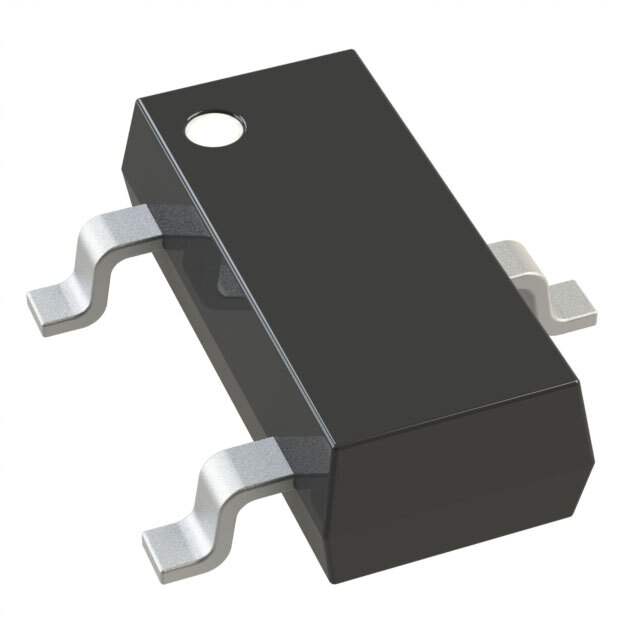
20V zener array, 300mW ceiling, SOT-23-3, -65°C to 150°C, common-cathode pair
Quick Engineering Summary
| Field | Value |
|---|---|
| Manufacturer | Diodes Incorporated |
| Category | Diodes - Zener - Arrays |
| Package | SOT-23-3 |
| Core function | DIODE ZENER ARRAY 20V SOT-23-3 |
| Key electrical range | Maximum Power Dissipation: 300mW; Supply and Demand Status: Balance; Temperature Range - Operating: -65°C to 150°C; Tolerance: ±5% |
| Reported stock | 987 pcs reported — confirm on RFQ |
987 pieces is enough to start, and the part is current
987 pieces are listed. More important, the part is Active with low risk and no conflicting lifecycle signal, so it is a reasonable candidate for new design-in and sustaining builds.
EU RoHS is listed, which clears a routine compliance check. The package and function matter more here: this is a 1 pair common cathode zener array in SOT-23-3, suited to two clamp paths that share a node when board area is tight. Reel - TR packaging points to normal SMT assembly rather than hand-loaded service stock.
300mW is the ceiling that decides whether it survives
300mW is the first number to respect. It is the maximum power dissipation ceiling, and in SOT-23-3 it quickly separates a workable light clamp or reference function from a part that runs hot under repeated stress.
The 20V zener rating sets the nominal clamp level. That still leaves behavior under current open, because the listing gives only ±5% tolerance and 50 Ohm maximum Zzt. If rail margin is narrow, that 50 Ohm ceiling matters: zener voltage can shift materially with current, so the nominal 20V is not enough by itself to close the call.
One more line item helps. Reverse leakage is listed as 100 nA at 15 V, which supports use on nodes that cannot spare much standby loss below the zener point. Even so, the listing does not show surge behavior, and nothing here supports treating this as a heavy transient-energy part.
The weak spot is missing transient detail
The weak spot is the missing transient detail. Pinout, package drawing, surge or pulse-current limit, and reverse-recovery time are not here, and those gaps matter if switching behavior or clamp stress drives the decision.
Wrong for broad surge claims, right for compact dual clamps
Wrong for blind surge design. With only 300mW maximum power dissipation and no pulse-current or derating curve in view, this is not the part to drop onto a line just because 20V looks convenient.
It fits compact board-level clamp or reference work that benefits from a common-cathode pair in one SOT-23-3 package. The -65°C to 150°C operating range keeps it in play across harsh ambient programs, but that span does not excuse self-heating. Use it where the dual topology saves space and routing; skip it where missing transient data would leave qualification arguments unresolved.
View the Win-Source product page for DZ23C20-7-F.
Key Takeaways for Engineers & Buyers
- Keep DZ23C20-7-F on rails and nodes that need a 20V zener ceiling, not a tighter clamp.
- Budget dissipation against the 300mW maximum before you commit this SOT-23-3 footprint.
- Pull the datasheet for pinout and reverse leakage at 15 V before layout freeze.