
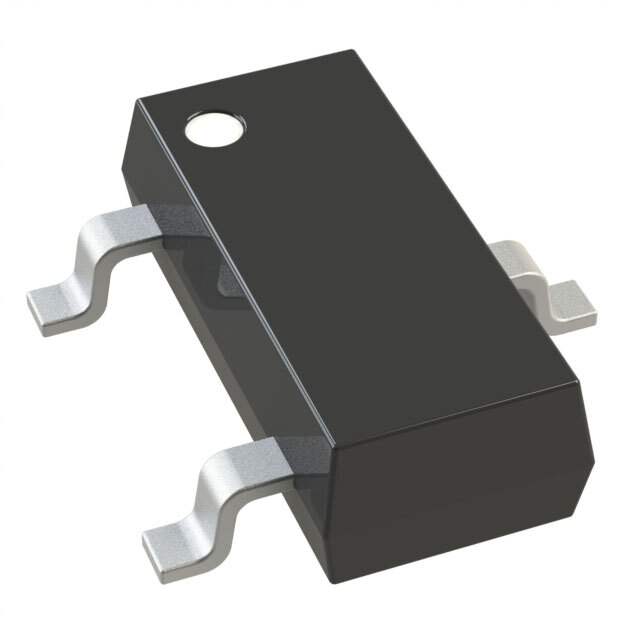
24V nominal zener array, 300mW ceiling, SOT-23-3, -65°C to 150°C operating range
Quick Engineering Summary
| Field | Value |
|---|---|
| Manufacturer | Diodes Incorporated |
| Category | Diodes - Zener - Arrays |
| Package | SOT-23-3 |
| Core function | DIODE ZENER ARRAY 24V SOT-23-3 |
| Key electrical range | Maximum Power Dissipation: 300mW; Supply and Demand Status: Balance; Temperature Range - Operating: -65°C to 150°C; Tolerance: ±5% |
| Reported stock | 6230 pcs reported — confirm on RFQ |
Use it to sustain a line, not to start one
Sustaining only.
Lifecycle status is the problem here. One field says Active, while another says 停止提供, and that conflict is enough to keep this out of a fresh design unless you already know why this exact 1 Pair Common Cathode array matters. For an existing production build, the 6230 stock and Reel - TR packaging are workable, and EU RoHS is straightforward.
The 24V mark does not settle the clamp by itself
And 24V still needs restraint. DZ23C24-7 is nominally 24V with ±15%, and the 80 Ohm Zzt is a ceiling on impedance, not a promise of a stiff clamp.
The real limit is shared dissipation in a tiny body
Shared dissipation is the constraint.
A SOT-23-3 body with a 300mW maximum power dissipation leaves little room for optimism, especially when 1 Pair Common Cathode puts both zeners into the same small package and any real protection event has to live inside that thermal envelope.
That makes DZ23C24-7 useful on compact board-level rail limiting or dual-node protection where the topology is exactly right and the clamp duty is modest. It is the wrong part when thermal headroom is thin or surge energy is uncertain, because the listing gives you the 300mW ceiling and little else about transient behavior.
The -65°C to 150°C operating range is broad, so ambient qualification is not the first objection. The thermal question stays open anyway because there is no thermal resistance and no derating curve. There is also a reverse leakage point, 100 nA at 18 V, but that is only a leakage ceiling at that stated condition, not a fuller leakage picture across temperature. On dense digital or mixed-signal boards, footprint can justify the trade. When the protection event is energetic enough that package heating decides the outcome, it can't.
What is still missing before you trust it
What would stop a release first?
The missing electrical and mechanical detail. A proper pinout and package drawing are still needed before layout, and the forward-voltage entry is blank here if either junction can ever be forward biased.
The other gaps are the ones that decide protection behavior under stress: no derating curve, no thermal resistance, no surge or overload figure, and no capacitance or recovery data. Those omissions matter more than another line of copy because they separate a harmless rail clamp from a field return.
View the Win-Source product page for DZ23C24-7.
Key Takeaways for Engineers & Buyers
- Treat 300mW as the dissipation ceiling when both zeners share one SOT-23-3 body.
- Hold rail tolerance against the 24V nominal value and ±15% tolerance before releasing the clamp point.
- If this goes into existing production, secure the 6230 pieces now and clear the lifecycle conflict first.