
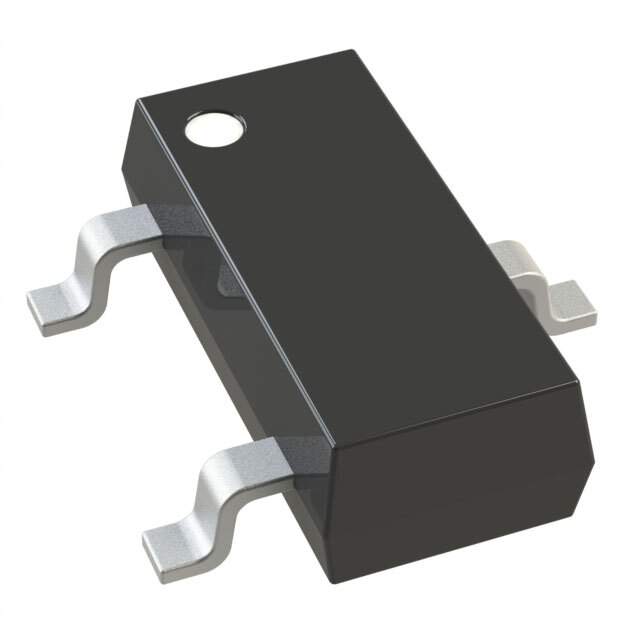
27V nominal zener, 300mW ceiling, SOT-23-3, -65°C to 150°C, common-cathode pair
Quick Engineering Summary
| Field | Value |
|---|---|
| Manufacturer | Diodes Incorporated |
| Category | Diodes - Zener - Arrays |
| Package | SOT-23-3 |
| Core function | DIODE ZENER ARRAY 27V SOT-23-3 |
| Key electrical range | Maximum Power Dissipation: 300mW; Supply and Demand Status: Balance; Temperature Range - Operating: -65°C to 150°C; Tolerance: ±5% |
| Reported stock | 1 pcs reported — confirm on RFQ |
300mW is the number that decides this part
300mW is the ceiling that decides whether DZ23C27-7-F works in the circuit or fails in the package. The 27V nominal zener value tells you where the clamp roughly sits, but dissipation is the harder limit in a small SOT-23-3 array, especially when the event energy is not trivial.
The rest of the listing supports a conservative new design-in call. It is marked Active with no lifecycle conflict, and the common-cathode 1 pair configuration fits dual-line clamping or paired reference nodes where board area is tight. EU RoHS is straightforward. What remains open is pulse handling, the thermal path, and the exact connection geometry.
The stock picture is weak, but the package fit is clear
The weak point is supply visibility. One quantity field says 1, while another says 4485. That does not rule out DZ23C27-7-F for a new schematic, but it does mean an immediate build needs a live availability check before release.
The package fit is clearer. SOT-23-3 and SMD mounting place it in dense board-level protection, not in work that needs generous thermal mass or easy leaded service access. The 1 pair common-cathode arrangement helps when two nodes share the same return reference. Reel - TR packaging also points to automated assembly rather than bench rework.
27V nominal is useful only if your margin is real
Use it carefully.
DZ23C27-7-F gives you a 27V nominal zener with ±15% tolerance, and that combination sets the real margin question. If the protected node can absorb movement around that nominal value, the array stays in play. If the clamp window is tight, ±15% is an immediate concern, because the listing gives no finer bin and no curve detail showing how sharply the device reaches that region.
The 80 Ohm maximum impedance matters for the same reason. It is a ceiling on how soft the zener behavior can be, not a promise of a stiff reference. In protection service, that leaves uncertainty in how firmly DZ23C27-7-F holds a stressed node near nominal. In reference service, the same limitation shows up in a different way. The operating temperature range of -65°C to 150°C is broad enough for harsh ambient conditions, but it does not answer how the zener behavior shifts across that span, because no temperature coefficient is listed.
Several missing items keep the stress case open. There is no reverse leakage figure, no forward voltage at a stated current, no derating curve, and no thermal resistance. On a zener array this small, those are the numbers that separate a harmless clamp from a hot one.
The real datasheet gaps are electrical, not clerical
The constraint is stress uncertainty. For DZ23C27-7-F, the missing items are reverse leakage, forward voltage at a stated current, thermal resistance or derating, and a package drawing or pinout.
View the Win-Source product page for DZ23C27-7-F.
Key Takeaways for Engineers & Buyers
- Treat 300mW as the dissipation ceiling; check whether both zeners can conduct in the same fault case.
- Match the clamp target to 27V nominal and ±15% tolerance before using DZ23C27-7-F on a tight rail.
- Resolve stock before release: one source shows 1 on hand while another shows 4485.