
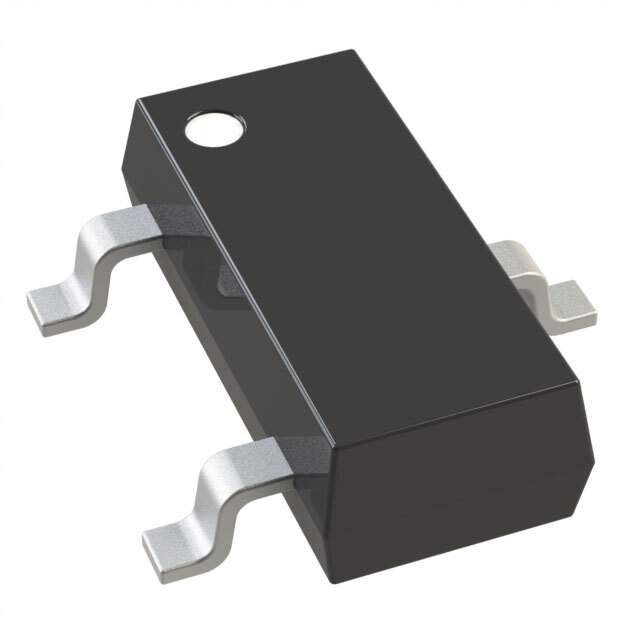
2.7V nominal, 300mW ceiling, 83 Ohm max impedance, SOT-23-3, -65°C to 150°C operating
Quick Engineering Summary
| Field | Value |
|---|---|
| Manufacturer | Diodes Incorporated |
| Category | Diodes - Zener - Arrays |
| Package | SOT-23-3 |
| Core function | DIODE ZENER ARRAY 2. |
| Key electrical range | Maximum Power Dissipation: 300mW; Supply and Demand Status: Limited; Temperature Range - Operating: -65°C to 150°C; Tolerance: ±5% |
| Reported stock | 1 pcs reported — confirm on RFQ |
Still usable for new work, but only in small-signal roles
And that is the real call on DZ23C2V7-7-F: it is an Active part, so lifecycle does not block a new design, but the electrical listing supports conservative use as a low-voltage zener pair in a very small package, not as a catch-all clamp.
The fit is narrow. A 2.7V nominal Vz with ±5% tolerance works for low-voltage reference or protection nodes where some spread is acceptable, and the 1 Pair Common Cathode configuration matters when two zeners need to share that node in SOT-23-3. EU RoHS is compliant. The harder issue is supply, not status: stock is 1 and supply is Limited, so line up actual reel availability before releasing it onto a fresh build.
The ceiling is dissipation, not the 2.7V label
The constraint is heat in a tiny body. The 300mW maximum power dissipation is a ceiling, and it does not define a safe steady operating point in your board stackup because no thermal resistance or derating curve is listed.
The 2.7V zener value answers only one question: whether the clamp level belongs near that rail. It does not settle regulation quality. The 83 Ohm maximum Zzt says the zener voltage can shift materially with current, so the part fits light protection or bias duties more comfortably than any node where tight dynamic regulation is the whole job.
83 Ohm is the number that decides whether this clamp behaves
83 Ohm is high enough to frame this as a modest zener array, not a stiff low-voltage reference. At 2.7V nominal and ±5%, you already start with spread around the target value; add a maximum Zzt of 83 Ohm and the voltage-current behavior is not pinned down tightly enough here for precision work, especially in SOT-23-3 with a 300mW dissipation ceiling.
That pushes it toward specific uses. It suits tight board area, and the common-cathode pair can simplify routing when the protected or biased node can tolerate movement around the nominal zener point. It does not read as the right choice for a rail that must hold close under changing current, and it does not read as a heavy transient absorber because no surge figure is listed while the package leaves little thermal slack.
The operating range of -65°C to 150°C is broad, but it is still only an operating temperature range. It does not show how the zener behavior moves across that span, and for DZ23C2V7-7-F those missing curves matter more than the headline temperature number.
The missing curves are the real review blocker
300mW is not enough. The listing does not give reverse leakage at Vr, forward voltage at If, thermal resistance, derating curve, or pinout. Those are the items that close clamp current, polarity use, and ambient headroom for DZ23C2V7-7-F.
View the Win-Source product page for DZ23C2V7-7-F.
Key Takeaways for Engineers & Buyers
- Treat 300mW as the dissipation ceiling; keep DZ23C2V7-7-F out of clamp jobs that live near it.
- Use the 83 Ohm max Zzt as a warning that 2.7V regulation will move under current.
- Secure reel planning now; stock is 1 and supply status is Limited.