
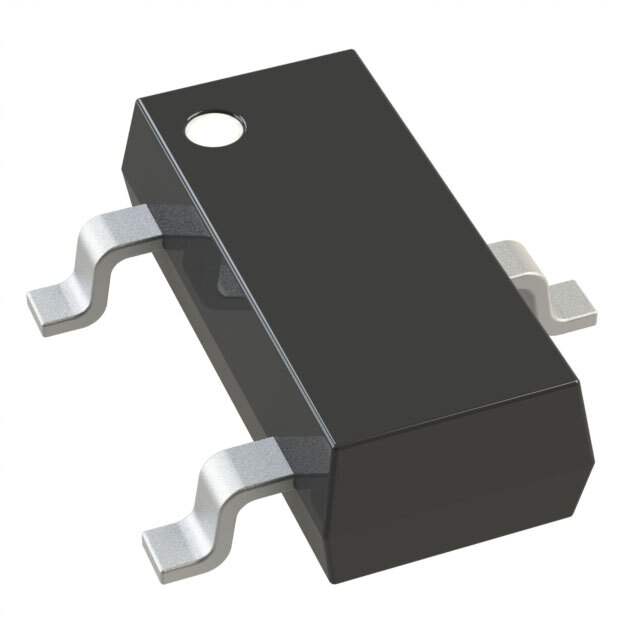
30V nominal Zener, 300mW ceiling, SOT-23-3, -65°C to 150°C operating range
Quick Engineering Summary
| Field | Value |
|---|---|
| Manufacturer | Diodes Incorporated |
| Category | Diodes - Zener - Arrays |
| Package | SOT-23-3 |
| Core function | DIODE ZENER ARRAY 30V SOT-23-3 |
| Key electrical range | Maximum Power Dissipation: 300mW; Supply and Demand Status: Balance; Temperature Range - Operating: -65°C to 150°C; Tolerance: ±5% |
| Reported stock | 33000 pcs reported — confirm on RFQ |
300mW is the number that decides this part
300mW is the ceiling that decides whether DZ23C30-7-F fits the job. The 30V nominal Zener value sets the clamp or reference neighborhood, but the maximum power dissipation is what separates a lightly loaded sense node from a rail that can sit in breakdown long enough to overheat a small package. Get that wrong and the package becomes the failure point before the nominal voltage tells you much of anything.
The rest of the picture is narrow but usable. DZ23C30-7-F is a 1 Pair Common Cathode array in SOT-23-3, which points it toward compact dual-node protection or paired reference duties where shared cathode routing is actually helpful. The ±5% tolerance works when the circuit can absorb spread around 30V, but it does not support precision thresholding on its own. The listed -65°C to 150°C operating range clears one common objection on ambient range, yet it still says nothing about thermal headroom once dissipation starts to matter. Active lifecycle status and EU RoHS compliance keep it viable for new design-in, while the thin electrical listing leaves clamp behavior and thermal budgeting as the real open items.
The package and topology narrow the use case fast
The constraint is density versus energy handling. SOT-23-3 and a common-cathode pair push this device toward compact board-level protection, bias limiting, or dual-line clamping where board area matters and event energy stays modest. It fits signal interfaces, monitor points, and housekeeping rails that need a 30V-class ceiling without spending more footprint than the node deserves.
It does not read as a part for heavy surge absorption or for designs that expect the Zener to live near breakdown as a normal condition. The 80 Ohm maximum impedance matters too: this listing does not make a case for a tight, low-dynamic-impedance clamp under changing current. Reel - TR packaging is the practical assembly constraint, so it belongs in automated flow rather than a hand-load process that gains nothing from this package choice.
Wrong for precision or surge-heavy jobs
Wrong for precision references and surge-heavy jobs. Better for compact dual-node limiting where 30V nominal and ±5% are acceptable, and where the 300mW ceiling remains a ceiling instead of becoming a steady operating point.
33000 pieces help, but the datasheet gaps still matter
33000 pieces help. For a running line, that removes the immediate availability argument against DZ23C30-7-F and supports a straightforward reel buy when this common-cathode topology is already qualified on the board.
What still blocks a confident electrical signoff is missing behavior, not stock. The listing does not include reverse leakage at Vr, forward voltage at If, surge current, thermal resistance, or a package drawing and pinout. Those are concrete gaps: leakage determines whether a protected node drifts when it should stay quiet, forward voltage matters if the array can be driven in the forward direction, surge current sets transient survivability, and the drawing closes the land-pattern and orientation check.
View the Win-Source product page for DZ23C30-7-F.
Key Takeaways for Engineers & Buyers
- Treat 300mW as the dissipation ceiling; close the thermal path before using DZ23C30-7-F as a sustained clamp.
- Use DZ23C30-7-F where a 30V nominal Zener with ±5% tolerance is acceptable at the node you are protecting or referencing.
- Buy on reel if the line is already set for TR; the listed stock is 33000.