
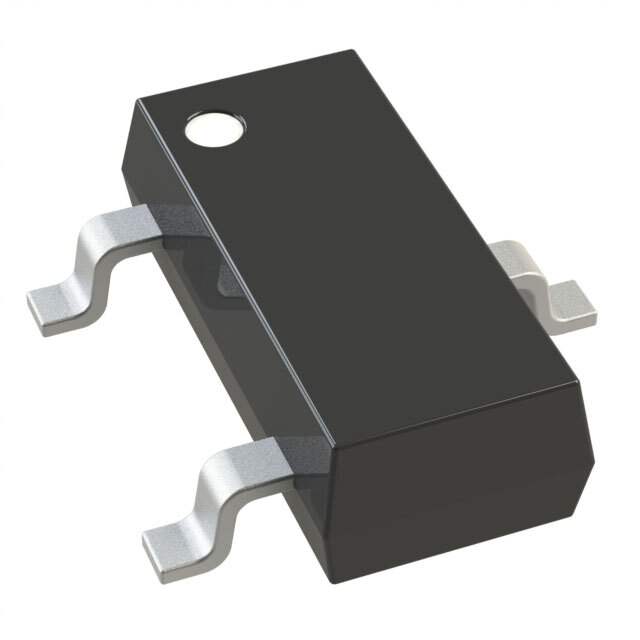
33V zener array, 300mW ceiling, SOT-23-3 package, -65°C to 150°C operating range
Quick Engineering Summary
| Field | Value |
|---|---|
| Manufacturer | Diodes Incorporated |
| Category | Diodes - Zener - Arrays |
| Package | SOT-23-3 |
| Core function | DIODE ZENER ARRAY 33V SOT-23-3 |
| Key electrical range | Maximum Power Dissipation: 300mW; Supply and Demand Status: Balance; Temperature Range - Operating: -65°C to 150°C; Tolerance: ±5% |
| Reported stock | 2975 pcs reported — confirm on RFQ |
The power ceiling is what decides this part
The constraint is simple: 300mW maximum power dissipation keeps this device in signal-level protection work, not in anything expected to absorb repeated heavy energy. Pair that with a 33V zener rating and the use case comes into focus fast: clamp or reference duty around a 33V threshold where event energy stays modest and the board already wants a tiny SOT-23-3 footprint.
Good for new design-in. Active lifecycle, low stated risk, and EU RoHS compliance remove the usual commercial hesitation, but the electrical numbers here still read as ceilings or nominal targets from a short listing, not as evidence of surge behavior or thermal margin.
Wrong for surge-heavy rails, right for compact 33V clamps
Wrong for a rail that lives on transient abuse. The listing gives 300mW maximum dissipation and 80 Ohm maximum impedance at Zzt, but it does not give IFSM, derating, or thermal resistance, so there is no basis here for calling DZ23C33-7-F a high-energy protector.
It fits denser board work that needs two zener elements in a 1 pair common cathode configuration. That detail matters more than the package headline because it decides whether the array drops into your node arrangement cleanly or forces crossed traces and a second footprint. If the schematic wants a common-anode pair or isolated singles, DZ23C33-7-F is the wrong geometry before voltage even enters the discussion.
The 33V zener value with ±5% tolerance settles one decision and leaves another open. It places the clamp target in the 33V class, and that spread may work for overvoltage limiting or coarse reference duty. It does not answer leakage at Vr or forward behavior, because those numbers are absent here. The -65°C to 150°C operating range is broad enough that ambient qualification is unlikely to be the first objection, yet without a derating curve it still does not show how much of the 300mW ceiling remains usable at the actual board temperature.
2975 pieces answers the immediate buy question
2975 pieces makes the near-term call easier. Reel packaging means DZ23C33-7-F is a practical line item for current builds, especially where placement already expects TR.
The missing numbers are the ones that close risk
What is still missing? Reverse leakage at Vr is absent, so standby loss and high-impedance node error stay open. Forward voltage at If is absent, so forward-driven behavior is still unclear. Thermal resistance and the derating curve are missing too, and those are the numbers that turn the 300mW ceiling into a real ambient limit.
Layout has its own gap. The listing names SOT-23-3 and TO-236-3, SC-59, SOT-23-3 package aliases, but it does not include the pinout or drawing here. For DZ23C33-7-F, that decides whether the common cathode lands where the board expects it.
View the Win-Source product page for DZ23C33-7-F.
Key Takeaways for Engineers & Buyers
- Keep DZ23C33-7-F in low-power clamp roles; 300mW is the dissipation ceiling, not design headroom.
- Match the common-cathode topology before layout; DZ23C33-7-F is 1 pair common cathode only.
- Buy on reel if the line is qualified for TR; listed stock is 2975.