
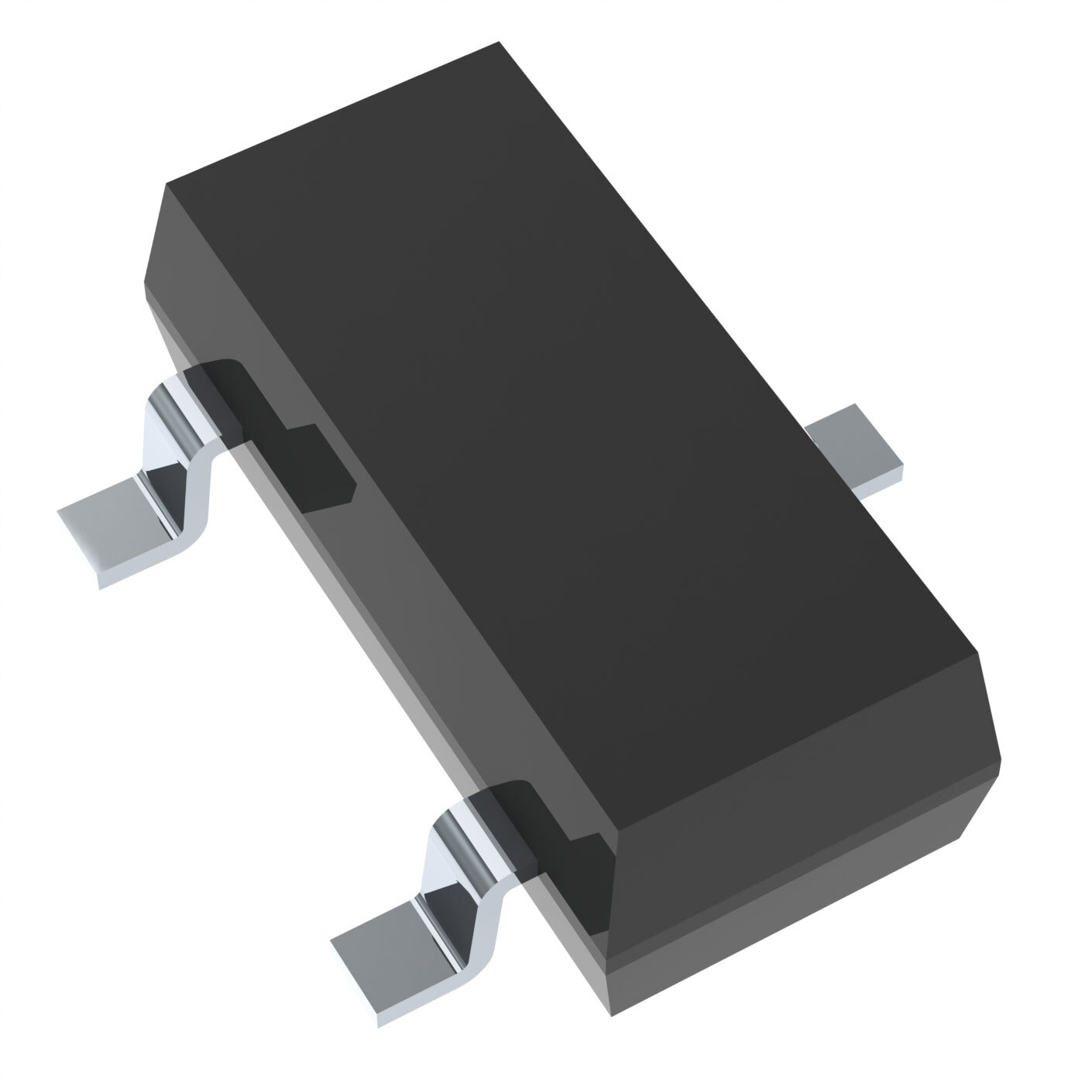
33 V nominal zener, 300 mW ceiling, SOT-23-3 common-cathode pair, -55°C to 150°C operating range
Quick Engineering Summary
| Field | Value |
|---|---|
| Manufacturer | Vishay |
| Category | Diodes - Zener - Arrays |
| Package | TO-236-3, SC-59, SOT-23-3 |
| Core function | DIODE ZENER ARRAY 33V SOT-23-3 |
| Key electrical range | Current - Reverse Leakage @ Vr: 100 nA @ 25 V; Power - Max: 300 mW; Supply and Demand Status: Normal; Temperature Range - Operating: -55°C ~ 150°C |
| Reported stock | 1 pcs reported — confirm on RFQ |
33 V is the clamp class, not the whole answer
33 V sets the protection class. For DZ23C33-E3-08, the ±5% tolerance says the clamp point is not a precision reference.
What it does not tell you is just as important: there is no forward-voltage figure, no zener curve, and no transient rating in the listing.
Can you actually buy it for a build?
Can this go on a running line now? Not from listed stock alone.
DZ23C33-E3-08 is Active and supply status is Normal, but the visible quantity is 1, so lifecycle is not the issue and immediate availability is. Keep it on the BOM as a valid candidate, not as line-ready supply.
Tape & Reel packaging fits automated assembly, and EU RoHS already aligns with most current builds. Reserve reel quantity before releasing a placement that depends on DZ23C33-E3-08.
Good for rail limiting, thin on surge detail
This one fits.
DZ23C33-E3-08 belongs in compact board-level protection and bias networks where a 33 V nominal zener pair and a common cathode solve two nodes in one SOT-23-3 footprint. The surface-mount package and 1 pair common cathode configuration suit layouts where board area matters more than through-hole serviceability.
The limits matter. The 300 mW power figure is a ceiling, so it defines the package dissipation budget rather than a normal operating point. The -55°C to 150°C operating range is broad enough for harsh ambient exposure, but without a derating curve you still do not know how much ambient headroom remains once the zeners are burning power. Reverse leakage is listed at 100 nA at 25 V, which is useful when the protected node cannot tolerate much standby bleed, but it is still only one leakage point rather than a full picture across voltage and temperature.
Wrong for surge-heavy clamps without more data
Wrong for surge-heavy clamps.
The listing does not give a transient current rating, pulse behavior, thermal resistance, or a package drawing, and those are the details that decide whether a small zener array survives real fault energy or only looks acceptable on a schematic.
Where DZ23C33-E3-08 does fit is quieter board protection, reference limiting, and paired clamp functions that benefit from the common-cathode arrangement. The 80 Ohms maximum impedance matters because it sets expectations for how stiff the zener behavior may be under load; if the circuit needs a tighter clamp as current changes, that ceiling is a warning, not reassurance.
The missing items are concrete: forward-voltage spec, transient or surge current capability, thermal resistance, and the mechanical pinout or drawing. Without them, you can place DZ23C33-E3-08 in a low-energy role with confidence, but not in a fault-path role where package heating and pulse survival decide field returns.
View the Win-Source product page for DZ23C33-E3-08.
Key Takeaways for Engineers & Buyers
- Treat 300 mW as the dissipation ceiling for the whole DZ23C33-E3-08 package, not a working target.
- Map the common-cathode topology before layout; DZ23C33-E3-08 is a 1 pair common cathode device in SOT-23-3.
- Do not release a build on listed stock of 1; place against reel supply only after confirming line quantity.