
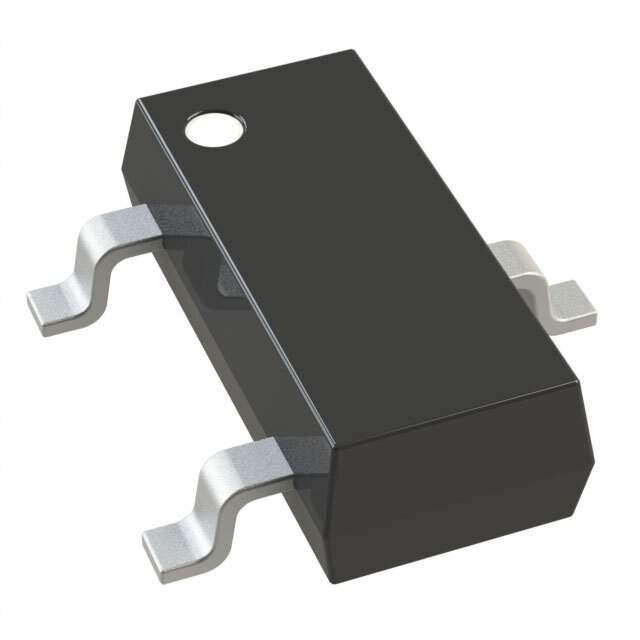
36V nominal zener array, 300mW ceiling, SOT-23-3, -65°C to 150°C operating range
Quick Engineering Summary
| Field | Value |
|---|---|
| Manufacturer | Diodes Incorporated |
| Category | Diodes - Zener - Arrays |
| Package | SOT-23-3 |
| Core function | DIODE ZENER ARRAY 36V SOT-23-3 |
| Key electrical range | Maximum Power Dissipation: 300mW; Supply and Demand Status: Balance; Temperature Range - Operating: -65°C to 150°C; Tolerance: ±5% |
| Reported stock | 1 pcs reported — confirm on RFQ |
Still, this is a real design-in candidate
Even so, the case for using DZ23C36-7-F starts with the combination that matters in practice: Active lifecycle, a defined 1 pair common cathode configuration, and a compact SOT-23-3 package that suits ordinary board-level protection or reference work.
The decision is not fully closed. RoHS compliance removes one routine compliance objection, but the electrical listing is still thin enough that the topology comes first and the exact stress margin comes second. For sustaining builds that already use this common-cathode arrangement, DZ23C36-7-F is straightforward. In a new design, it works when the missing reverse leakage and forward-voltage details are not the numbers that determine clamp behavior.
The 300mW limit is the real ceiling here
Use it carefully.
The number that drives the decision is 300mW maximum power dissipation. That is a hard ceiling, not a working target, and in a zener array it becomes the limit that decides whether a transient clamp or reference node stays inside the package budget once the board sees sustained stress. If the application expects repeated energy dumping, package headroom is the first question, not the nominal zener voltage.
The 36V zener voltage with ±5% tolerance defines a broad rail window rather than a precise threshold. It places DZ23C36-7-F around higher-voltage monitoring, bias, or protection nodes where some spread is acceptable, but it does not establish exact clamp behavior at the intended current because that current point is not listed here.
Then there is 90 Ohm maximum impedance at Zzt. That ceiling matters too, because it points to limited regulation stiffness. If the circuit depends on a sharp knee or a tightly held clamp voltage as current shifts, this listing does not prove that performance yet. The stated operating range of -65°C to 150°C is broad enough for harsh ambient conditions on paper, but without thermal resistance or a derating curve, it still does not show how much dissipation headroom remains across that span.
36V is only half the story
36V matters, but only with the right topology. DZ23C36-7-F fits board-level dual-node protection where a common cathode pair is exactly what the schematic calls for and SOT-23-3 density matters more than absolute clamp precision.
It is the wrong fit for a single-diode pin-compatible need, a low-impedance reference, or a fully characterized surge path.
Can you keep a running line on it?
Can you actually get it? Not without a quantity check. DZ23C36-7-F is marked Active and packaged on reel, which supports placement, but the available quantity is inconsistent: one field shows 1 and another field shows 614.
Freeze the BOM choice only after that is reconciled. For existing production, secure the exact quantity needed against the confirmed stock position rather than assuming the larger number is live.
What the listing still does not tell you
The constraint is incomplete electrical detail. DZ23C36-7-F is missing reverse leakage at Vr, forward voltage at If, and any thermal resistance or derating curve. Those values decide standby loss, fault behavior, and how closely the 300mW ceiling can be approached on a real board.
Pinout and package drawing are also absent here, even though the package names SOT-23-3, TO-236-3, and SC-59 appear in the listing. That identifies the family, but not enough to release land pattern or node assignment.
View the Win-Source product page for DZ23C36-7-F.
Key Takeaways for Engineers & Buyers
- Treat 300mW as the dissipation ceiling; the listing does not give thermal resistance.
- Use DZ23C36-7-F only where a 1 pair common cathode array matches the clamp topology.
- Resolve the quantity mismatch before release: stock shows 1, another field shows 614.