
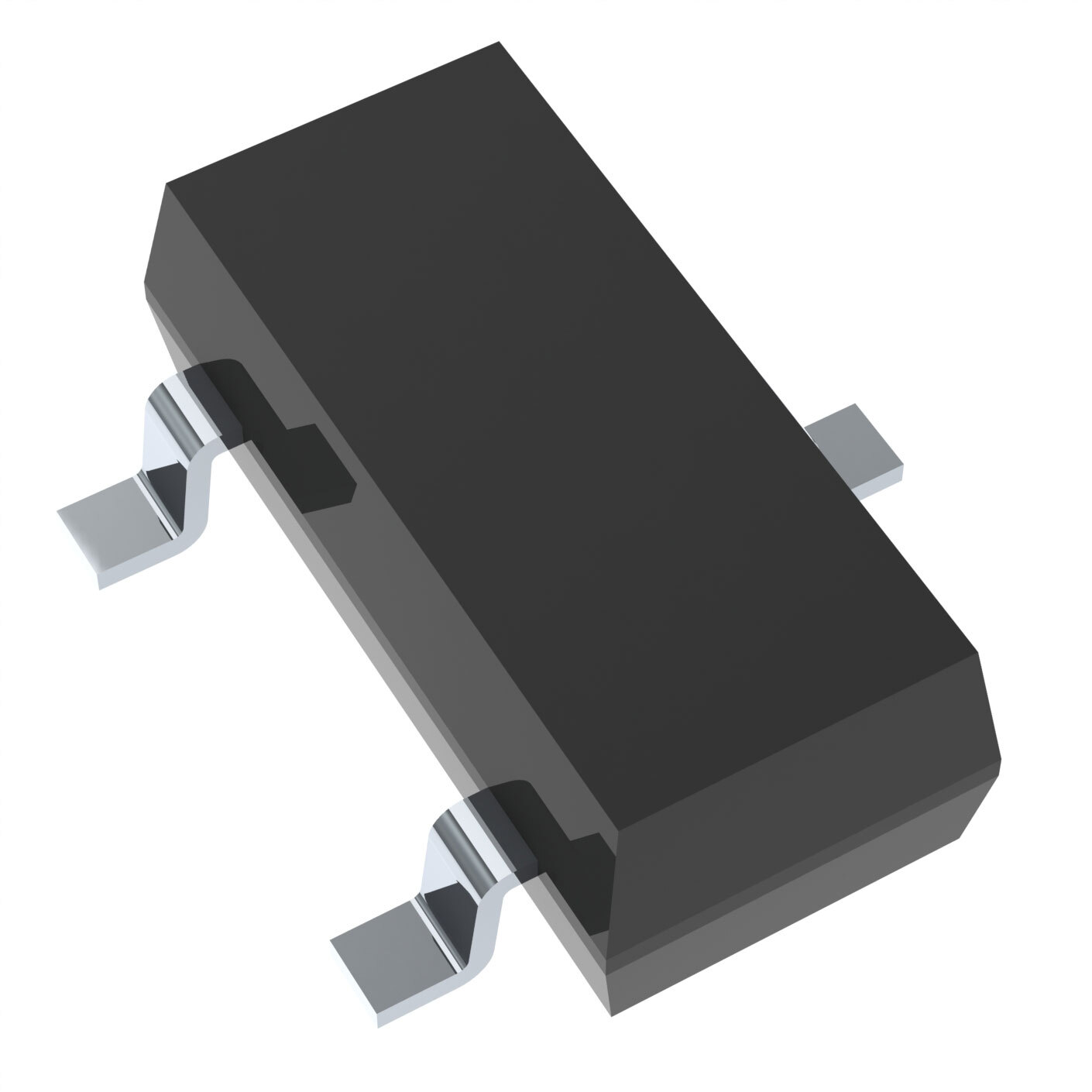
3 V nominal zener, 300 mW ceiling, SOT-23-3 package, -55°C to 150°C operating range
Quick Engineering Summary
| Field | Value |
|---|---|
| Manufacturer | Vishay |
| Category | Diodes - Zener - Arrays |
| Package | TO-236-3, SC-59, SOT-23-3 |
| Core function | DIODE ZENER ARRAY 3V SOT-23-3 |
| Key electrical range | Power - Max: 300 mW; Supply and Demand Status: Normal; Temperature Range - Operating: -55°C ~ 150°C; Tolerance: ±5% |
| Reported stock | 1 pcs reported — confirm on RFQ |
The real limit here is dissipation, not the 3 V label
The constraint is heat. The 300 mW figure is a ceiling, not a working point, and it does more to bound DZ23C3V0-E3-08 than the 3 V nominal zener value because the package is SOT-23-3 and the listing gives no thermal resistance or derating curve to show how much ambient headroom you really have.
The 3 V Vz with ±15% tolerance settles the clamp target and threshold spread. It does not settle current, surge, or heat. The 95 Ohms maximum Zzt matters too, because it points to limited regulation stiffness; if clamp behavior depends on a tight knee, the missing details have to carry the rest.
This belongs on low-power board clamps, not heat-heavy rails
3 V sets the lane. DZ23C3V0-E3-08 fits low-voltage protection and reference duties where a dual device in a 1 pair common cathode arrangement saves space, but the 300 mW maximum keeps it off rails that expect sustained energy absorption.
Can you buy it for a running line today?
Can you get enough of it now? Active lifecycle and Normal supply status say no end-of-life signal is showing, but quantity is the immediate issue: one stock figure shows 1, while the other quantity field shows 3000. Treat that as a line-planning problem, not a lifecycle one.
If this part is already qualified in production, put the allocation check ahead of any BOM touch. For a new build, don’t let DZ23C3V0-E3-08 become a schedule anchor until the available quantity is reconciled. EU RoHS is compliant.
95 Ohms max leaves important behavior unstated
95 Ohms maximum is the giveaway. It tells you this is not a precision shunt on description alone, and it also makes the missing details harder to ignore.
The listing does not give reverse leakage at Vr, forward voltage at If, surge current, thermal resistance, or pinout. Those are the numbers that decide standby loss, fault survivability, and whether the 300 mW ceiling is usable on your board at all. Package names are clear at TO-236-3, SC-59, and SOT-23-3, but for DZ23C3V0-E3-08 the common-cathode configuration is the reason to choose an array instead of two singles, so the exact lead assignment has to come from the datasheet before layout is frozen.
View the Win-Source product page for DZ23C3V0-E3-08.
Key Takeaways for Engineers & Buyers
- Treat 300 mW as the dissipation ceiling; don’t size DZ23C3V0-E3-08 from the 3 V nominal alone.
- Match the common-cathode topology before release; this is 1 pair common cathode in SOT-23-3.
- Cover the line need now if this is approved; listed stock is 1 even though lifecycle is Active.