
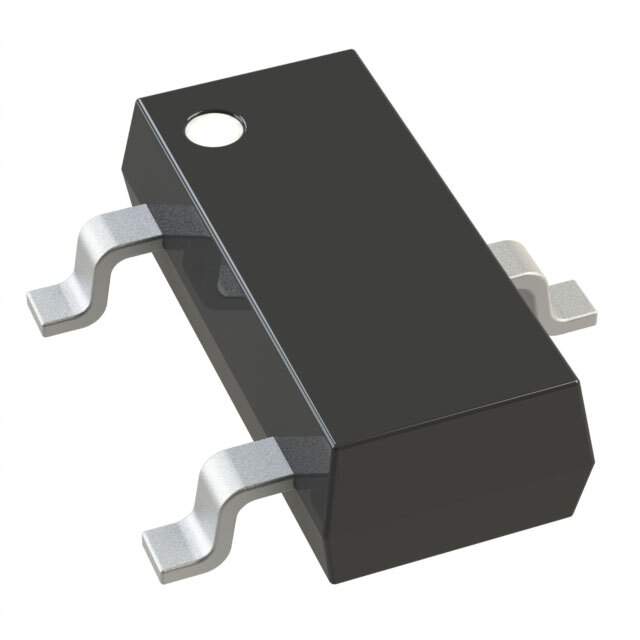
3.3V nominal zener pair, 300mW ceiling, SOT-23-3 package, -65°C to 150°C operating range
Quick Engineering Summary
| Field | Value |
|---|---|
| Manufacturer | Diodes Incorporated |
| Category | Diodes - Zener - Arrays |
| Package | SOT-23-3 |
| Core function | DIODE ZENER ARRAY 3. |
| Key electrical range | Maximum Power Dissipation: 300mW; Supply and Demand Status: Balance; Temperature Range - Operating: -65°C to 150°C; Tolerance: ±5% |
| Reported stock | 23715 pcs reported — confirm on RFQ |
Use it when the topology already fits
Good fit.
This is an Active 3.3V zener array in SOT-23-3, so it suits new design-in when the circuit already wants a compact common-cathode pair instead of a single diode or a larger TVS structure. The 3.3V nominal zener value sets the clamp class, but it does not settle pulse behavior on its own because the listing does not include the dynamic or surge figures that would finish that case.
The package and mounting style point to dense board-level protection, not cable-end hardware or anything that depends on generous thermal mass. EU RoHS is clear. For sustaining builds, the Active status and listed stock support a running line without forcing a lifecycle workaround.
Can you keep a line running on this part?
Can you actually buy it in production quantity?
Here, the answer is better than average: 23715 pieces are listed, packaging is Reel - TR, and lifecycle is Active with no conflict between status fields.
That matters because small protection parts like this usually disrupt builds for ordinary supply reasons before they fail on electrical fit. If your SMT flow already handles SOT-23-3 and tape-and-reel intake, the part moves through normal assembly without creating a handling exception. The real limit is topology, not packaging. The configuration is 1 Pair Common Cathode, so a board laid out for isolated zeners or a different node arrangement will not accept it just because the nominal voltage matches.
One caution belongs in the sourcing plan. The open-market fake-threat field is 95 pct., and while that is not an electrical spec, it is high enough to justify staying inside authorized stock for DZ23C3V3-7-F instead of treating it like a commodity buy when supply gets tight.
300mW is the ceiling that shapes the fit
300mW.
That maximum power dissipation ceiling is the first limit that decides whether DZ23C3V3-7-F belongs on a lightly loaded signal clamp or gets ruled out of a harsher protection job. Pair it with 95 Ohm maximum zener impedance and the device reads clearly: a small 3.3V clamp element, not a precision reference and not a high-energy suppressor.
The -65°C to 150°C operating range is broad enough for demanding ambient conditions, but it still leaves board-level thermal headroom unanswered in SOT-23-3 because no thermal resistance or derating curve is listed. The ±5% tolerance also leaves little room to lean on the nominal zener point when the rail itself has no margin.
What the listing still doesn't answer
4 items still matter.
Reverse leakage, forward voltage at stated current, pinout or package drawing, and any surge or transient current rating are still missing.
View the Win-Source product page for DZ23C3V3-7-F.
Key Takeaways for Engineers & Buyers
- Match the clamp network to the 1 Pair Common Cathode topology before layout.
- Treat 300mW as the dissipation ceiling; don't use DZ23C3V3-7-F where surge energy is undefined.
- Reserve reel handling for production builds; packaging is Reel - TR.