
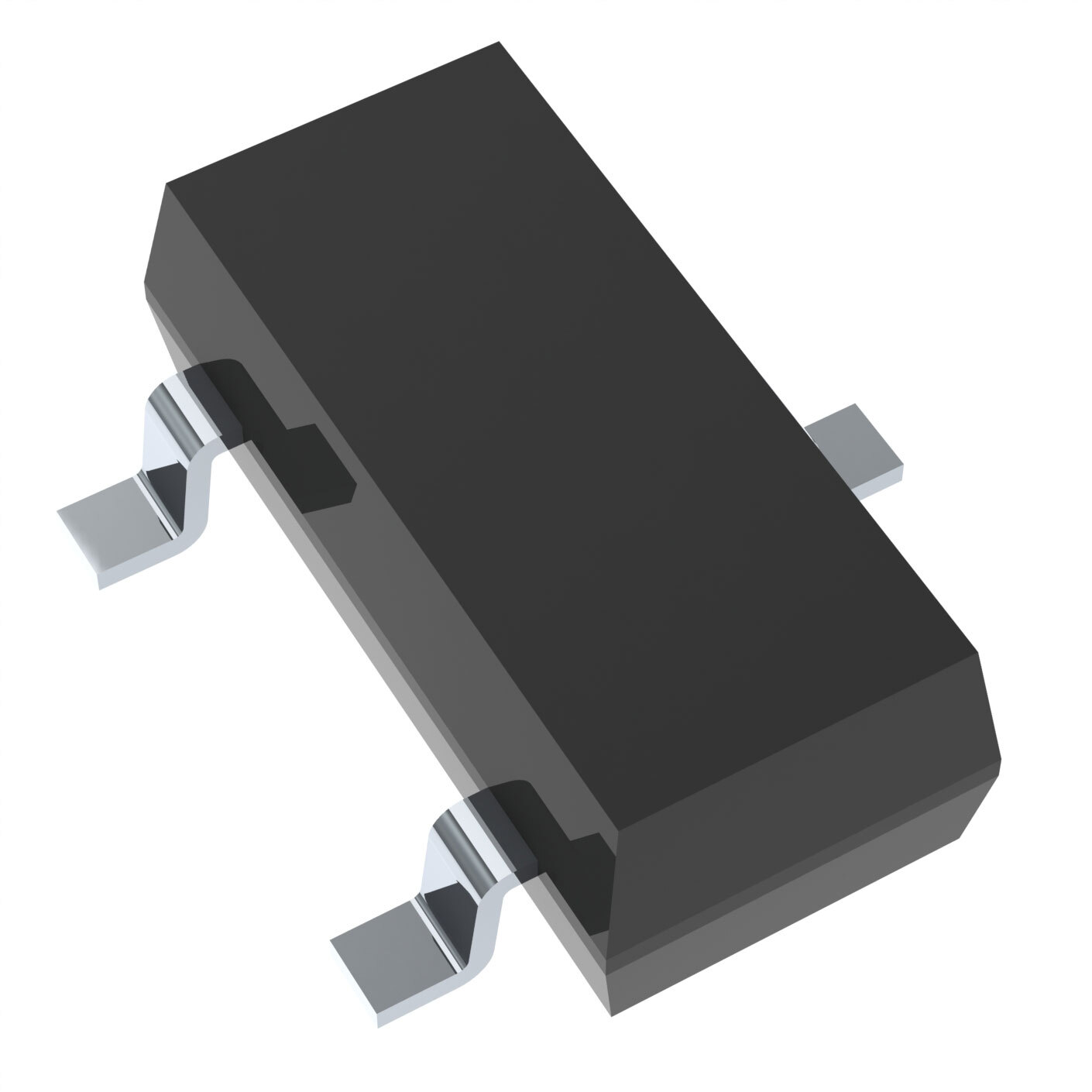
3.3 V nominal zener pair, 300 mW max, SOT-23-3, -55°C to 150°C operating range
Quick Engineering Summary
| Field | Value |
|---|---|
| Manufacturer | Vishay |
| Category | Diodes - Zener - Arrays |
| Package | TO-236-3, SC-59, SOT-23-3 |
| Core function | DIODE ZENER ARRAY 3. |
| Key electrical range | Power - Max: 300 mW; Supply and Demand Status: Normal; Temperature Range - Operating: -55°C ~ 150°C; Tolerance: ±5% |
| Reported stock | 22985 pcs reported — confirm on RFQ |
And that makes it a clean new-design choice
And that makes it a clean new-design choice for low-voltage clamp work, because the usual blockers for a small zener array in a fresh BOM are lifecycle doubt and package mismatch, and neither shows up here. The listing is Active, supply status is Normal, and tape and reel in SOT-23-3 puts it squarely in ordinary SMT assembly instead of some hand-fit exception path.
The electrical picture is limited, but it is pointed. A 3.3 V nominal zener value tells you the rail class, while the 1 Pair Common Cathode configuration settles the topology early: two zener junctions share a node, so this is not a single discrete clamp you can drop anywhere. EU RoHS is already covered. The real question is fit, and on that point the part is direct enough that the decision tends to be binary: either the design needs this common-cathode 3.3 V arrangement in a small surface-mount body, or it doesn't.
That clarity helps. It keeps the selection from drifting into generic diode territory and ties the choice back to the actual protection scheme instead of broad category matching.
300 mW is the ceiling that decides the job
300 mW sets the first hard limit. It is not a comfortable operating point; it is the dissipation ceiling the design cannot cross. If the clamp case depends on the zener pair absorbing sustained fault energy, this number can rule it out fast.
The 95 Ohms maximum Zzt answers a different question. Breakdown here is not an ideal hard wall, so a protection scheme that needs a very tight clamp shape still depends on the full datasheet. Then there is the ±5% tolerance on the 3.3 V nominal Vz. That is enough to place the part in the right rail class, but it does not finish the clamp analysis because the listing does not include the test current tied to Vz.
Good for board-level low-voltage clamps
It fits.
This belongs in compact board-level protection around low-voltage nodes when the schematic specifically wants a dual common-cathode zener arrangement and the package budget points to SOT-23-3.
It is the wrong choice for any use that needs a single independent zener, a through-hole body, or a protection part selected on surge confidence alone. The -55°C to 150°C operating range is broad enough that ambient qualification is unlikely to be the first objection, but temperature range is not thermal headroom under fault load. Surface mount and 300 mW max point to small-signal protection, not brute-force energy handling.
The buy call is straightforward
Wrong for spot buys that ignore reel flow. Right for scheduled SMT demand.
Tape and reel plus 22985 in stock make DZ23C3V3-E3-08 practical for running builds today, and the Active lifecycle removes the usual sustaining-only concern.
Keep it for builds that already want the common-cathode zener pair. Don't pull it in as a generic 3.3 V diode just because stock is there.
The missing datasheet items still matter
The constraint is incomplete detail. Reverse leakage, forward voltage, and pinout are absent here, and the package drawing is missing as well.
View the Win-Source product page for DZ23C3V3-E3-08.
Key Takeaways for Engineers & Buyers
- Keep DZ23C3V3-E3-08 on rails that really need a 3.3 V nominal clamp, not a looser threshold.
- Budget around the 300 mW ceiling before committing it to sustained fault energy.
- Use the 22985 stock on tape and reel for running builds, then pull the full datasheet for pinout and surge limits.