
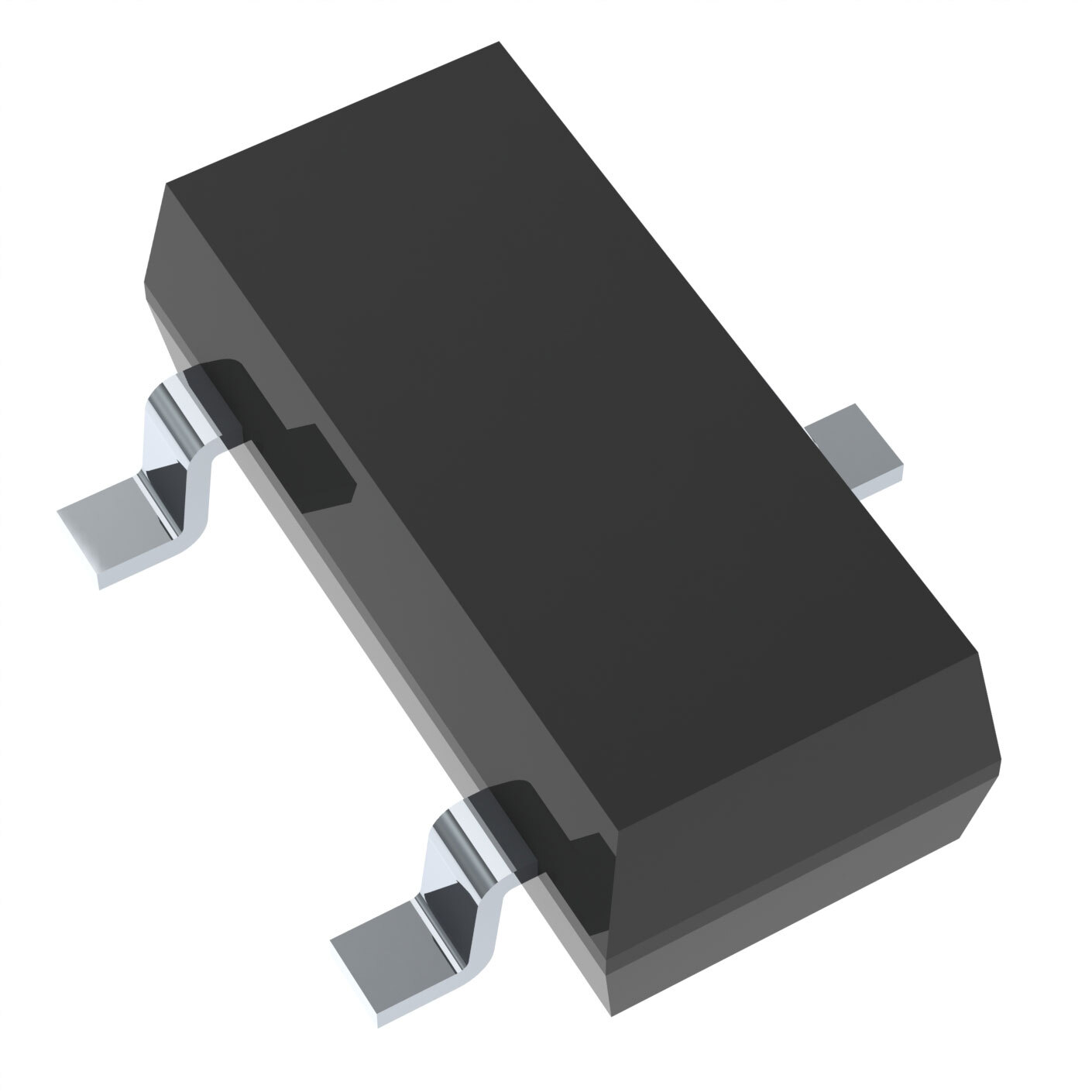
3.3 V nominal, 300 mW ceiling, SOT-23-3, -55°C to 150°C operating range
Quick Engineering Summary
| Field | Value |
|---|---|
| Manufacturer | Vishay |
| Category | Diodes - Zener - Arrays |
| Package | TO-236-3, SC-59, SOT-23-3 |
| Core function | DIODE ZENER ARRAY 3. |
| Key electrical range | Power - Max: 300 mW; Supply and Demand Status: Normal; Temperature Range - Operating: -55°C ~ 150°C; Tolerance: ±5% |
| Reported stock | 1 pcs reported — confirm on RFQ |
The package is easy; the missing curves are not
The constraint is not footprint but confidence. You get a 3.3 V nominal zener array in SOT-23-3 with a 300 mW maximum power rating, and that is enough to place it in a compact clamp or reference role, but not enough to close pulse behavior or thermal headroom.
New design-in is reasonable because lifecycle is Active and the configuration is specific rather than ambiguous: 1 pair common cathode. Keep the use case narrow. The 300 mW figure is a ceiling, not a working dissipation target, and the -55°C to 150°C operating range defines the rated temperature envelope rather than the board's ability to absorb self-heating. EU RoHS is straightforward.
Can you actually buy it for a build?
Can you get enough parts? Right now, that answer is unclear. One stock field says 1, while the quantity says 14960, and that conflict matters more than the Active lifecycle when you are trying to hold a running line.
Tape & Reel packaging fits placement, and supply-and-demand status is marked Normal, so nothing here points to a market exit. Still, the quantity mismatch is the real issue. Resolve it before you freeze DZ23C3V3-G3-08 onto a production BOM, because a good SOT-23-3 fit does not help if the available line item is effectively sample quantity.
300 mW is the ceiling that decides the use case
300 mW is the number that sets the boundary. It keeps DZ23C3V3-G3-08 in small-signal protection and low-power reference territory, not on rails where fault energy is the real problem.
The 3.3 V nominal Vz with ±5% tolerance is enough to place the array near low-voltage nodes where a few tenths either way still fit the clamp or reference window. Get that wrong and the circuit clamps too early or too late. The 95 Ohms maximum impedance matters too, because regulation is not especially stiff under changing current, so this is not a precision shunt reference just because the nominal number is 3.3 V.
What the listing still does not answer
95 Ohms helps, but not enough. Reverse leakage, forward voltage at a stated If, thermal resistance, and a package drawing with pinout are still missing.
View the Win-Source product page for DZ23C3V3-G3-08.
Key Takeaways for Engineers & Buyers
- Confirm whether DZ23C3V3-G3-08 stock is 1 or 14960 before releasing the BOM.
- Budget around the 300 mW ceiling; this listing does not give thermal resistance.
- Use DZ23C3V3-G3-08 only where a 1 pair common cathode array matches the net topology.