
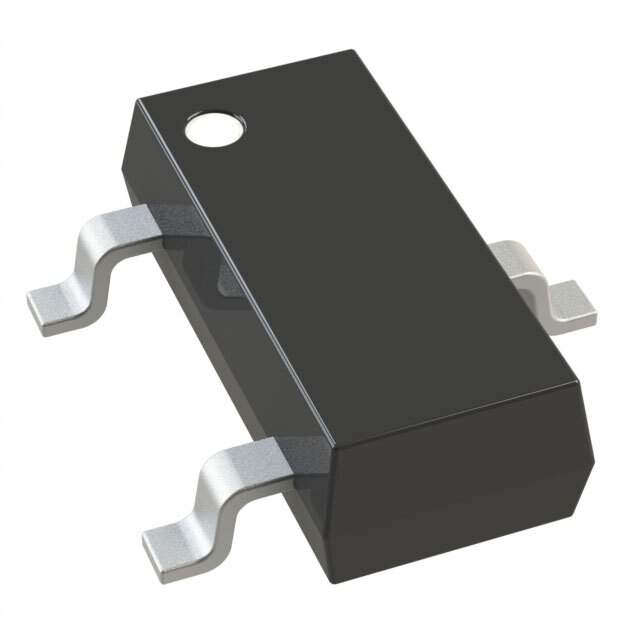
3.6V nominal Zener, 300mW ceiling, SOT-23-3 package, -65°C to 150°C operating range
Quick Engineering Summary
| Field | Value |
|---|---|
| Manufacturer | Diodes Incorporated |
| Category | Diodes - Zener - Arrays |
| Package | SOT-23-3 |
| Core function | DIODE ZENER ARRAY 3. |
| Key electrical range | Maximum Power Dissipation: 300mW; Supply and Demand Status: Sufficient; Temperature Range - Operating: -65°C to 150°C; Tolerance: ±5% |
| Reported stock | 73970 pcs reported — confirm on RFQ |
Good for new builds, but only as a small-signal clamp
Use it.
This is an Active Zener array in SOT-23-3, and the combination of 3.6V nominal Vz, 1 Pair Common Cathode configuration, and 300mW maximum power dissipation sets the role clearly: a compact board-level clamp for low-power rails or signal nodes, not a part that closes a surge or load-dump problem by itself. EU RoHS compliance also keeps it out of the compliance-exception bucket for ordinary commercial builds.
Supply looks straightforward. Reel - TR packaging and 73970 in stock support a running line without forcing a packaging change.
300mW is the limit that stops wishful thinking
300mW is the ceiling. On DZ23C3V6-7-F, that number is the first filter because it decides whether the part belongs on a lightly loaded reference or clamp node, and it does not say the device can sit at 3.6V under arbitrary fault current.
The 3.6V Zener voltage is nominal, with ±5% tolerance, so it sets the rough clamp level and reference window but not exact behavior across current because the listing does not include the test current behind Vz. The 95 Ohm maximum impedance points the same way: regulation is not infinitely stiff, so if your node needs a sharply held clamp under changing current, this is a warning flag, not a comfort spec.
What fits, what does not, and what the missing data blocks
And that fit is narrower than the package alone suggests. It belongs in dense SMT work where a common-cathode pair saves space and routing, especially when two lines need the same polarity arrangement in one SOT-23-3 body. It also fits designs that need temperature coverage from -65°C to 150°C, because that operating range keeps the part in play for harsh ambient and hot-board conditions, though it still does not answer how much dissipation you can really hold there without the thermal curves.
Where it does not belong is any decision that depends on dynamic behavior or leakage staying acceptable by assumption. The listing is missing reverse leakage at Vr, forward voltage at If, and any surge or transient current figure, so you cannot tell from this page whether DZ23C3V6-7-F is acceptable on a high-impedance sense node, whether forward conduction becomes a problem in fault polarity reversal, or whether a short transient will overstress it before average power says anything useful.
The thermal picture is thin too. You have a 300mW ceiling and a -65°C to 150°C operating range, but no thermal resistance, no derating curve, and no package drawing here. For a small package Zener array, that missing detail often separates a harmless clamp from a hot spot that drifts or fails in the field.
The real review gap is electrical detail
Wrong for blind drop-in protection choices. Right for compact 3.6V dual-node clamping once the datasheet fills in the missing curves.
The gaps that matter are reverse leakage at Vr, forward voltage at If, thermal derating, and pinout.
View the Win-Source product page for DZ23C3V6-7-F.
Key Takeaways for Engineers & Buyers
- Treat 300mW as the dissipation ceiling; don't size the clamp around the 3.6V nominal alone.
- Use DZ23C3V6-7-F where a 1 Pair Common Cathode array matches the rail topology and board space is tight.
- Pull the datasheet for reverse leakage and forward-voltage data before using DZ23C3V6-7-F on a sensitive node.