
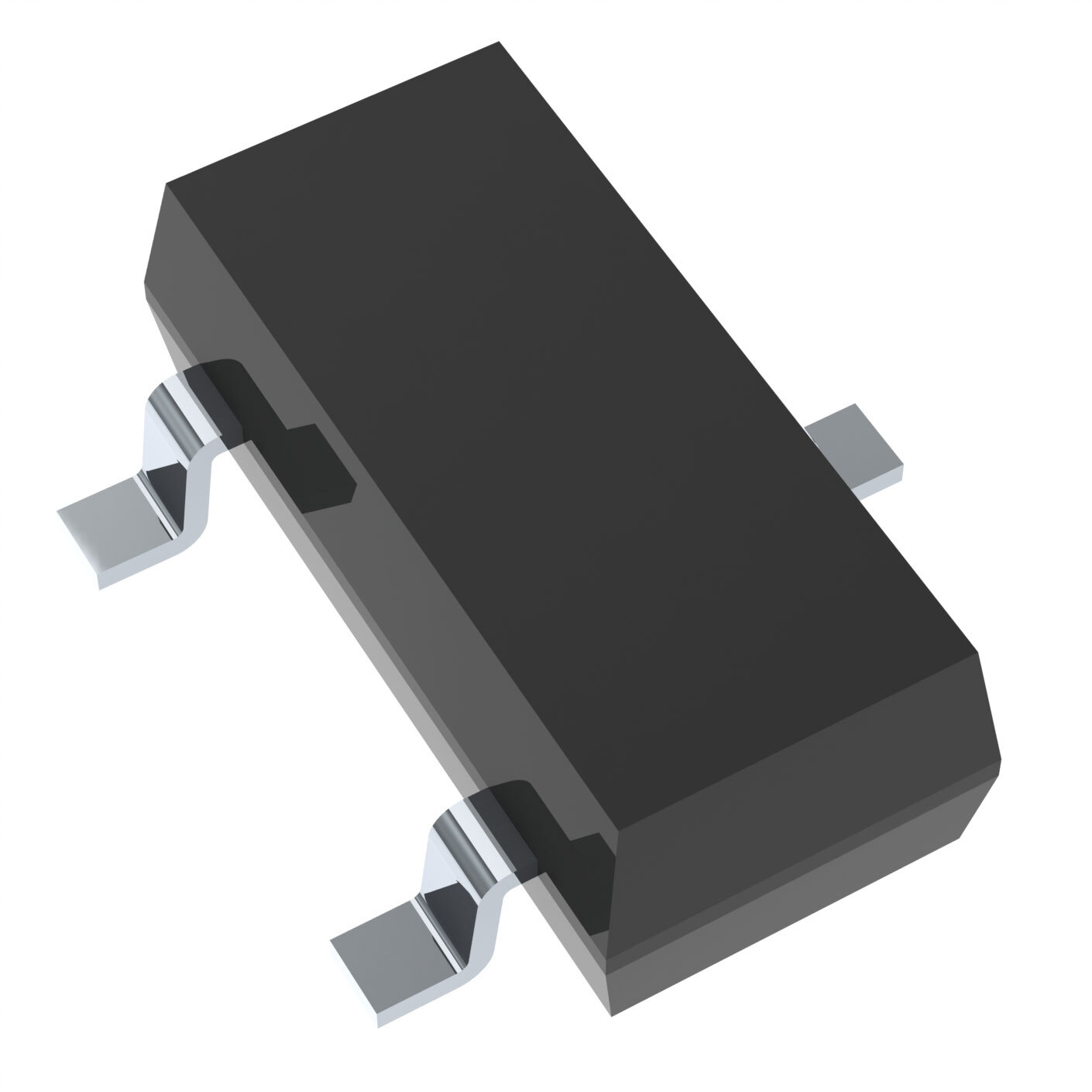
3.6 V nominal, 300 mW max, SOT-23 common-cathode pair; shortage is the real constraint
Quick Engineering Summary
| Field | Value |
|---|---|
| Manufacturer | Micro Commercial Co |
| Category | Diodes - Zener - Arrays |
| Package | TO-236-3, SC-59, SOT-23-3 |
| Core function | DIODE ZENER ARRAY 3. |
| Key electrical range | Current - Reverse Leakage @ Vr: 15 µA @ 1 V; Power - Max: 300 mW; Supply and Demand Status: Shortage; Tolerance: ±5% |
| Reported stock | 564 pcs reported — confirm on RFQ |
Shortage is the weak point; lifecycle is not
Shortage comes first. The part is still listed Active with low lifecycle risk and EU RoHS compliance, but the buy call has to respect the Shortage flag and the listed stock of 564.
Can you actually keep a line running on it?
Can you get enough of it? DZ23C3V6-TP is on Tape & Reel for automated assembly, but the supply status is Shortage and the visible quantity is 564.
That does not knock out an existing build or change the Active lifecycle call. It does mean you should buy to committed demand rather than assume the line can pull freely from spot stock. If this exact common-cathode array is already qualified, secure the reels you need now.
Wrong for heavy surge work, right for compact low-power clamps
Not for heavy surge work. The listed 300 mW maximum is a ceiling, not a working point, and in a SOT-23 package that leaves little room for any casual assumption that the device can soak up abuse just because the nominal Zener voltage is only 3.6 V.
It fits better in dense board-level protection or reference trimming that wants two Zeners in a 1 Pair Common Cathode arrangement. The 3.6 V nominal Vz with ±5% tolerance points to a modest clamp target, not a precision threshold, so it belongs in circuits that can live with that spread.
The 15 µA reverse leakage at 1 V is another ceiling worth budgeting on bias-sensitive nodes, but only at that stated condition. It says nothing about leakage behavior near the nominal Zener region. The 95 Ohms maximum Zzt also matters more than it first appears, because it tells you the clamp will not look stiff by default; in a rail or signal protector, that impedance sets how much the voltage can move as current rises, and without the test-current context in this listing you cannot judge how sharply DZ23C3V6-TP holds near breakdown. Small part. Limited authority.
The missing details are the real review blockers
Some details are missing.
The listing gives no forward-voltage figure at any If, no operating-temperature range, and no pinout or package drawing.
Those omissions are not cosmetic. Without Vf at If, you cannot judge whether forward conduction is acceptable in a bidirectional clamp arrangement or estimate the dissipation budget that mode implies. Without an operating-temperature limit, ambient fit is still open. Without the pinout and drawing, the common-cathode configuration is not enough to release layout on DZ23C3V6-TP.
View the Win-Source product page for DZ23C3V6-TP.
Key Takeaways for Engineers & Buyers
- Treat 300 mW as the dissipation ceiling; don’t use DZ23C3V6-TP to absorb rail abuse without thermal data.
- Check the common-cathode orientation against your clamp topology before layout; the listing gives configuration but no pinout.
- Cover the shortage now if this 3.6 V ±5% SOT-23 array is already on your BOM.