
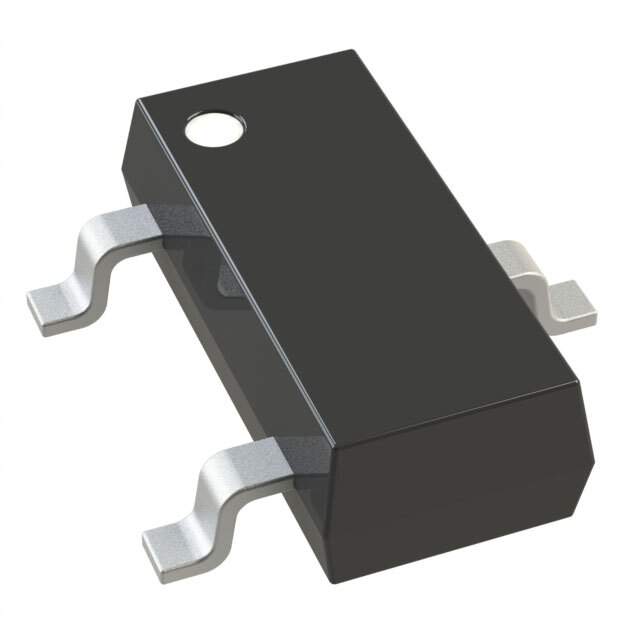
43V zener array, 300mW ceiling, SOT-23-3 package, -65°C to 150°C operating range
Quick Engineering Summary
| Field | Value |
|---|---|
| Manufacturer | Diodes Incorporated |
| Category | Diodes - Zener - Arrays |
| Package | SOT-23-3 |
| Core function | DIODE ZENER ARRAY 43V SOT-23-3 |
| Key electrical range | Maximum Power Dissipation: 300mW; Supply and Demand Status: Balance; Temperature Range - Operating: -65°C to 150°C; Tolerance: ±5% |
| Reported stock | 30641 pcs reported — confirm on RFQ |
43V decides the use case before the package does
43V is the deciding number for DZ23C43-7-F. In a zener array, that nominal zener voltage puts it on higher-voltage nodes where a lower clamp would trip too early, and it rules the part out for low-voltage logic rail protection before package style even enters the discussion. The ±5% tolerance matters too, because the clamp window is a band rather than a point; if that spread overruns the rail margin, this is the wrong protection element.
The other hard limit is 300mW maximum power dissipation. That is a ceiling, not an operating point, and it will decide survivability under repetitive stress or sustained fault energy long before the nominal 43V rating is the issue in a small SOT-23-3 body. Add the 100 Ohm maximum zener impedance and the picture gets clearer: the listing supports basic shunt or clamp duty, but it does not describe a particularly stiff clamp under surge current, so any design that depends on tight dynamic behavior still needs the missing curves.
Topology matters. This is 1 pair common cathode, which suits two-line protection around a shared node rather than a single discrete zener placed anywhere convenient. When that topology matches, the array saves footprint. When it doesn't, it just burns pins.
Wrong for low-voltage rails, useful on compact higher-voltage clamps
Low-voltage digital rails are the wrong target here. A 43V zener rating takes DZ23C43-7-F out of contention anywhere near logic supply levels, and the common-cathode array format also misses if the two protected lines do not share that return arrangement.
It fits compact board-level protection better, especially in SMD layouts that want two zener elements in one SOT-23-3 body. Placement near connectors or exposed nodes is straightforward, but the small package and 300mW ceiling keep it in the lane of compact signal or rail clamping rather than long-duration heavy fault absorption. The listed operating range of -65°C to 150°C answers one question quickly: ambient span is not the first blocker. Thermal path is.
Active status helps, but buy to the reel
This one is buyable.
Active lifecycle with no stated conflict supports new design-in, and EU RoHS avoids a compliance detour. Reel - TR fits production flow, and 30641 pieces is enough to support a running line without changing formats.
The weak point is missing behavior, not availability
The weak spot is the missing behavior data. The headline limits are here, but the numbers that close a protection review are not: reverse-recovery time, junction capacitance, thermal resistance, and a derating curve. For a zener array, those are not side details; they determine clamp speed, node loading, and how much ambient headroom the 300mW ceiling actually leaves.
A few other gaps matter just as much in abuse cases. There is no forward-voltage figure, no pinout drawing, and no surge current figure in this listing. That leaves real uncertainty around orientation and fault handling, which is exactly where a part like DZ23C43-7-F tends to earn its place on the board.
View the Win-Source product page for DZ23C43-7-F.
Key Takeaways for Engineers & Buyers
- Keep DZ23C43-7-F on rails that need a 43V clamp target, not lower-voltage protection.
- Treat 300mW as the dissipation ceiling and pull the thermal curve before committing ambient headroom.
- Buy on reel if the line is building volume; stock shows 30641 pieces today.