
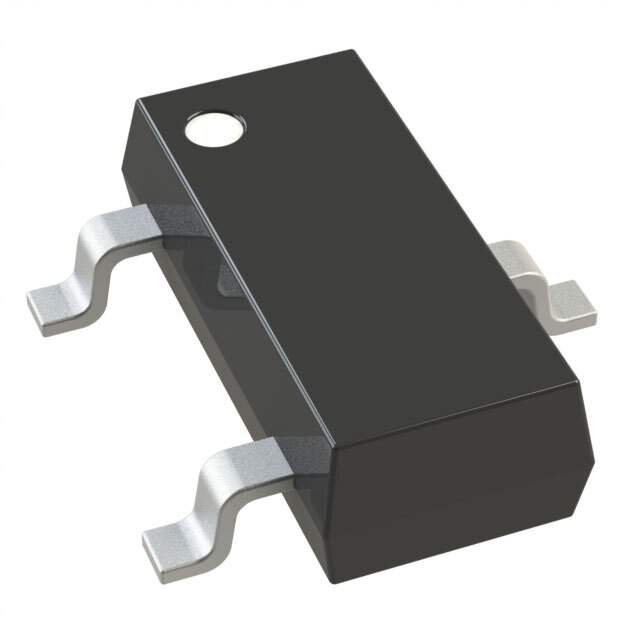
4.7V nominal zener, 300mW ceiling, SOT-23-3 package, -65°C to 150°C operating range
Quick Engineering Summary
| Field | Value |
|---|---|
| Manufacturer | Diodes Incorporated |
| Category | Diodes - Zener - Arrays |
| Package | SOT-23-3 |
| Core function | DIODE ZENER ARRAY 4. |
| Key electrical range | Maximum Power Dissipation: 300mW; Supply and Demand Status: Limited; Temperature Range - Operating: -65°C to 150°C; Tolerance: ±5% |
| Reported stock | 6000 pcs reported — confirm on RFQ |
Can you start a new build on this part?
Can I put this into a new build without creating a sourcing problem later? Yes—lifecycle is not the issue here. Active status is clear, with no conflicting signal, so it is a sound new design-in candidate for small-signal zener clamping or reference duties when a dual device in SOT-23-3 is the right fit.
What changes the buying plan is availability. Packaging is Reel - TR, stock is 6000, and supply is marked Limited, so this is a part to order against actual reel consumption rather than something to top up casually between builds. EU RoHS is compliant.
300mW is the ceiling that keeps this honest
300mW sets the limit. In a zener array, that is not much room once the device is asked to do real clamp work, and it should be treated as a ceiling rather than a normal operating point.
The rest of the listing points the same way. The 4.7V nominal zener value places it in low-voltage protection or bias networks, while the ±5% tolerance rules it out where the rail window is already tight. The 78 Ohm maximum impedance adds another boundary: clamp stiffness is limited, so a circuit that expects a very hard clamp is already a poor match. Use it for modest zener duties, not as a pretend precision reference.
The package and topology decide the real fit
4.7V is the headline number, but the decisive fit comes from the combination of 1 Pair Common Cathode and SOT-23-3. That pairing makes sense when two zener elements need a shared node on a crowded board, and it can save space versus placing two singles around the same connection.
It also narrows substitution options fast. If the schematic expects isolated zeners, a common-anode arrangement, or a single diode with no shared node, this device is wrong before electrical behavior even enters the discussion. Internal connection matters as much as nominal voltage here.
Then there is the package. SOT-23-3 works well for dense SMT layouts and reel-fed assembly, but it does not offer much thermal headroom, and the 300mW ceiling underlines that point. The operating range of -65°C to 150°C is broad enough that ambient qualification is unlikely to be the first objection, yet it still leaves the practical thermal question unanswered: without a derating curve or thermal resistance, you cannot see how quickly dissipation margin shrinks as ambient rises on a hot board.
What the listing still does not tell you
So the missing pieces are concrete. Reverse leakage is not listed, forward voltage at a stated current is not listed, and there is no thermal resistance or derating curve.
Pinout and package drawing are also not here.
View the Win-Source product page for DZ23C4V7-7-F.
Key Takeaways for Engineers & Buyers
- Keep DZ23C4V7-7-F on rails that need a 4.7V nominal clamp, not a tighter trim than ±5%.
- Budget dissipation against the 300mW ceiling before using both elements of the common-cathode pair.
- Buy in reel form and cover the current 6000 stock against the Limited supply flag.