
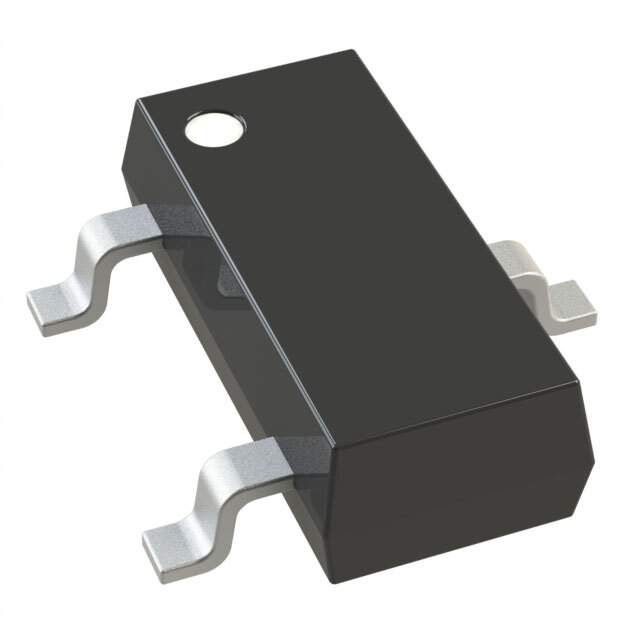
51V nominal zener, 300mW max, SOT-23-3, -65°C to 150°C operating range
Quick Engineering Summary
| Field | Value |
|---|---|
| Manufacturer | Diodes Incorporated |
| Category | Diodes - Zener - Arrays |
| Package | SOT-23-3 |
| Core function | DIODE ZENER ARRAY 51V SOT-23-3 |
| Key electrical range | Maximum Power Dissipation: 300mW; Supply and Demand Status: Balance; Temperature Range - Operating: -65°C to 150°C; Tolerance: ±5% |
| Reported stock | 22610 pcs reported — confirm on RFQ |
51V decides the rail, not the whole protection job
51V is the deciding number. It makes DZ23C51-7-F either relevant or irrelevant, because a 51V nominal zener array belongs on higher-voltage nodes where that clamp point is intentional, not on lower-voltage protection points.
That still leaves the real protection behavior open. This listing does not include surge behavior, leakage, or how sharply the clamp turns on.
The other immediate limit is 300mW maximum power dissipation. That is a ceiling, not a target, and it becomes the first check when the event is more than occasional. In a SOT-23-3 body, that points to a compact board-level clamp element rather than a part that absorbs much abuse on its own. Active lifecycle and EU RoHS status keep it viable for new design-in.
The package is small; the electrical margin is not generous
The constraint is density. SOT-23-3 and 1 Pair Common Cathode give you a compact way to place two zeners around one shared node, which helps when the network has to stay close to a connector or a tight high-voltage interface.
The margins are modest. The 300mW maximum dissipation is a ceiling, and the 100 Ohm maximum impedance says this listing does not present the clamp as especially stiff under current. The -65°C to 150°C operating range is broad, but it does not answer the missing thermal resistance or derating details that set real board headroom.
The weak spot is missing dynamic data
Missing dynamic data is the problem. Still, DZ23C51-7-F is Active, stocked at 22610, and offered on Reel - TR, so it is easier to keep on a running line than many small protection parts.
22610 in stock helps, but only if the footprint is already right
22610 in stock matters when the build already expects SOT-23-3 and tape-and-reel handling. That is the practical advantage here. You are not dealing with an odd package or a lifecycle exception.
Use that advantage where it fits. Reserve it for designs that already want a 51V common-cathode zener pair in this footprint, because the missing pinout still leaves room for avoidable layout churn.
What the datasheet still has to answer
So the selection does not close automatically. DZ23C51-7-F is easy to shortlist, but this listing still leaves several concrete questions open before the protection network is settled.
First is reverse leakage at a stated Vr. On bias-sensitive monitoring lines or divider-fed inputs, that missing number can separate an invisible clamp from a steady offset that only shows up after assembly.
Next is forward voltage at a stated If. In a dual array, that matters whenever one junction may conduct in the forward direction during fault handling, and this listing leaves that behavior blank.
Thermal detail is also missing: no thermal resistance and no derating curve. You have the 300mW maximum dissipation ceiling, but not the information that shows how ambient conditions and copper area change the usable margin in practice.
Then there is the basic implementation data. No pinout and no package drawing are included here, even though the package family is named as TO-236-3, SC-59, SOT-23-3. That's enough to classify the part, not enough to drop it in blind.
View the Win-Source product page for DZ23C51-7-F.
Key Takeaways for Engineers & Buyers
- Keep DZ23C51-7-F on rails that need a 51V nominal clamp, not lower-voltage protection points.
- Budget dissipation against the 300mW ceiling before using both diodes in the common-cathode pair.
- Pull the datasheet for leakage, forward-drop, and pinout details before freezing the protection network.