
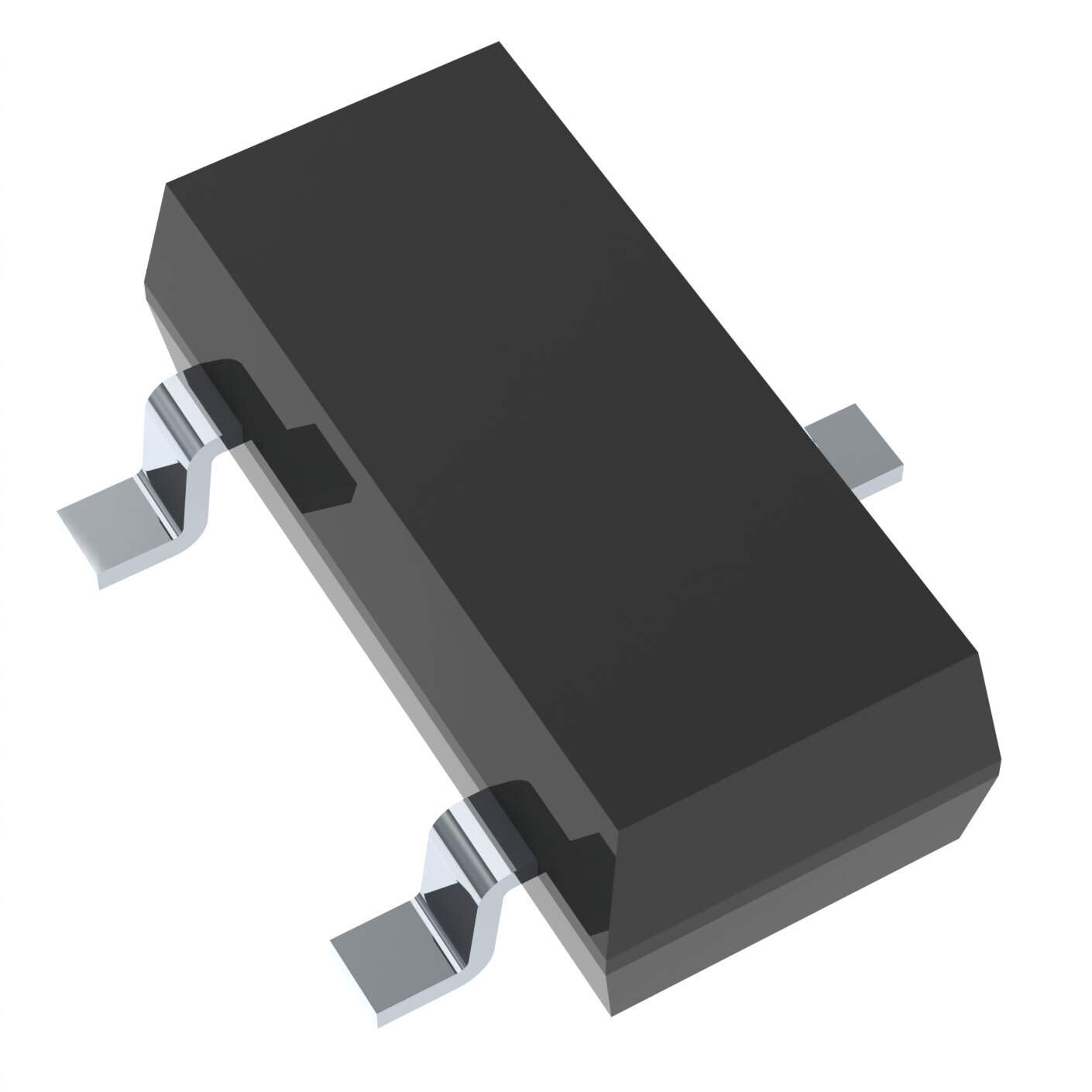
51 V nominal, 300 mW ceiling, SOT-23-3, -55°C to 150°C operating range
Quick Engineering Summary
| Field | Value |
|---|---|
| Manufacturer | Vishay |
| Category | Diodes - Zener - Arrays |
| Package | Tape & Reel (TR) |
| Core function | DIODE ZENER ARRAY 51V SOT-23-3 |
| Key electrical range | Current - Reverse Leakage @ Vr: 100 nA @ 38 V; Power - Max: 300 mW; Temperature Range - Operating: -55°C ~ 150°C; Tolerance: ±5% |
| Reported stock | 1 pcs reported — confirm on RFQ |
51 V tells you the rail, not the stress budget
51 V decides whether this part belongs on the schematic at all. It puts the device in high-voltage clamp or reference work, not low-voltage rail protection, and the ±5% tolerance sets the spread around that nominal threshold.
That number is only the starting point. The 300 mW rating is a ceiling, so the real design question is how often and how hard the zener pair must absorb energy in a SOT-23-3 body, especially when the common-cathode configuration is being used to clamp paired nodes that share a return point.
Can you actually buy this for a running line?
Can you get it in quantity today? Not from the numbers here.
Lifecycle is Active and risk is low, so there is no lifecycle case against new design-in. The immediate constraint is supply: stock is 1, while the standard package is 15,000 in Tape & Reel. That matters more than the compliance fields if this part is headed for production.
For an existing build, line up committed supply before it lands on a shortage list, because one piece on hand does nothing for a reel-fed SMT line. For a new design, approve it technically only after the channel can support reel quantity, since the package format already points to automated assembly rather than bench replenishment.
MSL 1 (Unlimited) helps with floor handling, and EU RoHS removes one routine paperwork snag. Neither changes the practical issue visible here: available inventory is almost nonexistent.
The weak spot is missing test detail
Yes, the weak point comes first. The listing places the part in the right voltage class, but it does not close an electrical review. You still need the zener test current behind the 51 V rating, the pinout for the common-cathode pair, the package drawing, and the forward-voltage data, which is blank here.
Where this array fits cleanly
And that still leaves a clear use case. DZ23C51-E3-08 fits where two high-voltage nodes need matched zener elements in one SOT-23-3 footprint, especially when board area matters more than through-hole serviceability.
The -55°C to 150°C operating range keeps it in play for wide-temperature electronics, but it does not settle self-heating because the derating curve and thermal resistance are not listed. Reverse leakage of 100 nA at 38 V is low enough to matter in bias or sensing paths where off-state leakage can skew a high-impedance node, while the 100 Ohms maximum impedance says this is not a stiff precision reference from this entry alone. Use it for a compact clamp network. Skip it when you need fully characterized reference behavior or surge handling data such as IFSM, because those numbers are not here.
View the Win-Source product page for DZ23C51-E3-08.
Key Takeaways for Engineers & Buyers
- Treat 300 mW as the dissipation ceiling; don’t size this clamp from the 51 V label alone.
- Lock supply before release; available stock is 1 while standard package is 15,000 TR.
- Request the full DZ23C51-E3-08 datasheet for zener test current, pinout, and package drawing.