
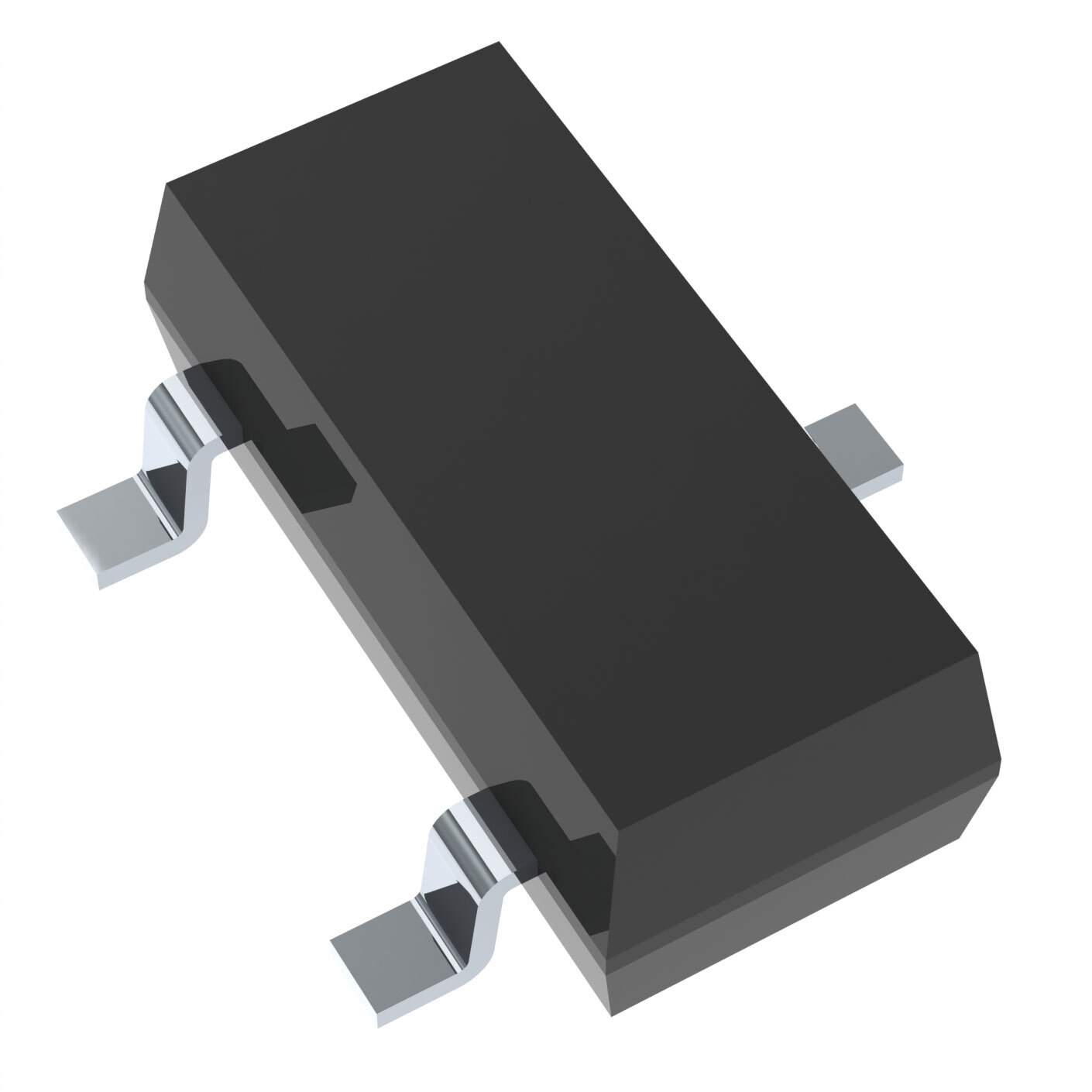
51 V zener array, 300 mW ceiling, SOT-23-3, -55°C to 150°C operation, for sustaining builds only
Quick Engineering Summary
| Field | Value |
|---|---|
| Manufacturer | Vishay |
| Category | Diodes - Zener - Arrays |
| Package | Tape & Reel (TR) |
| Core function | DIODE ZENER ARRAY 51V SOT-23-3 |
| Key electrical range | Current - Reverse Leakage @ Vr: 100 nA @ 38 V; Power - Max: 300 mW; Temperature Range - Operating: -55°C ~ 150°C; Tolerance: ±5% |
| Reported stock | 1 pcs reported — confirm on RFQ |
Still usable only if the line already depends on it
And that settles the main question: DZ23C51-HE3-18 is not a new design part. EOL status and stock of 1 shut that down before the electrical limits even enter the discussion.
For existing production, the case is narrower but still practical. You get a 51 V nominal zener array in a SOT-23-3 body with 1 pair common cathode, which can keep a fixed footprint and established topology in service a little longer. Keep it there only as a bridge for sustaining demand. EU RoHS is compliant, REACH is unaffected, and MSL 1 helps handling, but none of those points changes the lifecycle problem.
Not for power dumping; fine for compact 51 V clamping
Wrong job first: this is not the part to absorb much energy. The 300 mW rating is a ceiling, not an operating target, and in SOT-23-3 that ceiling points to a tight thermal budget long before anyone treats the 51 V zener value as permission to clamp a noisy line without checking pulse conditions.
It does fit dense board-level protection or reference duty that specifically needs a common-cathode zener pair. The 51 V nominal Vz and ±5% tolerance set the rail window and clamp spread, but they do not describe transient behavior. The listed 100 nA reverse leakage at 38 V is low enough to matter on high-impedance sensing nodes, though only at that stated reverse point. Small package, small margin.
The real limit is what the listing does not tell you
The constraint is incomplete dynamic and thermal detail. You have 100 Ohms maximum Zzt, 300 mW maximum power, 51 V nominal Vz, and an operating range of -55°C to 150°C, and that is enough to place this as a small high-voltage zener array for board-level use, but it is not enough to close a serious clamp review when the same sparse set of numbers has to carry electrical behavior, thermal headroom, and package-level confidence all at once.
Start with Zzt. A 100 Ohms maximum impedance means the zener voltage can shift materially with current, so any circuit that depends on a defined clamp knee rather than a loose overvoltage catch should treat that number as the warning flag. The ±5% tolerance already spreads the nominal 51 V value, and Zzt adds another reason not to read the nominal figure as the actual in-circuit clamp point.
Then the thermal side takes over. The 300 mW maximum is only a ceiling, and the operating range to 150°C junction does not say how quickly the package gets there because no derating curve or thermal resistance is listed. That missing information decides ambient headroom. The forward-voltage entry is also absent, so forward conduction behavior cannot be judged from this page. The missing items that would actually close the decision are the derating curve, thermal resistance, forward-voltage specification, and package drawing or pinout.
One unit on hand is the buying decision
1 unit decides it. The part is on tape and reel with a standard package of 10,000, but available quantity is 1, so this is not a replenishment situation.
Use that single piece only to protect an existing build or confirm form-fit on a board already committed to DZ23C51-HE3-18. Don't read the reel packaging field as proof of reel availability.
View the Win-Source product page for DZ23C51-HE3-18.
Key Takeaways for Engineers & Buyers
- Block new BOM releases for DZ23C51-HE3-18; lifecycle is EOL.
- Reserve the single on-hand unit for failure analysis or an existing line stop.
- Check clamp accuracy against the ±5% Vz tolerance before keeping DZ23C51-HE3-18 in a 51 V rail path.