
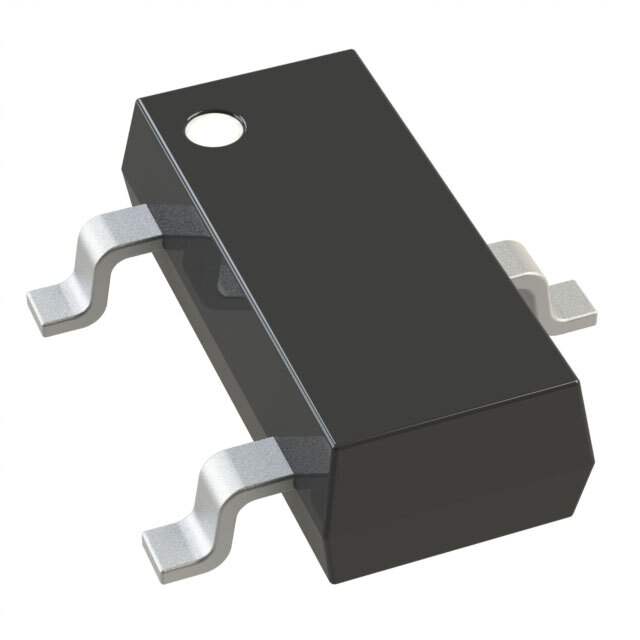
5.1V nominal zener array, 300mW ceiling, SOT-23-3, -65°C to 150°C operating range
Quick Engineering Summary
| Field | Value |
|---|---|
| Manufacturer | Diodes Incorporated |
| Category | Diodes - Zener - Arrays |
| Package | SOT-23-3 |
| Core function | DIODE ZENER ARRAY 5. |
| Key electrical range | Maximum Power Dissipation: 300mW; Supply and Demand Status: Balance; Temperature Range - Operating: -65°C to 150°C; Tolerance: ±5% |
| Reported stock | 4530 pcs reported — confirm on RFQ |
The weak point is tolerance, not lifecycle
±5% is not a precision reference window. It is still fine for a simple 5.1V clamp or bias limit. The stronger point is lifecycle: the part is listed Active, EU RoHS compliant, and packaged in SOT-23-3.
300mW is the ceiling that decides the network
300mW is the decisive number. It is the maximum power dissipation rating, and it sets the ceiling for steady use even though it does not define a safe operating point for your board stackup or copper area.
The other key figure is the 5.1V nominal zener voltage with ±5% tolerance. That places the part in a clamp class, not at an exact trip point, so DZ23C5V1-7-F fits rails and signal nodes that can absorb spread around 5.1V. The 60 Ohm maximum impedance matters too, because a soft zener knee shifts real clamp behavior under load, and the listing does not give the current condition behind that figure.
Common cathode and SOT-23-3 narrow the use case fast
And that package and topology do most of the sorting. DZ23C5V1-7-F is a 1 pair common cathode array in SOT-23-3, so it suits compact board-level protection or dual-node clamping where a shared node already exists in the schematic. It is not the right part for a loose single-diode substitution, and it does not help when the layout needs separated returns or a larger thermal body.
The listed operating range of -65°C to 150°C keeps it in play for harsh ambient targets, but that range does not settle dissipation at temperature. For sustaining designs, the same package logic holds: if the board already expects a common-cathode zener pair in SOT-23-3, this part stays in the right lane.
4530 on hand helps, but the datasheet still has the real blockers
4530 on hand makes this a practical line item now, and Reel - TR packaging fits normal SMT flow better than ad hoc handling. That matters if you are building a running line or qualifying a modest new build around DZ23C5V1-7-F.
The real blockers are electrical and mechanical details the listing does not include. Reverse leakage at Vr is missing. Forward voltage at If is missing. Pinout detail and a package drawing are missing. On a zener array, those are not side notes; leakage affects whether a protected node drifts when it should stay quiet, forward-voltage data shows how the pair behaves when driven the other way, and the pinout plus drawing decide whether the common cathode lands where the footprint expects it.
One more gap matters. The listing gives 60 Ohm maximum Zzt, but not the test condition behind it, so that number does not answer clamp behavior by itself. Buyable, yes. Ready for signoff, not until those details are in hand.
View the Win-Source product page for DZ23C5V1-7-F.
Key Takeaways for Engineers & Buyers
- Keep DZ23C5V1-7-F on rails and nodes that need a 5.1V nominal clamp, not a tighter trim than ±5%.
- Budget dissipation against the 300mW ceiling before using both diodes in the common-cathode pair.
- Pull the datasheet for leakage, forward-voltage, and pinout details before freezing the protection network.