
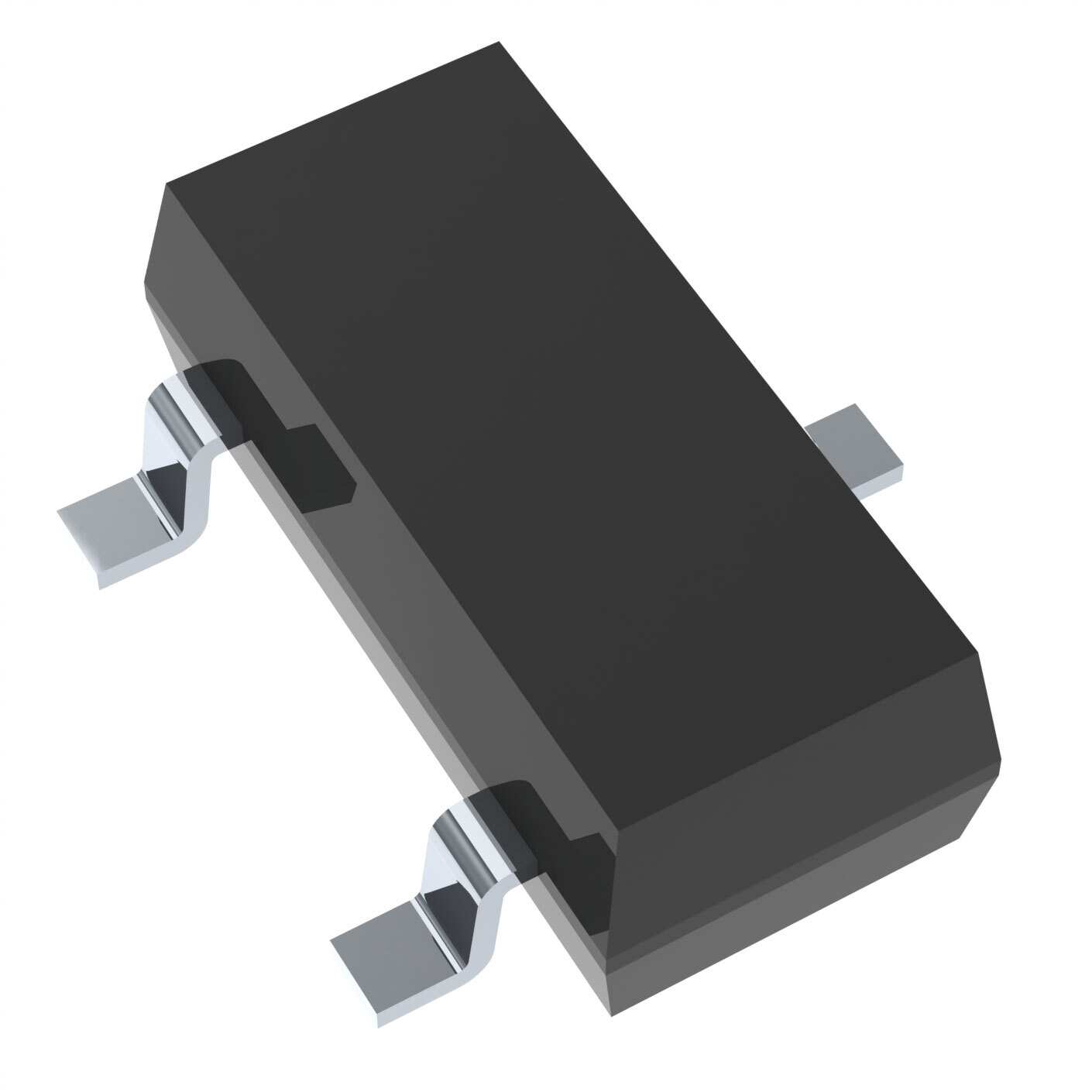
5.6 V zener pair, 300 mW ceiling, SOT-23-3, and -55°C to 150°C range decide the fit.
Quick Engineering Summary
| Field | Value |
|---|---|
| Manufacturer | Vishay |
| Category | Diodes - Zener - Arrays |
| Package | TO-236-3, SC-59, SOT-23-3 |
| Core function | DIODE ZENER ARRAY 5. |
| Key electrical range | Current - Reverse Leakage @ Vr: 100 nA @ 1 V; Power - Max: 300 mW; Supply and Demand Status: Normal; Temperature Range - Operating: -55°C ~ 150°C |
| Reported stock | 11263 pcs reported — confirm on RFQ |
Can you design DZ23C5V6-G3-18 in now?
Can you buy it and build with it now? Yes. It is marked Active, supply status is Normal, and listed stock of 11263 points to immediate builds rather than a paper-only part.
That answers sourcing, not fit. The device is a 1 pair common cathode zener array in SOT-23-3, so it belongs in compact clamp and reference jobs that already want that topology and footprint. EU RoHS is compliant. If your board expects a different connection scheme or a single discrete zener, DZ23C5V6-G3-18 is the wrong place to start before voltage even enters the discussion.
The weak point is tolerance, not availability
±5% is the weak point. Stocked, Active, and in tape and reel, it still fits automated assembly cleanly.
View the Win-Source product page for DZ23C5V6-G3-18.
5.6 V and 300 mW set the real boundaries
5.6 V is the nominal zener rating, and it sets the rail window this part can police. It does not tell you transient behavior, line regulation, or how sharply the clamp turns on under a real surge.
The 300 mW rating is a ceiling, not a working point. In a dual array that matters quickly because the SOT-23-3 package gives both elements one small body to share, so dissipation budget is the first thing to watch when the application wants continuous clamp duty instead of occasional protection. The 40 Ohms maximum impedance matters too; if the circuit expects a stiff reference under changing current, that number can separate a harmless tolerance stack from a rail that drifts out of spec.
Fit it where topology and package matter more than precision
It fits selectively.
Use it where board area is tight and the common-cathode arrangement is the point. DZ23C5V6-G3-18 makes sense in small signal protection networks, paired clamps, and simple zener reference duties that can live with 5.6 V nominal and ±5% tolerance. The -55°C to 150°C operating range keeps it in play across harsh ambient swings, but it does not answer self-heating because the thermal path and derating curve are not shown here.
Its limits are just as clear. If the design needs a single zener, a different node arrangement, or a tighter voltage window, this part forces compromises before layout starts. The reverse leakage figure, 100 nA @ 1 V, is low, but only at that stated condition; it helps with light-bias behavior and says little about higher-voltage leakage in the actual clamp region.
The missing details are concrete. There is no forward-voltage entry at If, even though the row explicitly leaves it blank, so accidental forward-bias loss cannot be judged. There is no thermal resistance, no derating curve, no pinout drawing, and no surge or overload figure such as IFSM. For DZ23C5V6-G3-18, those gaps separate a quick BOM call from a confident protection design.
View the Win-Source product page for DZ23C5V6-G3-18.
Key Takeaways for Engineers & Buyers
- Keep DZ23C5V6-G3-18 on rails that need a 5.6 V zener ceiling, not a tighter trim than ±5%.
- Budget dissipation against the 300 mW maximum before using both elements of the common-cathode pair.
- Buy in tape and reel if the line is already set for SOT-23-3; stock is listed at 11263.