
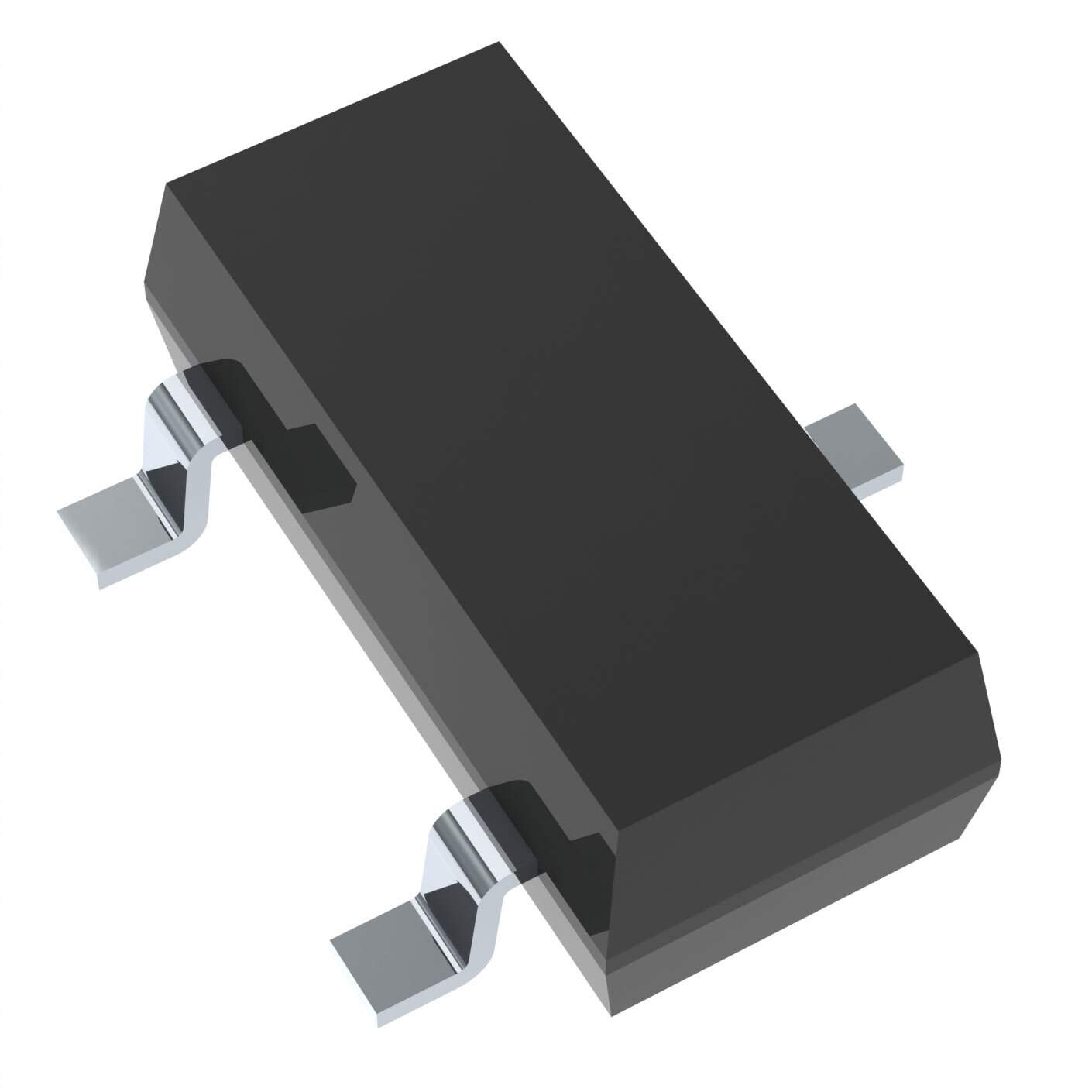
9.1V nominal, 300mW max, SOT-23-3, -55°C to 150°C: fit is clear, but stock and missing curves still decide it.
Quick Engineering Summary
| Field | Value |
|---|---|
| Manufacturer | Vishay |
| Category | Diodes - Zener - Arrays |
| Package | SOT-23 |
| Core function | DIODE ZENER ARRAY 9. |
| Key electrical range | Current - Reverse Leakage @ Vr: 100nA @ 7V; Operating Temperature Range: -55°C ~ 150°C; Power - Max: 300mW; Supply and Demand Status: Limited |
| Reported stock | 2 pcs reported — confirm on RFQ |
The weak point is supply, not lifecycle
Limited supply and a current quantity of 2 are the real problem.
Lifecycle is the steadier part of the picture: DZ23C9V1-E3-08 is listed Active with no stated conflict, and EU RoHS compliance is also listed.
300mW is the ceiling that sets the package budget
300mW is the number that matters first, because in SOT-23-3 it is a hard dissipation ceiling, not a comfortable operating point.
The 9.1V nominal Zener voltage with ±5% tolerance gives a broad clamp target, enough to sort rails and transient thresholds but not enough to show how tightly the protected node stays below a downstream absolute maximum. Reverse leakage is listed as 100nA at 7V, which keeps the part credible on high-impedance nodes, though that figure is still tied to 7V rather than the full 9.1V nominal point many leakage-sensitive designs actually care about.
Good for compact dual-node clamping, not for blind power work
Fit is narrow.
This part makes sense in dense board-level protection, where a 1 Pair Common Cathode array in SOT-23 saves space and where two related nodes need the same nominal 9.1V clamp reference. The -55°C to 150°C operating range and the listed Automotive, AEC-Q101 series tag keep it in harsh-environment discussions more easily than a generic small-signal Zener array.
It does not support blind power-clamp assumptions. The 300mW maximum remains a ceiling, and the 10 Ohm maximum impedance means clamp behavior still shifts with load.
The missing curves are what still block a clean release
The constraint is not the nominal voltage. It is the missing detail around it.
There is no forward-voltage figure at any If, so fault-polarity reversal behavior stays unclear if one leg is driven forward. There is no thermal resistance or derating curve, which leaves a direct gap between the 300mW maximum and any real ambient condition in SOT-23-3. There is no pinout or package drawing here, even though common-cathode arrays depend on correct orientation in layout and assembly. There is also no surge or overload figure such as IFSM, and that matters when the job is transient absorption rather than quiet bias stabilization.
So DZ23C9V1-E3-08 remains a candidate, not a finished choice, until the full datasheet closes the thermal path, terminal assignment, and fault-energy questions.
View the Win-Source product page for DZ23C9V1-E3-08.
Key Takeaways for Engineers & Buyers
- Treat 300mW as the dissipation ceiling; don’t use DZ23C9V1-E3-08 without the thermal details behind that limit.
- Use the 9.1V nominal and ±5% tolerance to check clamp window before committing the rail.
- Place a reel buy only if the line can absorb limited supply and the current quantity of 2.