
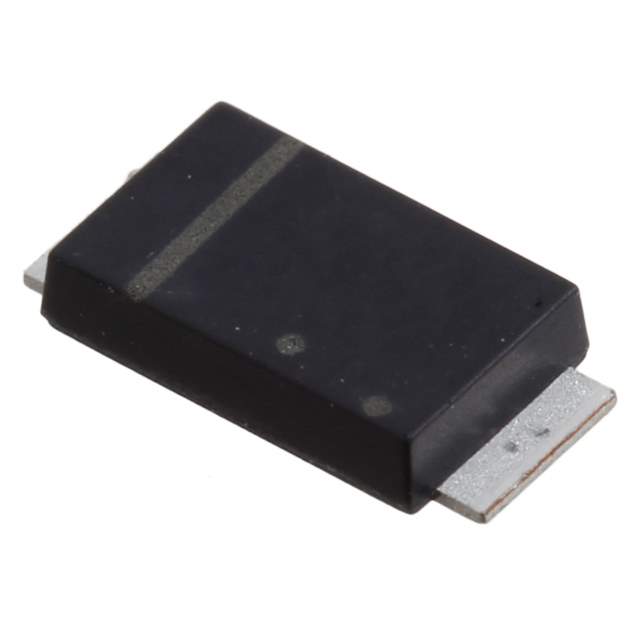
4.7 V nominal, 2 W ceiling, SOD-128 SMT package, ±5% tolerance, with a lifecycle conflict
Quick Engineering Summary
| Field | Value |
|---|---|
| Manufacturer | Panasonic |
| Category | Diodes - Zener - Single |
| Package | Tape & Reel |
| Core function | DIODE ZENER 4. |
| Key electrical range | Current - Reverse Leakage @ Vr: 40 µA @ 1 V; Power - Max: 2 W; Tolerance: ±5%; Voltage - Forward (Vf) (Max) @ If: 1.2 V @ 200 mA |
| Reported stock | 1 pcs reported — confirm on RFQ |
Wrong for fresh releases, usable for running lines
Wrong for a fresh release. Usable for an existing build, yes, but only if DZ2404700L is already qualified and the lifecycle conflict is acceptable inside that program.
That conflict drives the call more than the electrical summary does: one field says Active, another says 停止提供. So the conservative read is sustaining only.
Electrically, it is a familiar board-level zener: 4.7 V nominal, ±5% tolerance, 2 W maximum, SOD-128, SMT mount. EU RoHS is compliant, and MSL 1 helps on handling. Those points are fine, but they do not overcome the lifecycle mismatch for new programs.
The weak point is tolerance, not package size
Start with the weak point: ±5% tolerance. For a 4.7 V zener, that spread is wide enough to rule it out where the threshold itself is the tight requirement rather than simple overvoltage limiting.
The stronger numbers are elsewhere. The 2 W rating is a ceiling, and the 1.2 V maximum at 200 mA in forward conduction is a ceiling too. That tells you this is not a tiny signal zener, but it still leaves the thermal picture open because no thermal resistance or derating curve is listed, and the forward point only helps if fault polarity or AC swing can drive the diode that way.
The 60 Ohms maximum Zzt matters as well, since dynamic impedance shows up directly as a softer clamp when current moves around.
Can you actually buy it for a line?
Can you get enough of it to matter? Barely.
Stock is 1, the standard package is 3,000, and the package is Tape & Reel. That keeps DZ2404700L in line-support territory, not broad deployment.
Fits board clamps better than precision references
4.7 V sets the tone. That number points DZ2404700L toward straightforward board-level zener duty where an SMT SOD-128 clamp is needed and some spread is acceptable.
It is a poor fit for threshold-setting roles that depend on a narrow voltage window, because the listed tolerance is ±5% and the listing gives no deeper curve detail across current. The 40 µA reverse leakage at 1 V is only a narrow data point; it says leakage is specified at very low reverse bias, not what happens near the nominal zener region.
Use it for simple protection or bias roles. Keep it out of spots where exact knee behavior decides pass or fail.
The real blocker is what the listing leaves out
The constraint is missing thermal and surge context. The visible numbers are enough to sketch the part, but not enough to decide whether it survives real fault energy or only looks acceptable on a BOM.
You do get the nominal zener voltage, the tolerance, the power ceiling, one forward-drop point, and the 60 Ohms maximum Zzt. What you do not get is the information that turns those figures into a release decision under heat and stress, especially when a 2 W ceiling can mean very different things depending on board copper, pulse shape, and ambient conditions.
There is no derating curve, so the 2 W maximum cannot be translated into ambient headroom. There is no thermal resistance, so board copper and pulse heating stay unresolved. There is no surge or non-repetitive forward current figure, which leaves fault energy handling open. There is no mechanical drawing or pinout detail here either; SOD-128 identifies the package family, not the land pattern you release.
That is the real stop point for DZ2404700L. The next useful document is the manufacturer datasheet, specifically for thermal derating, surge capability, and package drawing.
View the Win-Source product page for DZ2404700L.
Key Takeaways for Engineers & Buyers
- Treat the 2 W rating as a ceiling and wait for thermal data before assigning ambient headroom.
- Hold buys to existing production demand; stock shows 1 while standard package is 3,000.
- Check clamp accuracy against the ±5% zener tolerance before locking any 4.7 V threshold.