
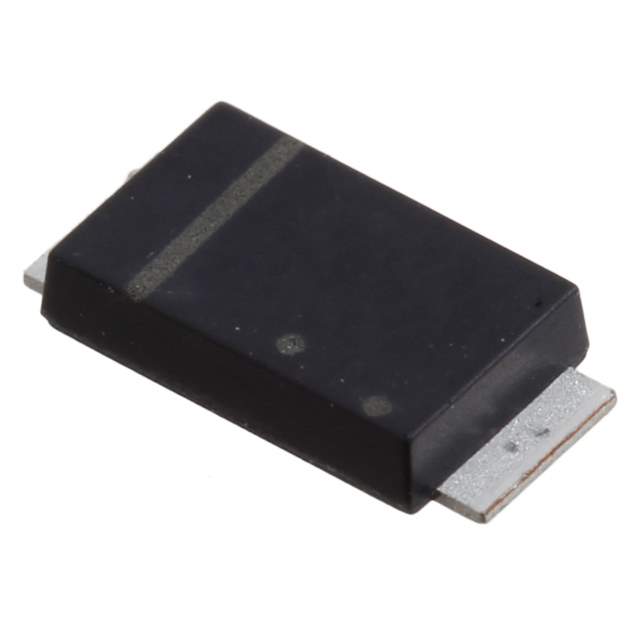
6.8 V nominal, 2 W ceiling, 30 Ohms max Zzt, 4-SMD no-lead package, with a lifecycle conflict
Quick Engineering Summary
| Field | Value |
|---|---|
| Manufacturer | Panasonic |
| Category | Diodes - Zener - Single |
| Package | 292-LBGA |
| Core function | DIODE ZENER 6. |
| Key electrical range | DIODE ZENER 6.8V 2W TMINIP2 |
| Reported stock | 1 pcs reported — confirm on RFQ |
6.8 V is useful, but it does not settle the part choice
6.8 V is the nominal zener value. That gets DZ2406800L into low-voltage clamp or reference work where a single zener rail matters, but it does not settle how tightly the rail holds on its own.
The harder limit is the combination of ±5% tolerance and 30 Ohms maximum Zzt. That set can work for coarse protection or bias limiting, yet it does not support a precision reference call, and it leaves clamp stiffness moving with current instead of locking it down.
Don't start a new design here
Don't.
An Active lifecycle flag appears alongside a stop-supply signal, and that conflict is enough to push DZ2406800L out of clean new design-in territory and into sustaining use only. EU RoHS is straightforward; lifecycle is not.
The supply picture is even tighter: stock is 1. Use it only to cover an existing production need, then clear the lifecycle status with Panasonic before letting DZ2406800L onto a fresh BOM.
The forward and leakage limits define the real operating risk
The weak point is missing context; the strong point is that the few electrical numbers here still show where DZ2406800L can get into trouble.
Start with the 2 W maximum. It is a ceiling, not a working point, and it decides whether this zener belongs in a light clamp role or in a spot where repeated dissipation builds in a very small body. Package information is messy — 292-LBGA, 4-SMD no lead, SOT-6, SOD-128, and T迷你型P2-F2-B all appear — so that power figure cannot be separated from package confirmation, because the thermal path, land pattern, and assembly assumptions all shift together if the package call is wrong.
Then there is the forward condition: 1.2 V at 200 mA. That is not a zener target. It is a forward-drop condition, and it shows that DZ2406800L can turn into a real heat source if polarity is driven the wrong way or if a transient pushes the clamp into forward conduction. In field returns, that is the kind of mistake that leaves the protection part running hottest.
Reverse leakage matters too: 10 µA at 3 V. Since 3 V sits below the 6.8 V nominal zener value, this is only a leakage checkpoint, not evidence of behavior near breakdown. It helps when a high-impedance bias network can be moved by off-state leakage, but it does not replace a full reverse I-V curve.
The missing datasheet items are not small details
30 Ohms maximum Zzt is the last hard electrical number before the listing runs out. What is missing closes the real decisions: pinout, package drawing, thermal resistance, and surge current.
View the Win-Source product page for DZ2406800L.
Key Takeaways for Engineers & Buyers
- Hold DZ2406800L to existing production; the lifecycle record shows Active and stop-supply at the same time.
- Budget around the 2 W maximum and 1.2 V at 200 mA forward condition; that pair sets heat, not just clamp voltage.
- Pull the full datasheet for pinout and thermal data before layout; this listing stops at package names.