
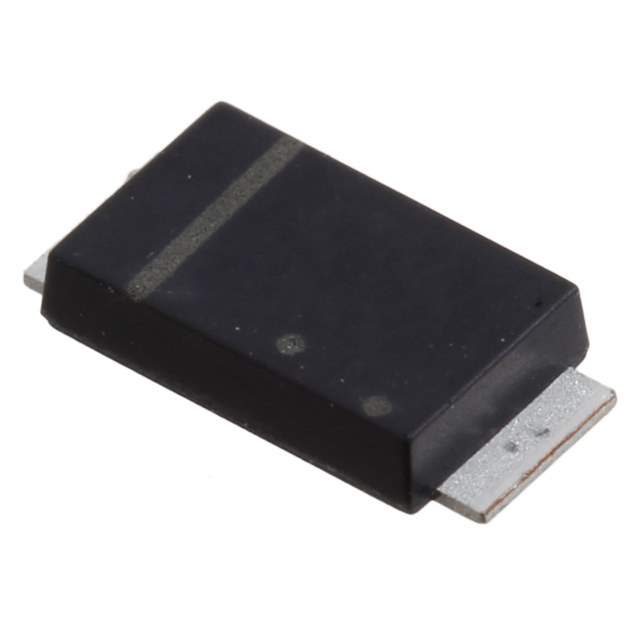
24 V nominal, 2 W max, SOD-128 SMT, ±5% tolerance; lifecycle conflict matters more than the clamp value
Quick Engineering Summary
| Field | Value |
|---|---|
| Manufacturer | Panasonic |
| Category | Diodes - Zener - Single |
| Package | Tape & Reel |
| Core function | DIODE ZENER 24V 2W TMINIP2 |
| Key electrical range | Current - Reverse Leakage @ Vr: 10 µA @ 17 V; Power - Max: 2 W; Tolerance: ±5%; Voltage - Forward (Vf) (Max) @ If: 1.2 V @ 200 mA |
| Reported stock | 1 pcs reported — confirm on RFQ |
Still not a clean new design-in
And that is the real call: DZ2424000L is not held back by its electrical headline so much as by its lifecycle story. One field says Active, another says 停止提供, and that conflict is enough to keep it out of a fresh design release.
For an existing production line, it can stay in play if the 24 V nominal zener and SOD-128 footprint already match the board. For a new release, treat it as sustaining-only until Panasonic clears the status. EU RoHS is compliant, and MSL 1 (Unlimited) removes one handling nuisance, but neither one fixes a lifecycle conflict.
The 24 V mark is useful, but it doesn't finish the rail call
The weak point comes first: ±5% on a 24 V zener is not a precision answer by itself. If the clamp window is tight, that tolerance leaves real uncertainty around where DZ2424000L starts to protect and where it starts to interfere.
The stronger numbers are the ceilings around it. The 2 W maximum is a ceiling, not a working dissipation target, so this part fits modest shunt or protection duty rather than a case where a sustained fault sits on the diode. The 30 Ohms maximum Zzt matters too, because the clamp will not behave like an ideal voltage wall as line and load move around breakdown.
What the listed Vf and leakage really tell you
Use it carefully.
The forward figure is 1.2 V maximum at 200 mA, and that is a ceiling tied to a stated current, not a promise of normal forward operation. It shows that DZ2424000L can survive being driven like an ordinary diode up to that listed point, while also making clear that forward conduction carries a real drop that belongs in the dissipation budget and in the fault case if current can be pushed through the part in that direction.
Reverse leakage is 10 µA at 17 V. That is low enough to keep the part plausible on monitor, reference, or light clamp nodes where standby drain matters, but it says nothing about behavior at the 24 V nominal zener point because the leakage condition sits below breakdown. Treating a pre-breakdown leakage number as if it described clamp current is the kind of shortcut that turns a tidy bench assumption into a bad protection call.
Package fit is straightforward: SMD in SOD-128, supplier package TMiniP2-F2-B, tape and reel packing, standard package 3,000. That lines up with board-level assembly rather than hand-loaded service hardware. It also makes sense only where a compact zener is already qualified into an SMT flow; DZ2424000L is the wrong choice when the design needs a documented surge part or a through-hole field replacement.
The buy constraint is stock, not packaging
Wrong for buffer stock. Fine for a specific build.
There is 1 in stock, while the standard package is 3,000 and the part ships on tape and reel. Buy only against a known requirement, then clear the lifecycle conflict before adding DZ2424000L to any new AVL entry.
The missing data that still matters
What is still missing? Operating temperature, surge or IFSM rating, thermal resistance, and pinout or package drawing. Those are the items that close the fault-energy, ambient, and footprint checks for DZ2424000L.
View the Win-Source product page for DZ2424000L.
Key Takeaways for Engineers & Buyers
- Hold DZ2424000L out of new releases until the Active versus 停止提供 conflict is resolved.
- Check the clamp window against 24 V nominal and ±5% tolerance before using DZ2424000L on a tight rail.
- Buy only against a build need; stock is 1 and standard package is 3,000.