
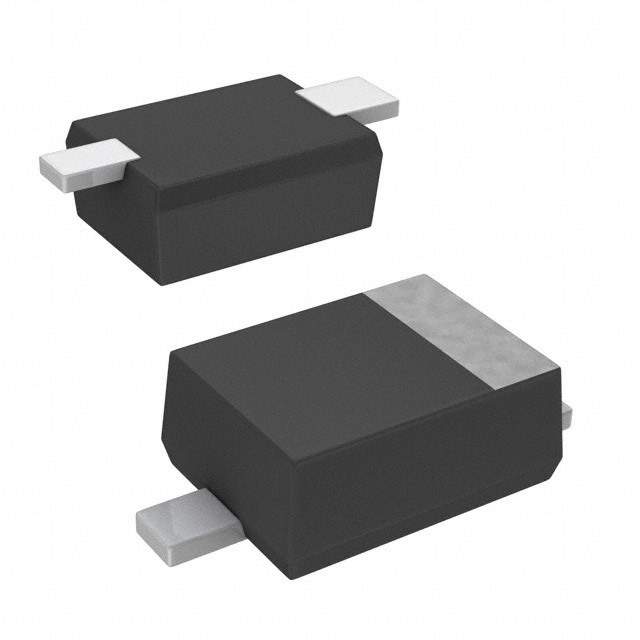
2.4V zener, 200mW ceiling, SC-90/SOD-323F package, ±5% tolerance, with lifecycle conflict to resolve first
Quick Engineering Summary
| Field | Value |
|---|---|
| Manufacturer | Panasonic |
| Category | Diodes - Zener - Single |
| Package | SC-90, SOD-323F |
| Core function | DIODE ZENER 2. |
| Key electrical range | Current - Reverse Leakage at Vr: 120μA at 1V; Maximum Power: 200mW; Supply and Demand Status: Limited; Tolerance: ±5% |
| Reported stock | 31000 pcs reported — confirm on RFQ |
Keep it on running lines, not fresh BOMs
Sustaining only.
The package and voltage fit a small SMD zener role, but the lifecycle story is too messy for a new program. One field says Active, another says 停止提供, and that conflict matters more than the nominal 2.4V because it can turn a routine clamp choice into a line-maintenance problem later. For existing production, the listed 31000 pieces and reel packaging support controlled buys while the approved part stays in place.
EU RoHS is compliant, and MSL 1 (Unlimited) removes one handling concern. It does not resolve the lifecycle conflict.
200mW is the real ceiling
200mW is the limit.
That ceiling puts DZ2J02400L in low-power clamp and reference duty, not as a working target.
The weak point is impedance, not package size
Impedance is the weak spot.
DZ2J02400L still earns its place on dense boards because it comes in SC-90, SOD-323F with an SMini2-F5-B supplier package, where a through-hole zener never belonged. But a 2.4V nominal zener with 100 Ohms maximum Zzt is not the pick when rail stiffness comes first.
The other number that shifts the decision is 120μA at 1V reverse leakage. That is a listed leakage point, not a blanket low-leakage promise across the operating range, so it helps only if your concern sits near that reverse condition. On the forward side, 1V at 10mA sets a dissipation budget in fault or polarity-reversal cases, but without a forward curve you still do not know how sharply loss rises away from that point.
Can you actually keep buying it?
Can you still get it?
If this part is already qualified, yes, with caution. The immediate constraint is not pack quantity 1 or reel packaging; it is Supply and Demand Status marked Limited plus the lifecycle conflict hanging over DZ2J02400L. Treat it like a sustaining part: pull in the reel quantity you need from the listed 31000 while stock exists, and don't let a new board spin depend on a diode whose status already disagrees with itself.
What the listing still doesn't answer
And that leaves the practical gaps. DZ2J02400L stops short of the details that decide whether a tiny 2.4V zener behaves well in a real clamp path or only looks acceptable on a BOM, because there is no operating temperature range, no thermal resistance, no surge or overload figure such as IFSM, and no drawing or pinout detail here to close the land-pattern and orientation check.
The electrical omissions matter just as much, and in some designs they matter more than the headline voltage: there is no reverse-recovery time, no junction capacitance, and no zener test-current context beyond the nominal 2.4V and 100 Ohms maximum impedance, so speed-sensitive clamping, AC loading, and the firmness of the zener voltage under your intended bias all stay unresolved.
That is why the part fits existing designs better than new ones. The published basics are enough to keep a known application moving, but not enough to remove the concrete questions around trr, thermal behavior, and pinout that usually need to be closed before a fresh release.
View the Win-Source product page for DZ2J02400L.
Key Takeaways for Engineers & Buyers
- Hold DZ2J02400L to clamps and references that can live with 2.4V nominal and ±5% spread.
- Budget dissipation against the 200mW ceiling before using DZ2J02400L as a continuous shunt element.
- Buy reel stock against the listed 31000 pieces if this part is already on your line.