
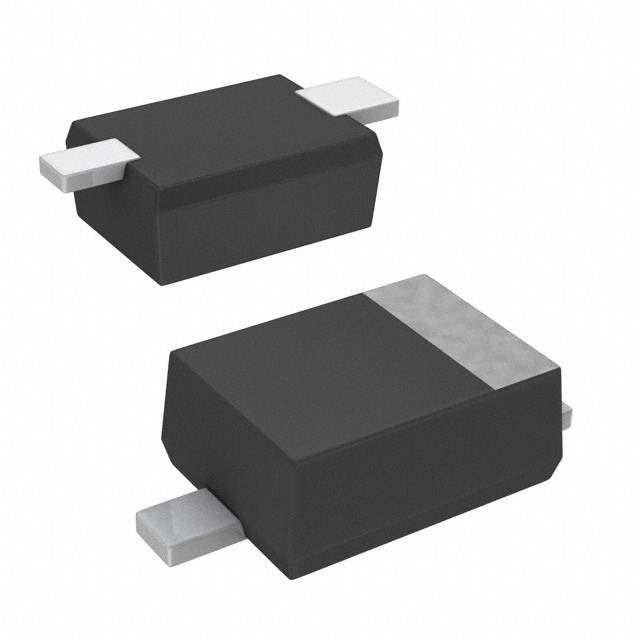
3 V zener, 200 mW ceiling, SMini2-F5-B package, 1 V at 10 mA forward limit
Quick Engineering Summary
| Field | Value |
|---|---|
| Manufacturer | Panasonic |
| Category | Diodes - Zener - Single |
| Package | SMini2-F5-B |
| Core function | DIODE ZENER 3V 200MW SMINI2 |
| Key electrical range | Current - Reverse Leakage @ Vr: 50μA @ 1V; Maximum Power Dissipation: 200mW; Supply and Demand Status: Balance; Tolerance: ±2.5% |
| Reported stock | 30000 pcs reported — confirm on RFQ |
Can you start a new build on this part?
Can we put it on a new BOM? Probably not.
The problem is the lifecycle conflict: Lifecycle Status is Active, while another lifecycle field says 停止提供. That is enough to keep it out of a fresh design-in unless you already have internal approval to use it only as a sustaining source.
For an existing production line, the picture is better. There are 30000 pieces listed, packaging is Reel - TR with 3k pcs per package, the supply-and-demand field says Balance, and EU RoHS is compliant. Compliance is not the blocker here; lifecycle ambiguity is.
The 3 V marking does not settle the clamp behavior
It doesn't.
The listed 3 V is the nominal zener voltage, and the ±2.5% tolerance shows how tightly that nominal point is held. It does not tell you what current is required to reach regulation in your circuit, so it still leaves open how hard DZ2J030M0L clamps under a real fault or reference load.
The 120 Ohm maximum impedance matters more than the headline voltage, because a zener with that ceiling can shift under current change even when the nominal value looks acceptable on paper. Add the 50µA reverse leakage at 1V and the likely fit becomes clearer: low-power bias or reference duty where leakage at low reverse voltage matters. What is still missing is proof of tight dynamic behavior across load steps.
200 mW is the real design limit here
200 mW decides it.
That maximum power dissipation is a ceiling, not an operating point, and in a tiny SMini2-F5-B body it rules out casual use as a catch-all shunt for unknown fault energy. Pair that with the listed 1 V forward drop at 10mA and you can at least see the forward-conduction limit the part implies, but not enough to size thermal margin confidently because the thermal path is not described.
The package details narrow the fit further. DZ2J030M0L is SMD (SMT) in SMini2-F5-B, and the package note also calls out SC-90, SOD-323F, so this is a small board-level zener for dense layouts rather than a part for generous pulse handling or easy manual rework. Get that call wrong and the failure mode is straightforward: the dissipation ceiling arrives before the schematic warning does.
The listing also stops short where the hard decisions begin. There is no derating curve, no thermal resistance, no surge or IFSM figure, and no operating temperature field. Those missing items decide ambient headroom, pulse tolerance, and whether DZ2J030M0L survives anything beyond a very modest steady-state protection or reference role.
What the missing datasheet items still have to answer
30000 pieces help, but they don't close the engineering gaps.
The missing items that matter are the derating curve, thermal resistance, IFSM or other surge rating, and the package drawing with pinout. For a zener, the zener test current behind the 3 V rating also matters, because without it the nominal voltage is only half the story.
View the Win-Source product page for DZ2J030M0L.
Key Takeaways for Engineers & Buyers
- Treat 200 mW as the dissipation ceiling; don't use DZ2J030M0L where surge or thermal headroom is undefined.
- Lock the SMini2-F5-B footprint before release; the listing gives no pinout or package drawing.
- Buy on reel in 3k pcs lots if the line is already qualified; 30000 pieces are listed today.