
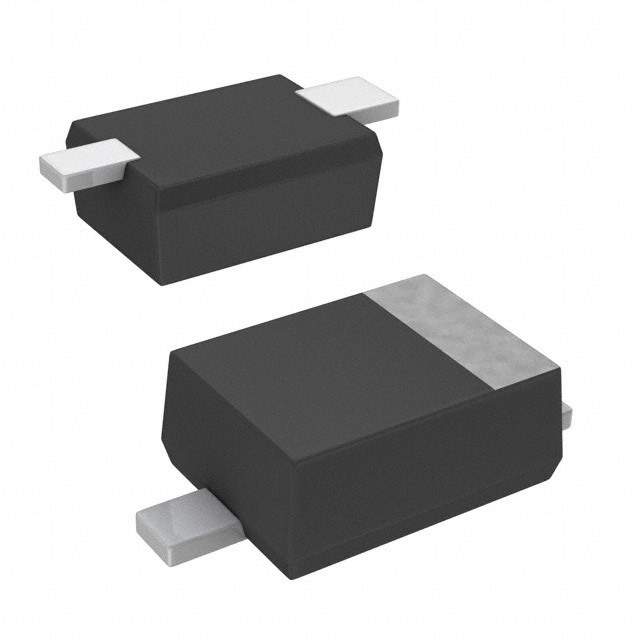
3.3V zener, 200mW ceiling, SMini2-F5-B package, ±5% tolerance; lifecycle conflict is the real decision point.
Quick Engineering Summary
| Field | Value |
|---|---|
| Manufacturer | Panasonic |
| Category | Diodes - Zener - Single |
| Package | SMini2-F5-B |
| Core function | DIODE ZENER 3. |
| Key electrical range | Current - Reverse Leakage @ Vr: 20μA @ 1V; Maximum Power Dissipation: 200mW; Supply and Demand Status: Balance; Tolerance: ±5% |
| Reported stock | 18000 pcs reported — confirm on RFQ |
200mW is the limit that decides this part
200mW is the ceiling that makes or breaks the decision. In a 3.3V zener in SMini2-F5-B, that number does not tell you the usable clamp current by itself, but it does set the class of job: small-signal protection or reference duty, not heavy surge absorption or sustained shunt burn.
The other number that settles fit is 3.3V nominal with ±5% tolerance. That works when the rail can absorb spread, and it rules out nodes that need a tighter reference without trimming or calibration. The 130 Ohm maximum Zzt matters too. Regulation will not stay stiff as current moves, so if you need a hard clamp knee, this is the wrong choice.
Wrong for hard clamps, fine for light board-level protection
Wrong for high-energy suppression. The 200mW ceiling and tiny SMini2-F5-B body push it toward local bias protection, light rail clamping, and simple reference duty on dense SMT boards.
It belongs on the PCB, not at a connector that sees real abuse.
The weak point is lifecycle ambiguity, not the silicon
The weak point is the status conflict: one field says Active, another says 停止提供. That keeps the part out of comfortable new design-in even though the electrical listing is otherwise straightforward and the stock line shows 18000 pieces in Reel - TR.
For an existing production build, the picture is clearer. If the design already accepts a 3.3V zener with ±5% tolerance, 20μA reverse leakage at 1V, and 1V forward drop at 10mA, the part remains usable for continuity. Those last two numbers are not selling points; they simply bound reverse leakage at the stated condition and forward conduction in the wrong direction if the node gets abused.
What the listing does not close is the thermal and dynamic behavior that usually decides whether a small zener is comfortable or marginal in service. There is no derating curve, no thermal resistance, no surge figure, and no operating temperature, so ambient headroom and pulse behavior stay unresolved. The package drawing and pinout are also missing, which leaves footprint fit and orientation unanswered if the layout is already frozen.
Buy it for continuity, but clear the missing data first
So the constraint is simple: lifecycle uncertainty outranks availability. If the part is already on your BOM, secure the reel-form supply needed for the current build and keep it on a short leash.
The missing items worth chasing are the derating curve, thermal resistance, surge or overload capability, and the package drawing with pinout. Those will settle ambient margin and whether it drops into an existing land pattern without surprises.
View the Win-Source product page for DZ2J03300L.
Key Takeaways for Engineers & Buyers
- Treat 200mW as the dissipation ceiling; check whether your clamp duty stays comfortably below it.
- Hold the rail target against 3.3V with ±5% tolerance before locking DZ2J03300L into a reference node.
- If this is for an existing build, cover the next reel break now; listed stock is 18000 and packaging is Reel - TR.