
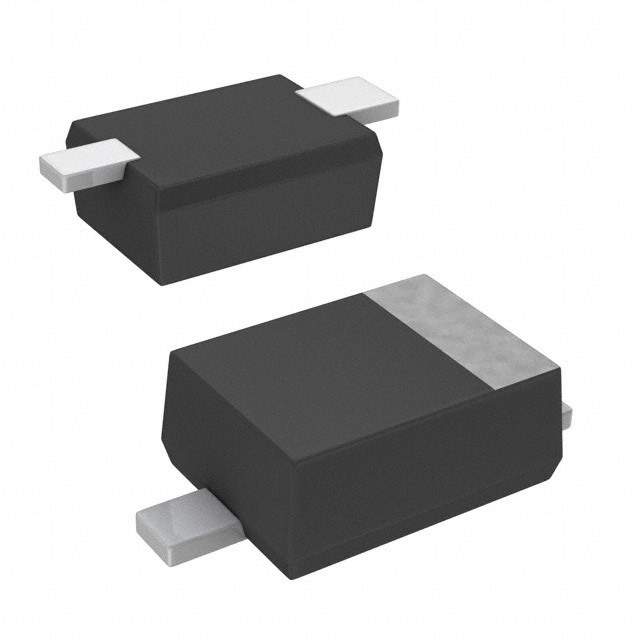
3.6V nominal zener, 200mW ceiling, SMini2-F5-B package, ±5% tolerance
Quick Engineering Summary
| Field | Value |
|---|---|
| Manufacturer | Panasonic |
| Category | Diodes - Zener - Single |
| Package | SMini2-F5-B |
| Core function | DIODE ZENER 3. |
| Key electrical range | Current - Reverse Leakage @ Vr: 10μA @ 1V; Maximum Power Dissipation: 200mW; Supply and Demand Status: Balance; Tolerance: ±5% |
| Reported stock | 3000 pcs reported — confirm on RFQ |
Can you start a new build on this part?
Can you release a new build on it with confidence? Only if you have to. The package, voltage class, and SMD format fit a small zener clamp, but the lifecycle picture does not support a comfortable new release: one status says Active, another says stop supply.
That conflict matters more than the nominal 3.6V. A rail clamp you can't keep buying becomes a line problem before it becomes an electrical one. For existing production, the picture is better: 3000 pieces are listed, packaging is reel - TR, and RoHS is compliant under EU RoHS. That supports sustaining use, not a broad green light for fresh design-in.
200mW is the ceiling that sets the whole conversation
200mW is the hard ceiling. It decides whether DZ2J03600L belongs in the protection network at all.
That rating is maximum power dissipation, so it sets the upper bound on what the device may absorb, but it does not answer how long a surge lasts, how ambient temperature shifts the limit, or how much board copper helps. The rest of the electrical picture has to be read under that cap.
The zener point is 3.6V with ±5% tolerance, which works for low-voltage reference or clamp duty where that spread is acceptable and rules it out where the rail window is tight. The forward figure is 1V at 10mA, and if the diode is ever driven forward, that drop and current count toward dissipation. The 10µA at 1V reverse leakage helps when off-state bleed matters, but it is not a statement about behavior near the zener region.
What the listed numbers say about real fit
And that narrows the fit more than the category label suggests. DZ2J03600L is a single zener in SMini2-F5-B, mounted as SMD, so it belongs in dense board-level clamp and bias jobs where footprint matters and the energy stays modest. If the node sits near 3.3V, the 3.6V nominal value is the reason it stays in the conversation.
The 130 Ohm maximum impedance matters because the zener region is not infinitely stiff; as current moves, the clamp voltage will move too, so this is not the part to treat like a precision reference element. It still fits simple protection and coarse biasing, but it moves out of contention when the clamp point itself has to be tightly controlled across operating current.
Package details point the same way. This is for very small-outline assembly, not leaded service work or layouts meant to be friendly to hand rework.
The harder fit calls remain open because several concrete items are missing. There is no operating temperature, no derating curve, no thermal resistance, and no surge or overload figure such as IFSM. Those gaps are what separate a harmless low-energy clamp from a field return when the transient is repetitive instead of occasional.
The buy decision is about continuity, not availability
The weak point comes first: lifecycle conflict. The useful counterweight is that DZ2J03600L is on hand at 3000 pieces and comes on reel - TR, so a running SMT line won't hit a packaging mismatch.
Treat it as a sustaining buy. Cover the current build window, then stop treating DZ2J03600L as settled for future releases until the stop-supply signal is resolved.
View the Win-Source product page for DZ2J03600L.
Key Takeaways for Engineers & Buyers
- Treat 200mW as the dissipation ceiling when sizing any clamp duty on DZ2J03600L.
- Check that ±5% on the 3.6V zener point still protects the rail window you actually have.
- Book reel demand against the 3000-piece stock if DZ2J03600L is already on a running BOM.