
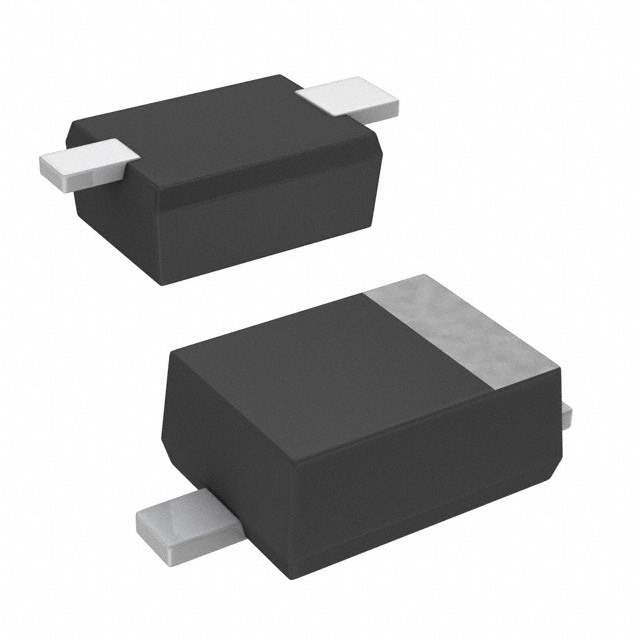
3.9V zener, 200mW ceiling, SMini2-F5-B package, and a lifecycle conflict that changes the buy call
Quick Engineering Summary
| Field | Value |
|---|---|
| Manufacturer | Panasonic |
| Category | Diodes - Zener - Single |
| Package | SMini2-F5-B |
| Core function | DIODE ZENER 3. |
| Key electrical range | Current - Reverse Leakage @ Vr: 10μA @ 1V; Maximum Power Dissipation: 200mW; Supply and Demand Status: Balance; Tolerance: ±2.5% |
| Reported stock | 10603 pcs reported — confirm on RFQ |
The lifecycle conflict is the real decision point
The weak point comes first: DZ2J039M0L is marked Active, but the same record also carries a 停止提供 signal. That conflict keeps it out of a fresh platform unless you already have a reason to stay with it.
The better fit is sustaining use. The part is still stocked at 10603, supply and demand is marked Balance, and it is EU RoHS compliant, so there is a practical path to keep a running line moving. Don’t let the Active label outweigh the contradiction beside it.
What would a buyer ask first: can we keep building with it?
Can we keep building with it? Yes, for now. The immediate constraint is not package availability or compliance; it is the mixed lifecycle signal, so the buy decision should track existing production demand rather than a broad release.
The packaging details help if you are already committed. It is supplied on Reel - TR, with 3k pcs per package, and the listed stock is 10603. That supports line loading and replenishment better than ad hoc small-lot handling. Place orders against known consumption, because the lifecycle conflict is the one fact here that can still stall a build.
This is a 3.9V clamp, not a power part
Keep it narrow.
The 3.9V zener rating is the reason to use DZ2J039M0L, but it does not settle dynamic clamp behavior by itself. The ±2.5% tolerance tells you how tightly that nominal value is held, so it fits reference trimming, rail limiting, or low-energy protection where that spread matters.
The 200mW maximum power dissipation is a ceiling, and in this package it is the ceiling that bites first. If your fault case leans on the zener for more than brief, modest energy, this listing gives you no room to pretend otherwise. The 130 Ohm maximum Zzt matters too: it points to limited regulation stiffness, so a circuit expecting a very hard knee from a tiny zener may wander more than the nominal 3.9V suggests.
Fit is fine for dense SMD bias networks, thin for anything harsher
And this is where the fit gets concrete. DZ2J039M0L is an SMD zener in SMini2-F5-B, with the row also naming SC-90, SOD-323F, so it belongs in compact board-level work where footprint pressure is real and the zener is doing housekeeping rather than absorbing abuse.
The forward figure, 1V at 10mA, is not a normal zener operating target; it is the forward-direction ceiling point the listing gives you. That matters because accidental forward bias is not free, and in a protection network it can become the hidden dissipation path that shows up later as drift or shorts.
Use it where reverse leakage of 10µA at 1V is acceptable and where a small-signal zener package makes sense. What the listing does not cover matters just as much: there is no operating temperature, no surge figure, and no thermal resistance, so it does not close any argument about repetitive fault energy, hot-ambient headroom, or pulse survival.
The missing numbers are the ones that finish the review
200mW is not enough by itself. The gaps that still matter are operating temperature, thermal resistance, surge capability, and a package drawing or pinout for DZ2J039M0L.
View the Win-Source product page for DZ2J039M0L.
Key Takeaways for Engineers & Buyers
- Hold DZ2J039M0L to rails that truly need a 3.9V zener target with ±2.5% tolerance.
- Budget around the 200mW ceiling first; that limit closes off casual clamp duty in a tiny SMini2-F5-B body.
- Buy in reel multiples where possible: packaging is Reel - TR with 3k pcs per package.