
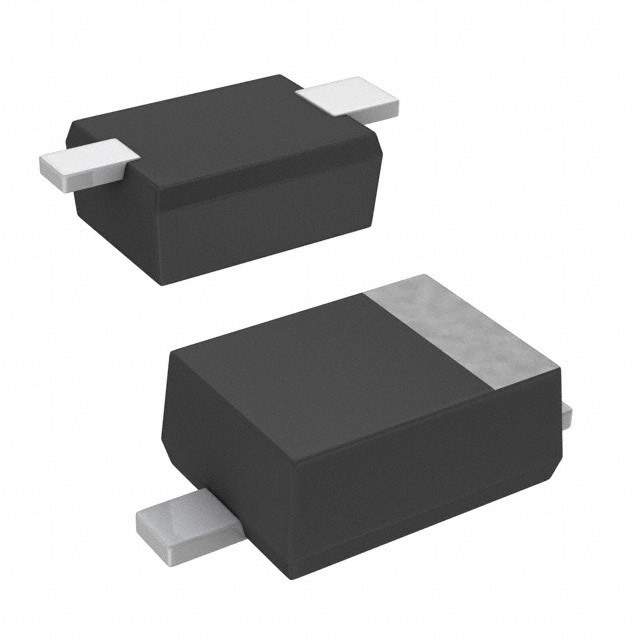
4.3V zener, 200mW ceiling, SMini2-F5-B package, ±5% tolerance, 1V at 10mA forward limit
Quick Engineering Summary
| Field | Value |
|---|---|
| Manufacturer | Panasonic |
| Category | Diodes - Zener - Single |
| Package | SMini2-F5-B |
| Core function | DIODE ZENER 4. |
| Key electrical range | Current - Reverse Leakage @ Vr: 10μA @ 1V; Maximum Power Dissipation: 200mW; Supply and Demand Status: Balance; Tolerance: ±5% |
| Reported stock | 2790 pcs reported — confirm on RFQ |
Not for fresh platforms; acceptable on a running line
Wrong for a fresh platform. The lifecycle story conflicts before the electrical limits even matter: one field says Active, another says 停止提供, so DZ2J04300L belongs in sustaining-only planning until that contradiction is cleared.
Its fit is narrower and more practical on an existing line. If the design already uses a 4.3V nominal zener in an SMini2-F5-B footprint and stays within a 200mW ceiling, this part can still support production. EU RoHS is straightforward, and reel packaging helps line loading, but neither changes the lifecycle risk.
Can you actually keep buying it?
Can you keep the line fed? There are 2790 pieces listed on reel - TR, which supports a controlled sustaining buy better than a speculative redesign, but it does not answer the long-term continuity question.
The lifecycle conflict still sets the boundary. If DZ2J04300L is already on a released assembly, cover the near-term requirement against the 2790 on hand while the manufacturer status is cleared in parallel.
The 200mW ceiling matters more than the 4.3V label
The weak point comes first: 200mW is a small dissipation ceiling. In a tiny SMini2-F5-B body, that limit will shut down casual use as a clamp or reference long before the 4.3V nominal value sounds restrictive.
Electrically, the 4.3V nominal Vz with ±5% tolerance places DZ2J04300L in low-voltage bias, reference, or light clamp duties that truly target 4.3V. It does not support a tighter-regulation reading, because ±5% is the listed spread and nothing here narrows it. The 130 Ohm maximum Zzt is another caution point rather than a comfort number; if the circuit needs a stiff zener characteristic, that ceiling says voltage movement under changing current may be larger than the design wants.
The forward-side number needs the same discipline. The listing gives 1V at 10mA as a maximum forward-drop point, useful as a dissipation budget marker when the diode is driven forward by mistake or by design, not as a normal zener operating point. Reverse leakage is 10µA at 1V, and that helps only at that stated reverse condition; it does not describe leakage near the 4.3V zener region, so the listing does not support a broader low-leakage claim.
Small SMD zener, but only for modest jobs
Narrow fit.
DZ2J04300L suits compact surface-mount work where the board already expects a single zener in SMini2-F5-B and the job is modest enough that 200mW remains a ceiling with room to spare. That points more toward local protection and simple bias functions than energy-heavy use.
It does not belong where the zener must absorb repeated stress without a published surge story or where tight voltage behavior is the whole reason to choose the part. The package and category set expectations, and the listed limits show how quickly those expectations can be exceeded.
What the listing still doesn't answer
And that leaves the practical gaps: pinout or package drawing, thermal resistance, derating curve, and a surge or IFSM rating. Those missing items decide ambient headroom, land pattern confidence, and how much abuse the zener can survive.
View the Win-Source product page for DZ2J04300L.
Key Takeaways for Engineers & Buyers
- Hold DZ2J04300L for rails that truly want 4.3V nominal, not adjacent clamp targets.
- Budget around the 200mW ceiling first; that limit closes small-package headroom fast.
- Resolve the Active versus 停止提供 conflict before adding DZ2J04300L to a new BOM.