
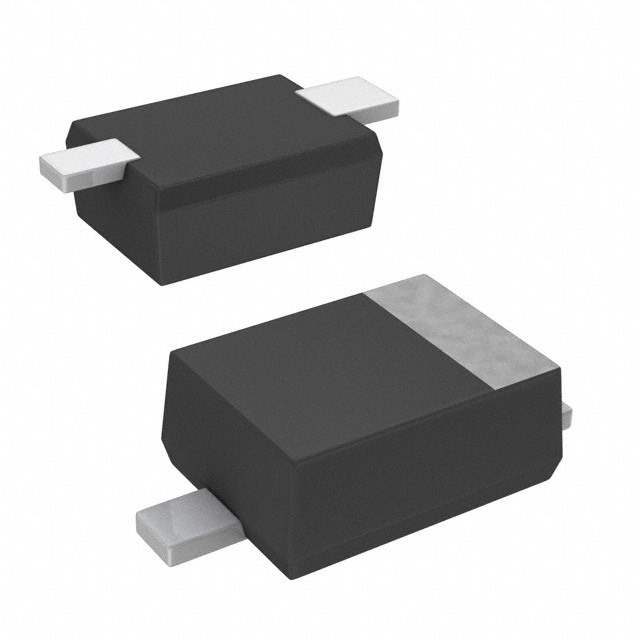
4.3V zener, 200mW ceiling, SMini2-F5-B package, ±2.5% tolerance, with conflicting lifecycle signals
Quick Engineering Summary
| Field | Value |
|---|---|
| Manufacturer | Panasonic |
| Category | Diodes - Zener - Single |
| Package | SMini2-F5-B |
| Core function | DIODE ZENER 4. |
| Key electrical range | Current - Reverse Leakage @ Vr: 10μA @ 1V; Maximum Power Dissipation: 200mW; Supply and Demand Status: Sufficient; Tolerance: ±2.5% |
| Reported stock | 222200 pcs reported — confirm on RFQ |
Not for fresh platforms; acceptable on a running line
This is the wrong zener to anchor a fresh platform. DZ2J043M0L carries a direct lifecycle conflict: Active in one field, 停止提供 in another. That rules out an easy new design-in call when the same record disagrees with itself.
For existing production, the picture is better. The stock figure is 222200, supply status is sufficient, and the part is on reel with 3k pcs per package, so it is practical when you need continuity on a board that already expects a 4.3V single zener in SMini2-F5-B. Keep the decision conservative. EU RoHS is compliant.
The electrical story is narrow
Use it carefully.
The 4.3V Vz and ±2.5% tolerance set a fairly tight clamp target for a small signal rail or reference trim point, but they do not show how voltage shifts across current because the operating curve is not here.
200mW is the ceiling that decides the job
200mW is not much room. That maximum power dissipation keeps DZ2J043M0L in low-power clamp and reference duty, not in abuse-heavy surge work or any spot where the zener is expected to sit in conduction for long stretches.
The forward figure matters too, but only as a limit: 1V at 10mA is a maximum forward drop at a stated current, so if your circuit can ever drive the device forward, that pair sets a dissipation budget you still have to respect. The reverse leakage figure, 10μCA at 1V, is useful mainly for very light-bias nodes; it does not answer leakage near the nominal zener region because that condition is not listed.
Then there is Zzt. A maximum impedance of 130 Ohm says the zener voltage will not behave like an ideal stiff reference, especially if the surrounding circuit expects a hard clamp under changing current. In practice, it belongs in modest shunt and protection roles where some movement is acceptable, not in a precision reference position that lives or dies on dynamic stiffness.
Package fit is easy; the missing curves are not
The constraint is confidence, not footprint. SMD mounting and the SMini2-F5-B case make placement easy on dense boards where a through-hole zener would be out of the question, and reel packaging suits automated assembly without any special handling story beyond the listed dry storage cabinet and humidity protection package.
What still blocks a clean technical signoff is the missing detail around stress and behavior. There is no reverse-recovery time, no junction capacitance, no thermal resistance, and no derating curve. For a zener used on fast edges, the missing capacitance leaves you blind on loading; for a shunt role, the missing thermal path and derating curve leave ambient headroom unresolved; and for any review that cares about package interchange, the listing names SMini2-F5-B and also mentions SC-90, SOD-323F, but it does not carry the drawing or pinout that would settle land pattern and orientation without opening the datasheet.
That is why DZ2J043M0L is easier to keep in a known design than to introduce into a new one. The headline numbers are enough to place it roughly. They are not enough to close the edge cases that usually bite first.
View the Win-Source product page for DZ2J043M0L.
Key Takeaways for Engineers & Buyers
- Hold DZ2J043M0L to 4.3V nominal and ±2.5% tolerance when checking clamp window.
- Budget around the 200mW dissipation ceiling before committing DZ2J043M0L to a sustained shunt role.
- Buy on reel: TR packaging and 3k pcs per package set the incoming format.