
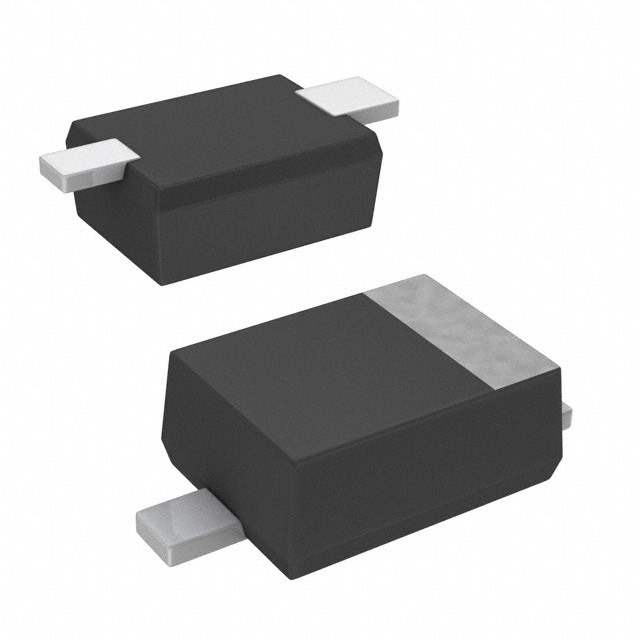
5.6V zener, 200mW ceiling, SMini2-F5-B package, ±2.5% tolerance
Quick Engineering Summary
| Field | Value |
|---|---|
| Manufacturer | Panasonic |
| Category | Diodes - Zener - Single |
| Package | SMini2-F5-B |
| Core function | DIODE ZENER 5. |
| Key electrical range | Current - Reverse Leakage @ Vr: 500nA @ 2.5V; Maximum Power Dissipation: 200mW; Supply and Demand Status: Sufficient; Tolerance: ±2.5% |
| Reported stock | 237000 pcs reported — confirm on RFQ |
Still not a clean new design-in call
And that settles the main question on DZ2J056M0L: keep it in existing production, but do not start a fresh platform on it while the lifecycle story disagrees with itself. One field says Active, another says stop supply, and that conflict matters more than any electrical line item because it determines whether your BOM can survive a routine build cycle without a forced requalification.
The rest of the listing is straightforward for a small zener: 5.6V nominal, 200mW maximum power dissipation, SMD mounting in SMini2-F5-B, and EU RoHS compliance. None of that overrides the lifecycle conflict. If DZ2J056M0L is already on a running line, secure the reel quantity you need and treat it as a sustaining part, not a greenfield choice.
The 200mW limit is the real ceiling
This part is small.
For DZ2J056M0L, 200mW maximum power dissipation is a ceiling, not a target, and it is the number that decides whether this zener belongs in a light clamp or reference role instead of anything that sits near continuous stress. The 5.6V zener voltage sets the nominal clamp point, but it does not settle thermal headroom; the dissipation ceiling does. The ±2.5% tolerance is tight enough to matter when the rail window is narrow, while the 40 Ohm maximum impedance says regulation will move under current, so do not expect an ideal knee from a tiny package.
The 1V maximum forward drop at 10mA is also only a limit. It tells you what happens if DZ2J056M0L is driven forward by mistake or by a transient path, not how to run it as a forward-biased diode.
237000 pieces help, but only for now
237000 pieces can support a running line, and reel packaging with 3k pcs per package fits normal SMT intake. Inventory buys time. It does not resolve the lifecycle conflict around DZ2J056M0L.
Wrong for power clamping, right for tight board space
Wrong for power clamping first: DZ2J056M0L is not the part to reach for when the zener has to absorb much energy, sit hot, or carry a thermal budget nobody has written down yet. The 200mW maximum power dissipation is too small a ceiling to hand-wave, and the listing gives no derating curve, no thermal resistance, and no surge figure to show how quickly that ceiling can collapse on a real board.
Where it fits is compact board-level protection or reference duty where 5.6V nominal is the actual requirement, leakage matters, and assembly wants a small SMD body. The 500nA reverse leakage at 2.5V is low enough to keep bias networks from being dominated by the diode at that test point, but it does not tell you leakage in the full zener region. The SMini2-F5-B package and SMD mounting make DZ2J056M0L as much a footprint-driven choice as an electrical one, especially when the board is dense and the clamp current stays modest.
The missing items are concrete: thermal resistance, derating curve, surge or overload capability, and a package drawing with pin orientation. For a zener in this size class, those omissions separate a safe clamp from a field return.
View the Win-Source product page for DZ2J056M0L.
Key Takeaways for Engineers & Buyers
- Hold DZ2J056M0L to rails that genuinely need a 5.6V zener with ±2.5% tolerance.
- Start with the 200mW ceiling; the small SMini2-F5-B body leaves little room for dissipation mistakes.
- Buy on reel in 3k pcs lots and secure the line while 237000 pieces are available.