
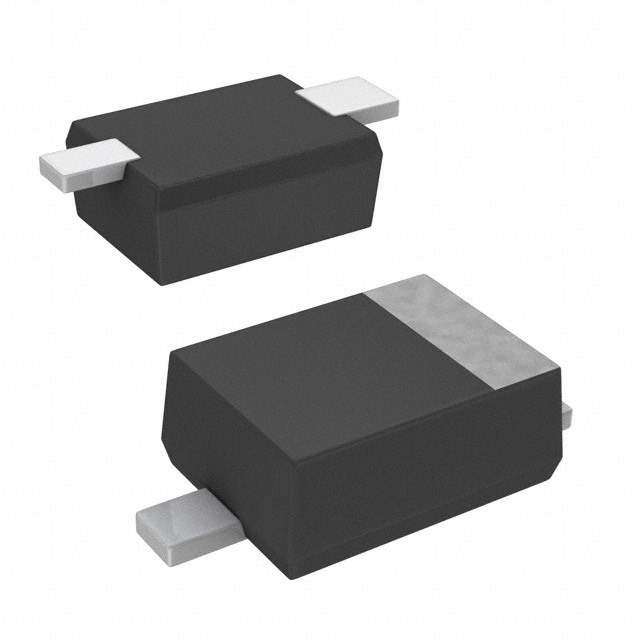
6.2 V nominal, 200 mW ceiling, SMini2-F5-B package, 30 Ohm max impedance
Quick Engineering Summary
| Field | Value |
|---|---|
| Manufacturer | Panasonic |
| Category | Diodes - Zener - Single |
| Package | SMini2-F5-B |
| Core function | DIODE ZENER 6. |
| Key electrical range | Current - Reverse Leakage @ Vr: 200nA @ 4V; Maximum Power Dissipation: 200mW; Supply and Demand Status: Sufficient; Tolerance: ±2.5% |
| Reported stock | 75950 pcs reported — confirm on RFQ |
The lifecycle conflict is the first thing to believe
The weak point comes first: DZ2J062M0L carries a direct conflict between Active status and a stop-supply signal, so it should not go into a fresh platform until that contradiction is cleared. The stronger point is near-term availability. Stock is listed at 75950, and supply-and-demand is marked sufficient, so an existing production line can still use it for continuity now.
That leaves a straightforward call. Treat DZ2J062M0L as sustaining-only, with EU RoHS compliance noted but not treated as the deciding factor. Secure what the current build plan needs, then judge whether the lifecycle conflict clears your release gate.
200 mW is the ceiling that decides the job
200 mW is the figure that settles most of this part’s use case. It is the maximum power dissipation rating, and it defines a small safe envelope for a 6.2 V zener in this package while leaving out the thermal details that would show how much margin is really available across ambient conditions, board copper, and pulse events.
The next figure is 6.2 V nominal Vz with ±2.5% tolerance. That is useful for simple clamp and reference work, but it does not settle rail accuracy on its own once temperature drift and dynamic behavior start to matter, and those are exactly the areas this listing does not cover. The 30 Ohm maximum Zzt pushes the same point from another angle: regulation is limited, so node voltage will shift with current, and that shift has to be acceptable in the circuit rather than assumed away.
Forward behavior belongs in the same budget. The listing gives 1 V at 10 mA, and that is a ceiling for forward drop at that test current, not a target operating point. If a fault can drive the device forward, that number starts consuming dissipation margin immediately. Small part, small margin.
So it fits quiet low-power rails, not energy-heavy clamps
And that follows directly from the numbers above. DZ2J062M0L fits low-power bias, reference trimming, and light clamp duty on dense SMT boards where the SMini2-F5-B footprint matters and where a 200 mW ceiling is acceptable. The 200 nA reverse leakage at 4 V is also a useful clue for high-impedance nodes below zener voltage, since off-state loading stays low at that stated condition.
It does not fit positions where surge energy, thermal headroom, or tight dynamic regulation decides field life, because the listing gives no IFSM, no derating curve, and no thermal resistance. If those missing details are what separate a nuisance return from a stable release, this page does not close the call.
The missing datasheet items are not cosmetic
Wrong fit first: this page does not close a surge or thermal review. What it does support is narrower. DZ2J062M0L can be screened for package, nominal zener point, and a modest power ceiling, but the missing items are the ones that decide abuse survival and voltage behavior under load.
The gaps are concrete: no derating curve, no thermal resistance, no surge current figure, and no package drawing or pinout detail. Any one of them can stop a release faster than the nominal 6.2 V can help it.
View the Win-Source product page for DZ2J062M0L.
Key Takeaways for Engineers & Buyers
- Hold DZ2J062M0L to clamp and reference jobs that stay inside the 200 mW ceiling.
- Use the ±2.5% Vz tolerance in the rail-error budget before approving DZ2J062M0L for a reference node.
- Buy on reel only if TR packaging fits the line setup and the 75950 stock covers the build window.