
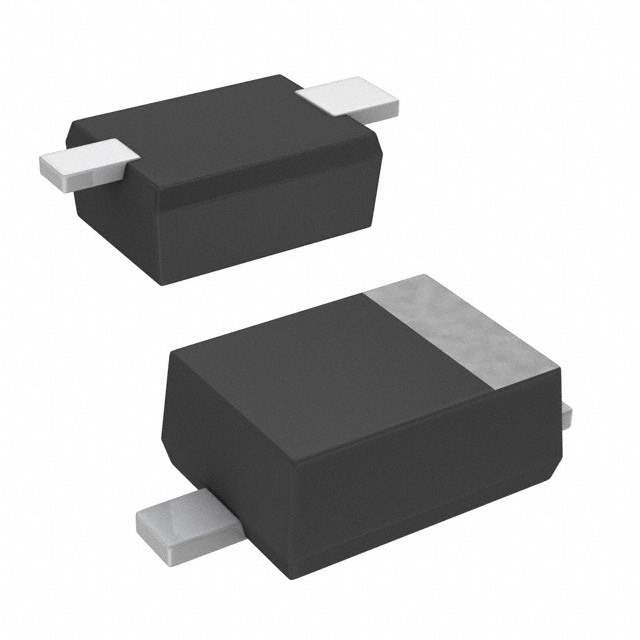
6.8 V nominal, 200 mW ceiling, 20 Ohm max impedance, SMini2-F5-B package
Quick Engineering Summary
| Field | Value |
|---|---|
| Manufacturer | Panasonic |
| Category | Diodes - Zener - Single |
| Package | SMini2-F5-B |
| Core function | DIODE ZENER 6. |
| Key electrical range | Current - Reverse Leakage @ Vr: 100nA @ 4V; Maximum Power Dissipation: 200mW; Supply and Demand Status: Sufficient; Tolerance: ±2.5% |
| Reported stock | 205000 pcs reported — confirm on RFQ |
The lifecycle conflict is the real limit
The real constraint here is lifecycle, not voltage. Active appears alongside 停止提供, so the safe read is sustaining-only for existing production. EU RoHS is compliant, but that does not offset the supply-status conflict.
The 200 mW rating is a ceiling, not a use case
That same conservative read carries into the electrical picture. The 6.8 V zener value sets the nominal clamp point, while the 200 mW maximum power dissipation sets a hard thermal ceiling for a very small package.
The other number that matters is 20 Ohm maximum Zzt. In a clamp or simple reference role, that says regulation will shift with current more than it would with a lower-impedance zener, so the nominal 6.8 V should not be read as a stiff rail. The 1 V at 10 mA forward figure belongs to forward-drive fault or polarity-reversal conditions; it is a listed limit point, not a normal operating target.
Wrong for heavy shunt duty, useful in small SMD clamps
Not for power dumping. DZ2J068M0L fits lighter jobs: catching a modest overvoltage event, setting a simple reference point, or protecting a node where board area is tight, and the SMini2-F5-B package suits that kind of dense placement.
What it does not support is the common mistake of treating 200 mW as permission for continuous abuse. That number is a ceiling, and with a zener in a package this small, thermal budget usually decides the design before nominal voltage does. If the circuit depends on low dynamic impedance, wide surge tolerance, or generous ambient headroom, this listing does not settle the question.
The leakage figure, 100nA at 4V, helps in one specific way: it keeps reverse leakage low below the zener region, so high-impedance sensing nodes are less likely to be disturbed while the diode is off. That still does not turn DZ2J068M0L into a precision reference by itself, because the listing gives no temperature behavior and no fuller zener curve.
The weak point is missing detail, not stock
The weak point is documentation depth. The strong point is availability: 205000 pieces are listed, with Reel - TR packaging and 3k pcs per package, so it should feed cleanly into an SMT line if you are already committed to DZ2J068M0L.
What is still missing is the detail that closes a real review: no thermal resistance, no derating curve, no surge or overload figure such as IFSM, and no package drawing or pinout detail beyond the package names. For a zener, those gaps decide ambient headroom, pulse survivability, and land-pattern confidence faster than another restatement of the 6.8 V nominal value.
View the Win-Source product page for DZ2J068M0L.
Key Takeaways for Engineers & Buyers
- Hold DZ2J068M0L for existing builds until the Active versus 停止提供 conflict is resolved.
- Budget around the 200 mW ceiling first; that limit closes small-clamp use, not heavier shunt duty.
- Match feeders to Reel - TR and 3k pcs before releasing DZ2J068M0L to the line.