
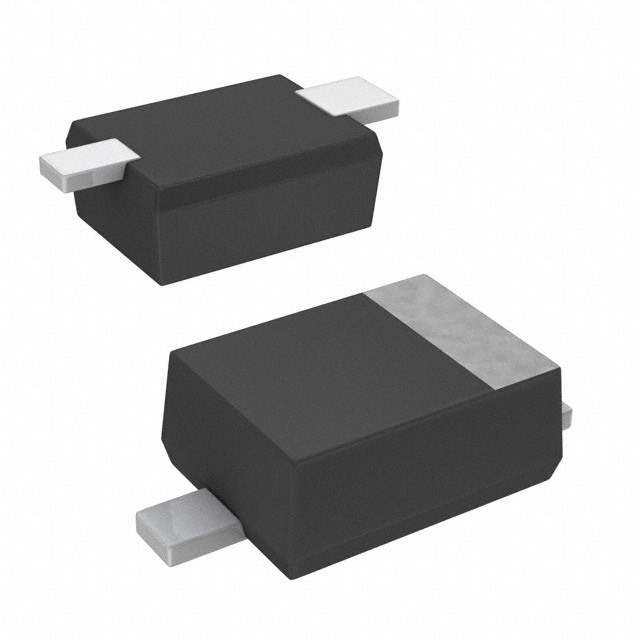
7.5V nominal, 200mW ceiling, SMini2-F5-B package, and ±2.5% tolerance set the call here.
Quick Engineering Summary
| Field | Value |
|---|---|
| Manufacturer | Panasonic |
| Category | Diodes - Zener - Single |
| Package | SMini2-F5-B |
| Core function | DIODE ZENER 7. |
| Key electrical range | Current - Reverse Leakage @ Vr: 100nA @ 5V; Maximum Power Dissipation: 200mW; Supply and Demand Status: Balance; Tolerance: ±2.5% |
| Reported stock | 6000 pcs reported — confirm on RFQ |
The lifecycle conflict is the real constraint
The constraint is lifecycle ambiguity. Active appears alongside 停止提供, so Panasonic DZ2J075M0L fits sustaining builds, not a comfortable new design-in choice.
Small package, small power budget
The weak point comes first: 200mW is a low ceiling, and the SMini2-F5-B body does not leave room to pretend otherwise.
The better news is the 7.5V nominal zener value with ±2.5% tolerance. That is tight enough for simple reference or clamp duty when the rail window is already understood. Panasonic DZ2J075M0L belongs in low-power local protection and bias jobs, not where the clamp must absorb repeated energy or where board heat is already crowded. The 20 Ohm maximum impedance matters too, because a zener that shifts under current is a poor fit when the downstream circuit expects a stiff reference.
What the listed numbers decide, and what they don't
200mW decides whether this device belongs in the circuit at all.
It is a dissipation ceiling, not a working point, and it says nothing about ambient headroom because the listing gives no derating curve or thermal resistance. The 1V maximum forward drop at 10mA is also just a limit in forward conduction; it shows what happens if the diode is driven the wrong way in a protection path, and it sets a loss budget you still have to check against missing thermal data.
The 100nA reverse leakage at 5V is useful. It shows the device stays quiet well below its 7.5V nominal zener point, so it will not load a lower-voltage node much in standby. But that number does not describe behavior near breakdown, and the 20 Ohm maximum zener impedance is the warning flag: if the circuit needs a very stiff clamp or reference under changing current, this listing does not show enough to assume it.
The fit is narrow, and that's fine. Panasonic DZ2J075M0L makes sense on dense SMT boards that need a compact single zener and can stay inside a 200mW ceiling; it does not belong where surge handling, thermal margin, or precision dynamic behavior are the first questions.
The missing datasheet items are the gating issue
So the gaps matter more than another pass through the headline specs. The listing does not give a derating curve, thermal resistance, pinout drawing, or package drawing, and those are the items that close the real review for DZ2J075M0L.
There is also no junction capacitance or surge figure here. If the job is fast clamping, noise-sensitive biasing, or anything that sees pulse stress, those omissions are what stall approval, not the nominal 7.5V line item.
View the Win-Source product page for DZ2J075M0L.
Key Takeaways for Engineers & Buyers
- Treat 200mW as the dissipation ceiling; don’t size DZ2J075M0L from the 7.5V nominal alone.
- Use the ±2.5% zener tolerance in rail-clamp limits before releasing a board spin.
- Buy in reel multiples of 3k pcs if this stays on the line; listed stock is 6000.