
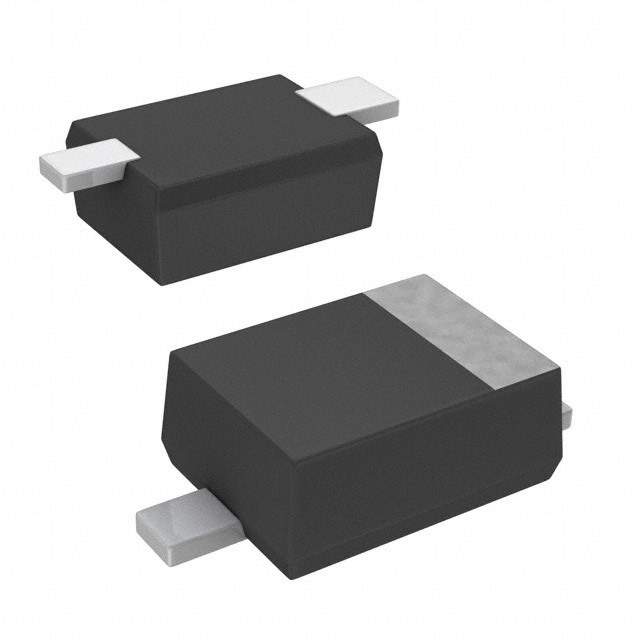
8.2V nominal, 200mW ceiling, SMini2-F5-B package, ±5% tolerance define the fit
Quick Engineering Summary
| Field | Value |
|---|---|
| Manufacturer | Panasonic |
| Category | Diodes - Zener - Single |
| Package | SMini2-F5-B |
| Core function | DIODE ZENER 8. |
| Key electrical range | Current - Reverse Leakage @ Vr: 100nA @ 5V; Maximum Power Dissipation: 200mW; Supply and Demand Status: Balance; Tolerance: ±5% |
| Reported stock | 3000 pcs reported — confirm on RFQ |
200mW is the number that decides this part
200mW is the hard ceiling here. It tells you where DZ2J08200L belongs and where it does not.
That limit puts it in low-power clamp, reference, or protection duty in a very small SMD body. It does not answer ambient headroom, pulse tolerance, or how much junction stress it can take, because the thermal curve is not included.
The other key figure is 8.2V nominal Vz with ±5% tolerance. That is enough to place DZ2J08200L on an 8.2V rail or clamp point, but not enough to assume a tight threshold when the circuit trips near the edge. Miss that margin and the clamp point can move more than the rest of the design will tolerate.
20 Ohm and 1V tell you where the losses show up
20 Ohm is the listed maximum zener impedance. That one number keeps DZ2J08200L in modest-current regulation work instead of letting it masquerade as a stiff reference, because once current shifts, the clamp voltage will move rather than hold like an ideal wall, and that behavior shows up quickly in line and load variation.
The forward side matters too. The listing gives 1V at 10mA as a maximum forward-drop condition, so if the device is ever driven forward, that drop belongs in the dissipation budget and in the fault story. It is a ceiling at a stated current, not a typical operating point.
Reverse leakage is low at 100nA at 5V, which helps on protected nodes that cannot spare much standby bleed. Still, that figure says little about behavior near the 8.2V zener region. The practical read is simple: low leakage at 5V is useful for quiet bias points, while the 20 Ohm maximum is the reminder that DZ2J08200L is a small zener, not a precision shunt.
Use it on a running line, not a fresh platform
Not for new design-in.
The issue is lifecycle, not identity. One field says Active, another says stop supply, and that conflict is enough to keep DZ2J08200L out of a clean new-platform BOM.
For existing production, the picture is better. Panasonic DZ2J08200L sits in a standard single-zener category, comes on reel packaging, has 3000 pieces listed, and carries EU RoHS compliance, so it can keep a current line moving while the status is cleared.
Physical fit is straightforward. SMini2-F5-B and SMD mounting point to dense board-level protection or bias networks, not hand-assembled service boards or layouts that need generous thermal mass.
What is still missing before you trust the corner cases
What would a buyer ask for first? Thermal data and surge data.
DZ2J08200L is capped at 200mW, but the listing does not include thermal resistance or a derating curve, so that ceiling cannot be turned into ambient margin.
The other gaps are the ones that decide transient behavior and layout release: no reverse-recovery time, no junction capacitance, no IFSM, no pinout, and no package drawing. For a small zener, those are the omissions that turn into bench surprises.
View the Win-Source product page for DZ2J08200L.
Key Takeaways for Engineers & Buyers
- Hold DZ2J08200L for rails that need 8.2V nominal, not adjacent clamp values.
- Keep dissipation below the 200mW ceiling; that number is the thermal limit, not a target.
- Buy against the 3000-piece reel stock only for current builds until the lifecycle conflict is resolved.