
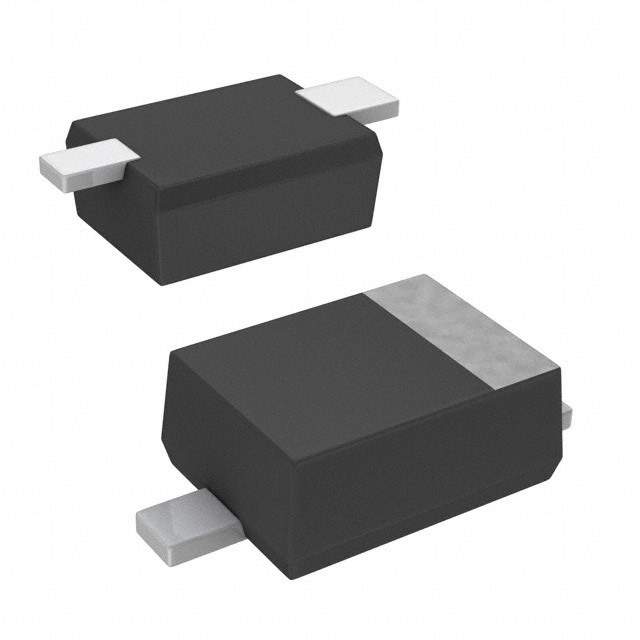
9.1V nominal, 200mW ceiling, SMini2-F5-B package, ±5% tolerance, 100nA leakage at 6V
Quick Engineering Summary
| Field | Value |
|---|---|
| Manufacturer | Panasonic |
| Category | Diodes - Zener - Single |
| Package | SMini2-F5-B |
| Core function | DIODE ZENER 9. |
| Key electrical range | Current - Reverse Leakage @ Vr: 100nA @ 6V; Maximum Power Dissipation: 200mW; Supply and Demand Status: Balance; Tolerance: ±5% |
| Reported stock | 13788 pcs reported — confirm on RFQ |
200mW is the number that decides this part
200mW sets the ceiling. That keeps DZ2J09100L in signal-level clamp and reference work, not in jobs that burn steady power. The 9.1V nominal value shows where regulation starts, but it does not answer the thermal limit.
That pushes it toward light clamp duty, not heavy shunt work
And the rest of the listing points the same way. A 20 Ohm maximum Zzt is workable for a small zener, but it still says DZ2J09100L is not a precision reference by default; if the rail budget is tight, movement around the knee will show up.
The 100nA reverse leakage at 6V fits high-impedance sensing nodes and low-bleed protection paths. The 1V maximum forward drop at 10mA also matters, because forward conduction has to be budgeted anywhere polarity can reverse. In practice, DZ2J09100L fits compact protection and bias networks, not casual power dumping.
The weak point is lifecycle confidence, not electrical fit
The weak point comes first: the lifecycle call is conflicted. One field says Active, another says 停止提供. That is enough to keep DZ2J09100L out of a fresh platform unless you already have internal approval for a supply-risk exception.
The stronger news is on the buy side. There are 13788 pieces listed, packaging is Reel - TR, supply-demand is marked Balance, and EU RoHS is compliant. For sustaining production, the practical move is to secure the reel quantity you need and stop treating the Active flag as settled fact.
What the listing still doesn't answer
The constraint is missing thermal and dynamic detail. You get 9.1V, ±5%, 200mW, leakage, forward drop, and Zzt, but not the derating curve that sets ambient headroom or the thermal resistance that ties that 200mW ceiling to a real board condition.
The listing also leaves out surge capability, junction capacitance, and a package drawing. Those aren't side notes. Surge current decides whether a transient clamp survives the first hit or turns into a field return, capacitance decides whether the protected node stays clean, and the drawing closes the footprint question around SMini2-F5-B, SC-90, and SOD-323F naming before DZ2J09100L goes onto a new layout.
View the Win-Source product page for DZ2J09100L.
Key Takeaways for Engineers & Buyers
- Treat 200mW as the dissipation ceiling; don't let DZ2J09100L carry clamp duty without the thermal data.
- Hold the rail target against 9.1V nominal and ±5% tolerance before using it as a reference.
- If this stays on the BOM, buy in reel and cover the 13788-piece line while lifecycle status is unresolved.