
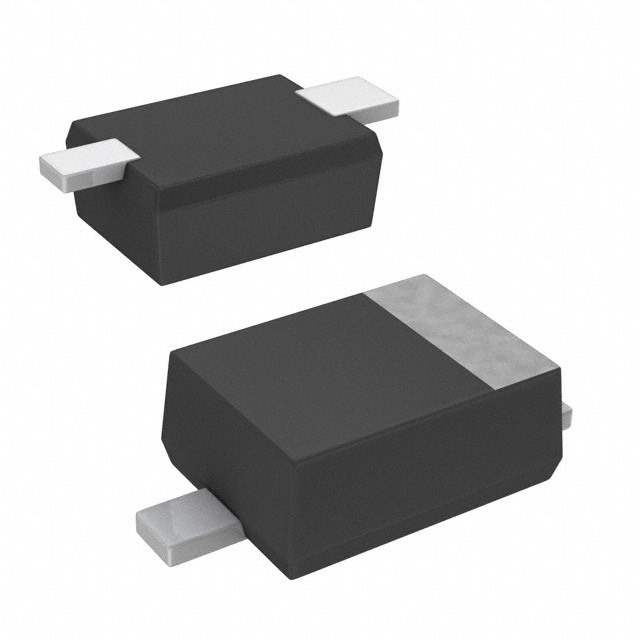
9.1 V zener, 200 mW ceiling, SMini2-F5-B package, ±2.5% tolerance
Quick Engineering Summary
| Field | Value |
|---|---|
| Manufacturer | Panasonic |
| Category | Diodes - Zener - Single |
| Package | SMini2-F5-B |
| Core function | DIODE ZENER 9. |
| Key electrical range | Current - Reverse Leakage @ Vr: 100nA @ 6V; Maximum Power Dissipation: 200mW; Supply and Demand Status: Balance; Tolerance: ±2.5% |
| Reported stock | 18000 pcs reported — confirm on RFQ |
Still usable, but the lifecycle conflict changes the call
And that conflict is the first thing that matters here. DZ2J091M0L is marked Active, yet another lifecycle field says 停止提供, so the safe call is sustaining only: acceptable for an existing production line that already knows this zener, but not for a clean new design where you want the lifecycle story to stay uneventful.
The electrical listing is narrow, but it is enough to place the part. A 9.1 V nominal zener voltage with ±2.5% tolerance points to a fairly tight clamp or reference window, not a loose protector where wide spread is harmless. The 200 mW maximum power dissipation is a hard ceiling, which quickly narrows the use case to low-power bias, sensing, and rail-trim work rather than positions that see repeated surge energy or sustained clamp current. The 20 Ohm maximum zener impedance matters too, because it tells you how stiff the clamp remains as current moves; if the node needs a very hard knee, that number alone may push you elsewhere. EU RoHS compliance is straightforward. It does nothing to settle the lifecycle ambiguity.
200 mW is the real boundary
200 mW sets the boundary. It keeps DZ2J091M0L in signal-level work, and the 1 V maximum forward drop at 10 mA is only a reverse-use sanity check, not a sign that this zener can stand in for a general rectifier or answer thermal behavior under clamp stress.
Fit is narrow and that is fine
It fits small boards.
The SMini2-F5-B / SC-90, SOD-323F body and SMD mounting make DZ2J091M0L a sensible choice for dense handheld, control, and interface boards that need a small 9.1 V shunt element close to the protected node.
Its limits are just as clear. The listing gives no surge rating, no derating curve, and no thermal resistance, so DZ2J091M0L is not the default pick for abuse-heavy input protection, hot clamp duty, or any spot where the package must absorb fault energy repeatedly and predictably.
Can you keep a line running on it?
Can you get enough of it now? Yes: 18000 pieces are listed, on reel - TR, with 3k pcs per package, so DZ2J091M0L is practical for a running line if your build plan matches reel consumption and you do not need odd-lot handling.
The issue is not quantity. It is confidence. With the lifecycle fields in conflict, secure the reels needed for near-term builds and clear the manufacturer status before releasing DZ2J091M0L into any new BOM.
The missing datasheet items are the ones that decide stress
The weak point is coverage. This listing omits reverse-recovery time, junction capacitance, thermal resistance, the derating curve, and a pinout or package drawing.
Those gaps decide whether DZ2J091M0L works in the harder corners of a design. Junction capacitance affects behavior on a fast or high-impedance node, while thermal resistance and the derating curve determine how much ambient headroom the 200 mW ceiling really leaves on the board; the missing pinout or package drawing still has to come from the datasheet before layout is frozen.
View the Win-Source product page for DZ2J091M0L.
Key Takeaways for Engineers & Buyers
- Hold DZ2J091M0L to clamps and references that stay inside the 200 mW ceiling.
- Use the ±2.5% Vz spread in the rail window before releasing DZ2J091M0L to production.
- Buy in reel multiples of 3k pcs if DZ2J091M0L must stay on the running line.