
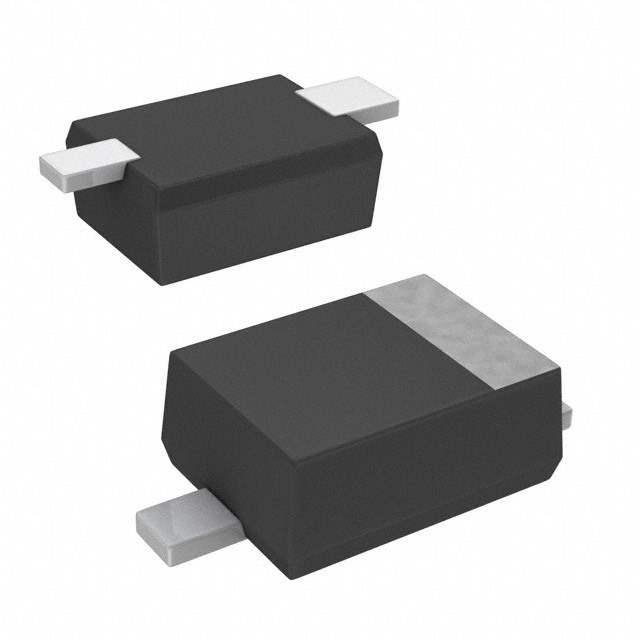
10V zener, 200mW ceiling, SMini2-F5-B package, ±5% tolerance, with conflicting lifecycle signals
Quick Engineering Summary
| Field | Value |
|---|---|
| Manufacturer | Panasonic |
| Category | Diodes - Zener - Single |
| Package | SMini2-F5-B |
| Core function | DIODE ZENER 10V 200MW SMINI2 |
| Key electrical range | Current - Reverse Leakage @ Vr: 50nA @ 7V; Maximum Power Dissipation: 200mW; Supply and Demand Status: Sufficient; Tolerance: ±5% |
| Reported stock | 18000 pcs reported — confirm on RFQ |
The lifecycle story is the problem
The weak point comes first: lifecycle signals conflict, with Active in one field and 停止提供 in another. That keeps DZ2J10000L out of a fresh BOM.
For sustaining builds, the listed 18000 on hand, Reel - TR packaging, and EU RoHS status make it usable now.
The 200mW ceiling decides more than the 10V name does
So the real headline is the 200mW maximum power dissipation, not the 10V zener label. It is a ceiling, not a working point, and it answers only one question cleanly: whether DZ2J10000L belongs on a low-power clamp or reference node, while leaving ambient headroom, pulse survival, and the value of extra board copper unresolved.
The 10V nominal Vz with ±5% tolerance is the next number that matters because it sets the rail window and clamp spread at schematic level. If the protected node cannot tolerate that band, the part is out before layout starts. The 30 Ohm maximum Zzt matters too, because a zener with that listed impedance will not behave like an ideal 10V wall as current shifts; circuits that need a tighter knee cannot rely on nominal voltage alone.
The forward side is only partly described. The listing gives 1V at 10mA, useful as a dissipation-budget clue when the diode is driven forward by fault polarity or AC swing. It does not replace the forward-drop curve, and that missing curve is the detail that would show how quickly stress worsens away from that single test point.
Reverse leakage is listed as 50nA at 7V. That helps when the node sits below breakdown and leakage error matters, but it says little about behavior near 10V, where many zener applications actually operate.
Small package, small job
The constraint is simple: SMini2-F5-B and 200mW push this device toward housekeeping duty, not energy-heavy protection.
That leaves DZ2J10000L suited to light rail trimming, low-current reference duty, and signal-line clamping where board area is tight and SMD assembly is already the plan. The small SMD body supports dense placement, but it does not soften the dissipation ceiling; treating the 10V marking as the whole story usually ends in heat or drift rather than a schematic problem.
What the listing still does not answer
Wrong for surge-heavy or thermally uncertain use first, because the missing numbers are the ones that settle that call.
There is no operating temperature, no thermal resistance, and no derating curve, so the ambient limit remains open. There is no surge or overload figure such as IFSM, so fault-energy handling remains open. The package name is here, but a drawing and pin-level mechanical detail are not, leaving footprint confirmation to the datasheet. Those are the gaps that matter before DZ2J10000L moves from bench idea to released hardware.
View the Win-Source product page for DZ2J10000L.
Key Takeaways for Engineers & Buyers
- Treat 200mW as the dissipation ceiling when sizing DZ2J10000L into a clamp or reference node.
- Hold reel planning to 3k pcs increments; DZ2J10000L is listed in Reel - TR packaging.
- Secure line coverage against the lifecycle conflict before adding DZ2J10000L to a new BOM.